

Applied Mathematics
Vol.06 No.01(2015), Article ID:53062,16 pages
10.4236/am.2015.61009
Symmetry Analysis for MHD Viscous Flow and Heat Transfer over a Stretching Sheet
Hossam S. Hassan
Department of Basic and Applied Science, Arab Academy for Science, Technology and Maritime Transport, Alexandria, Egypt
Email: hossams@aast.edu
Copyright © 2015 by author and Scientific Research Publishing Inc.
This work is licensed under the Creative Commons Attribution International License (CC BY).
http://creativecommons.org/licenses/by/4.0/



Received 26 October 2014; revised 22 November 2014; accepted 10 December 2014
ABSTRACT
This work deals with the boundary layer flow and heat transfer of an electrically conducting viscous fluid over a stretching sheet. Lie-group method is applied for determining the symmetry reductions for the governing equations by reducing the number of independent variables in the given system of partial differential equations by one, leading to a system of non-linear ordinary differential equation. The resulting system is then solved numerically using shooting method coupled with Runge-Kutta scheme. Effects of various values of physical parameters on the horizontal and vertical velocities, temperature profiles, wall heat transfer and the wall shear stress (skin friction), have been studied and the results are plotted. Furthermore, a comparison between the present results with existing numerical and homotopy methods has been reported and we found that they are in a good agreement.
Keywords:
MHD Flow, Viscous Flow, Stretching Sheet, Lie-Group, Similarity Solution

1. Introduction
The boundary layer flow and heat transfer of an incompressible viscous fluid over a stretching sheet appear in several manufacturing processes of industry such as the aerodynamic extrusion of plastic sheets, the extrusion of polymers, hot rolling, the cooling of metallic plates, glass-fiber production, etc., [1] .
Sakiadis [2] presented the pioneering work in this field. He investigated the flow induced by a semi-infinite horizontally moving wall in an ambient fluid.
Crane [3] studied the flow over a linearly stretching sheet in an ambient fluid and gave a similarity solution in closed analytical form for the steady two-dimensional problem. He presented a closed form exponential solution for the planar viscous flow of linear stretching case.
Gupta and Gupta [4] investigated the effect of mass transfer on the Crane flow. They analyzed the viscous flow and heat transfer by an isothermal stretching sheet with suction/injection.
Chiam [5] studied the boundary layer flow due to a plate stretching with a power-low velocity distribution in presence of a magnetic field. To yield similarity equations, a special form of the magnetic field is chosen. He presented linearized solutions for the case of large magnetic parameters and derived an expression for the skin friction coefficient using Crocco’s transformation and compared it numerically using Runge-Kutta shooting algorithm with Newton iteration.
Vajravelu [6] studied flow and heat transfer in a viscous fluid over a non-linear stretching sheet. In his study, the heat transfer is analyzed when the sheet is maintained at a constant temperature and the viscous dissipation is neglected. He used a fourth-order Runge-Kutta integration scheme to solve the resulting nonlinear differential equations.
Cortell [7] presented a numerical analysis for the flow and heat transfer in a viscous fluid over a nonlinear stretching sheet by employing a novel numerical procedure. In his work, he studied two cases for the nonlinear stretching sheet, with constant surface temperature and with prescribed surface temperature. The resulting nonlinear ordinary differential equations after converting the governing partial differential equations by a similarity transformation are solved using Runge-Kutta scheme.
Abbas and Hayat [8] studied the radiation effects on the magnetohydrodynamic (MHD) flow of an incompressible viscous fluid in a porous space. In their study, they extended the analysis of Cortell [7] by considering a MHD flow, analyzed the flow in a porous medium, included the radiation effects and provided analytic solution namely homotopy analysis method (HAM) instead of numerical technique applied in [7] . Hayat et al. [9] investigated the magnetohydrodynamic (MHD) boundary layer flow by employing the modified Adomian decomposition method and the Padé approximation and developed the series solution of the governing non-linear problem.
Ghotbi [10] considered the problem of the boundary layer flow of an incompressible viscous fluid over a non- linear stretching sheet. In order to obtain analytical solution of the governing nonlinear differential equations, HAM is applied.
Mehmood et al. [11] reported the corrections to HAM results presented in [10] . A comparison between their HAM solution and the exact solution obtained by Pavlov [12] was made and it was in a good agreement.
Javed et al. [13] investigated the boundary layer flow and heat transfer analysis of electrically conducting viscous fluid over a nonlinearly shrinking sheet. They used a similarity transformation to reduce the governing partial differential equations to a set of nonlinear ordinary differential equations. The resulting system of equations is then solved numerically using an implicit finite difference scheme known as Keller-box method.
Fathizadeh et al. [14] employed the modification of the homotopy perturbation method to solve the MHD boundary-layer equations. In their work, the viscous fluid is electrically conducting in the presence of a uniform applied magnetic field and the induced magnetic field is neglected for small magnetic Reynolds number. They obtained the similarity solutions of ordinary differential equation resulting from the momentum equation. Some numerical comparisons among the new modified homotopy perturbation method, the standard homotopy perturbation, the exact solution and the shooting method are obtained.
In this paper, we shall investigate the solution of the MHD boundary layer flow for an incompressible viscous fluid over a sheet stretching according to a power-law velocity. Lie-group theory is applied to the equations of motion for determining symmetry reductions of partial differential equations [15] - [30] . The resulting system of nonlinear differential equations is then solved numerically using shooting method coupled with Runge-Kutta scheme. Our results are compared with the work of [5] - [14] .
2. Mathematical Formulation of the Problem
We consider the MHD flow over a flat plate coinciding with the plane , of an incompressible viscous fluid with heat transfer. The wall is stretched horizontally by applying on both sides two equal and opposite forces along the
  -axis to keep the origin fixed. The fluid is electrically conducting under the influence of an applied magnetic field
  in the
  -direction normally to the stretching sheet, Figure 1.
The induced magnetic field is neglected. Under these assumptions, the continuity, momentum and energy equations become

Figure 1. Physical model and coordinate system.
 (2.1)
(2.1)
 (2.2)
(2.2)
 (2.3)
(2.3)
where  and
and , are the velocity components in the
  and
and  directions, respectively,
  is the kinematic viscosity,
  is the fluid density,
  is the electrical conductivity of the fluid,
  is the specific heat of the fluid at constant pressure,
  is the thermal conductivity of the fluid, and
  is the temperature.
The magnetic field is defined by
 , (2.4)
where  and
and  are constants.
The boundary conditions are
 (2.5)
(2.5)
where  is a constant,
  is the uniform temperature of the stretching sheet and
  is the temperature at large distance from the wall, where
 .
.
The variables in Equations (2.1)-(2.5) are dimensionless according to
 , (2.6)
where  is the characteristic velocity.
Substitution from Equation (2.6) into Equations (2.1)-(2.3) gives
 (2.7)
(2.7)
 , (2.8)
 , (2.9)
where,  is a constant,
  is the Prandtl number, and
  is the dynamic viscosity. Without losing of generality, let,
 .
.
The boundary conditions Equation (2.5) will be
 (2.10)
From the continuity Equation (2.7) there exist stream function  such that,
 (2.11)
which satisfies Equation (2.7) identically.
Substituting from Equation (2.11) into Equations (2.8)-(2.9), yields
 , (2.12)
 , (2.13)
where subscripts denote partial derivatives.
The boundary conditions Equation (2.8) will be
 (2.14)
3. Solution of the Problem
Firstly, we derive the similarity solutions using Lie-group method under which Equations (2.12)-(2.13) and the boundary conditions Equation (2.14) are invariant, and then we use these symmetries to determine the similarity variables.
Consider the one-parameter  Lie group of infinitesimal transformations in
  given by
 (3.1)
(3.1)
where “ ” is the group parameter.
A system of partial differential Equations (2.12)-(2.13) is said to admit a symmetry generated by the vector field
 , (3.2)
if it is left invariant by the transformation .
.
The solutions  and
and , are invariant under the symmetry Equation (3.2) if
 , (3.3)
and
 . (3.4)
Assume,
 , (3.5)
 . (3.6)
A vector  given by Equation (3.2), is said to be a Lie point symmetry vector field for Equations (2.12)- (2.13) if
 (3.7)
(3.7)
where,
 (3.8)
(3.8)
is the third prolongation of .
.
To calculate the prolongation of the given transformation, we need to differentiate Equation (3.1) with respect to each of the variables,  and
and . To do this, we introduce the following total derivatives
 (3.9)
(3.9)
Equation (3.7) gives the following linear partial differential equation
 , (3.10)
 (3.11)
The components ,
,  ,
,  ,
,  ,
,  ,
,  ,
,  ,
,  can be determined from the following expressions
 (3.12)
where  and
and  are stand for
  and
and .
.
Invariance of the boundary conditions Equation (2.14i), yields
 . (3.13)
Substitution from Equations (3.12)-(3.13) into Equation (3.11) will lead to a large expression, then, equating to zero the coefficients of ,
,  ,
,  ,
,  ,
,  and
and , gives
 . (3.14)
Substitution from Equation (3.14) into Equation (3.11) will remove many terms. Then, equating to zero the coefficients of  and
and , leads to the following system of determining equations:
 (3.15)
 . (3.16)
Again, substitution from Equations (3.12)-(3.16) into Equation (3.10) will remove many terms. Then, equating to zero the coefficients of ,
,  ,
,  ,
,  ,
,  and
and , gives
 , (3.17)
and
 . (3.18)
Solving the system of Equations (3.14)-(3.18) in view of the invariance of the boundary conditions Equation (2.14), yields
 (3.19)
The system of nonlinear Equations (2.12)-(2.13) has the three-parameter Lie group of point symmetries generated by
 (3.20)
The one-parameter group generated by  consists of scaling, whereas
  and
and  consists of translation. The commutator table of the symmetries is given in Table 1, where the entry in the i-th row and j-th column is defined as
 .
.
The finite transformations corresponding to the symmetries ,
,  and
and  are respectively
 , (3.21)
where ,
,  and
and  are the group parameters.
We look for solutions that invariant under the linear combination of the operators given by Equation (3.20). By determine the one-dimensional optimal system of subalgebras of the given partial differential equation, all of these solutions can be obtained. Olver’s approach given in [17] starts out by computing the commutators of the
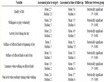
Table 1. Table of commutators of the basis operators.
symmetry Lie algebra Equation (3.20) and then obtaining the adjoint representations. The adjoint action on Lie algebras is defined by the adjoint operator given by
 , (3.22)
where,  is a small parameter.
In terms of Lie brackets using Campbell-Baker-Hausdorff theorem [31] , this operator can be rewritten as
 . (3.23)
In our problem,  is the Lie algebra associated with the symmetry group. The calculations of the adjoint action are summarized in Table 2.
To construct the one-dimensional optimal system of , consider a general element of
  given by
 , (3.24)
for some constants ,
,  and
and , and probe whether
  can be transformed to a new element
  under the general adjoint action, where
  takes a simpler form than
 , [32] .
Let,
 . (3.25)
We make appropriate choice of  such that the
 ’s can be made 0 or 1. We end up with simpler forms of
  that will constitute the one-dimensional optimal system.
By substitution  in Equation (3.25) and dropping the primes, we get
 . (3.26)
Now, Equation (3.26) prompts the consideration of the cases  and
and .
.
Case (1): 
By choosing  and scaling the resulting operator by
 , Equation (3.26) will be
 . (3.27)
We can further consider the subcases  and
and . Therefore, an optimal system of one-dimensional subalgebra for this case is given by
 , where,
 .
.
Case (2): 
Using repeatedly the adjoint operation to simplify , an optimal system of one-dimensional subalgebra for this case is given by
 , where,
 .
.
In summary, the optimal system of one-dimensional subalgebras of the symmetry Lie algebra is
 . (3.28)
Table 3 shows the solution of the invariant surface conditions associated with the optimal system.
(i) Solutions invariant under :
:
The characteristic
Table 2. Table of adjoint representations.
Table 3. Solutions of the invariant surface conditions associated with the optimal system.
 , (3.29)
has the components
 (3.30)
Therefore, the general solutions of the invariant surface conditions Equations (3.3)-(3.4) are
 (3.31)
where  is the similarity variable.
Substitution from Equation (3.31) into Equations (2.12)-(2.13), yields
 , (3.32)
 , (3.33)
where,  and
and  is the magnetic parameter, where
  is the Hartmann number.
The boundary conditions Equation (2.14) will be
 (3.34)
(ii) Solutions invariant under :
:
The characteristic Equation (3.29) has the components
 (3.35)
Therefore, the general solutions of the invariant surface conditions Equations (3.3)-(3.4) are
 (3.36)
Practically, Equation (3.36) is a solution of Equations (2.12)-(2.13), even though it is not a particularly interesting one which contradicts the boundary conditions Equation (2.14). So, no solutions are invariant under the group generated by .
.
(iii) Solutions invariant under :
:
The characteristic Equation (3.29) has the components
 (3.37)
Therefore, the general solutions of the invariant surface conditions Equations (3.3)-(3.4) are
 (3.38)
where  is the similarity variable, which gives the same solutions invariant under
 .
.
(iv) Solutions invariant under :
:
The characteristic Equation (3.29) has the components
 (3.39)
Therefore, the general solutions of the invariant surface conditions Equations (3.3)-(3.4) are
 (3.40)
This contradicts the boundary conditions Equation (2.14). So, no solutions are invariant under the group generated by .
.
4. Results and Discussion
The system of non-linear differential Equations (3.32)-(3.33) with the boundary conditions Equation (3.34) is solved numerically using the shooting method, coupled with Runge-Kutta scheme. From Equations (2.11) and (3.31), we get
 . (4.1)
The effects of the parameter  which is a function of the power-index
 , the Hartmann number
 , and the Prandtl number
  on the horizontal and vertical velocities, and temperature profiles are illustrated in Figures 2-8. Moreover, the numerical values of the skin friction
  (wall shear stress) and rate of heat transfer
  are tabulated in Tables 4-11, for different values of parameters of interest.
4.1. The Horizontal Velocity
Figure 2 illustrates the effect of  on the profile of the horizontal velocity
 . It is noted that, the horizontal velocity decreases as
  increases both for
  (hydrodynamic fluid) and
  (hydromagnetic fluid) but this decreasing is smaller with
  compared with the case
 , that is because the magnetic force acts as a resistance to the flow, [13] . Also, the boundary layer thickness decreases by increasing
  and the flow makes the stretching surface rougher.
Figure 3 describes the effect of  on the behavior of the horizontal velocity
 . As seen, by increasing the magnetic field, the horizontal velocity and the thickness of the boundary layer decrease. From Figure 3(a) we can conclude that, for
  with small values of
  less than 0.4 near the surface, the behavior of the horizontal velocity is differ from the well-known cases, that is because the horizontal velocity increases to a maximum values before it starts to decrease.
4.2. The Vertical Velocity
Figure 4 shows the behaviour of the vertical velocity  for
for , over a range of the magnetic parameter
 . As seen, the absolute value of the vertical velocity increases with the decrease of
 .
.
Figure 5 illustrates the behaviour of the vertical velocity  for
for  over a range of the parameter
 . As seen, the absolute value of the vertical velocity increases with the increase of
 .
.

 (a) (b)
Figure 2. Horizontal velocity profiles over a range of  with
with  for: (a)
 ; (b)
; (b) .
.

 (a) (b)
Figure 3. Horizontal velocity profiles over a range of  with
with  for: (a)
 ; (b)
; (b) .
.
4.3. The Temperature
Figure 6 illustrates the variation of the temperature profiles  for
for  with Prandtl number
 , over a range of
 . We notice that, the temperature profiles increases as
  increases.
Figure 7 describes the distribution of the temperature  for
for  with
with , over a range of the nonlinear stretching parameter
 . As seen, with an increase in
 , the temperature increases.
Figure 8 shows the variation of the temperature profiles  for
for  with
with , over a range of the Prandtl number
 . As seen, the temperature decreases as the Prandtl number increases which consistent with the fact that the thermal boundary layer thickness decreases as the Prandtl number
  increases.
4.4. Wall Shear Stress
The dimensionless wall shear stress  (skin friction) is computed for different values of the Hartmann number
  and the parameter
 . Table 4 shows the numerical values of the skin friction
  for different values of the nonlinear stretching parameter
  with
with . As seen, the absolute value of the dimensionless wall shear stress
  increases with increasing
 , that is because by increasing the values of

Figure 4. Vertical velocity profiles over a range of  with
with  and
and .
.

Figure 5. Vertical velocity profiles over a range of  with
with  and
and .
.
the layer thickness decreases with an increase in the skin friction at the wall which may cause to lose the smoothness of the stretching wall. So, by increasing the value of , the flow makes the stretching surface rougher. An excellent agreement between our work and other works is absorbed.
Tables 5-8 show the numerical values of  over a range of
  with at
  and
and , respectively. As
  increases, the absolute value of the dimensionless wall shear stress
  increases and the thickness of the boundary layer decreases. From Table 8, we noticed that, for small values of
  less than 0.4,
  decreases as
  increases which is consistent with Figure 3(a). Again, an excellent agreement is achieved between our work and other works. No convergent value for
  is obtained by Hayat et al. [9] when
  at
at , see Table 8.

Figure 6. Temperature profiles over a range of  with
with  and
and .
.

Figure 7. Temperature profiles over a range of  with
with  and
and .
.

Figure 8. Temperature profiles over a range of  with
with  and
and .
.
Table 4. Comparison between the values of  for different
  with
with .
.
Table 5. Comparison between the values of  for different
  at
at .
.
Table 6. Comparison between the values of  for different
  at
at .
.
Table 7. Comparison between the values of  for different
  at
at .
.
Table 8. Comparison between the values of  for different
  at
at  and
and .
.
Table 9. Comparison between the values of  for different values of
  and
and  with
with .
.
Table 10. Comparison between the values of  at
at  for different values of
  and
and .
.
Table 11. Numerical values of  for different
  at
at  and
and .
.
4.5. Wall Shear Stress
Table 9 illustrates the numerical values of the surface heat flux  for different values of the Prandtl number
  and nonlinear stretching parameter
  with
with . The thickness of thermal boundary layer becomes thinner when
  increases and this causes an increase in the gradient of the temperature, so, the surface heat flux
  increases as
  increases. As seen, the results of the present work are in very good agreement with other works, Table 9.
Also, from Table 9, it is noticed that, for fixed value of , the surface heat flux
  decreases as nonlinear stretching parameter
  increases. Also, the value of
  is positive which is consistent with the fact that the heat flows from the sheet surface to the fluid as long as
 .
.
Another comparison between the present work with the work of Vajravelu [6] is made, see Table 10.
Table 11 illustrates the numerical values of the surface heat flux  for different values of the
  with
with  and
and . As seen, the surface heat flux
  decreases as
  increases.
5. Conclusion
We have used Lie-group method to obtain the similarity reductions of the MHD boundary-layer equations. By determining the transformation group under which the given system of partial differential equations and its boundary conditions are invariant, we obtained the invariants and the symmetries of these equations. In turn, we used these invariants and symmetries to determine the similarity variables that reduced the number of independent variables. The resulting system of ordinary differential equations was solved numerically using shooting method coupled with Runge-Kutta scheme and the results were plotted. The numerical values of the wall shear stress (skin friction) and surface heat flux were compared with those obtained by other works and they were found in a good agreement.
Acknowledgements
The author would like to express his appreciations for the potential reviewers for their valuable comments that improved the paper and enhanced the results.
References
- Pop, S.R., Grosan, T. and Pop, I. (2004) Radiation Effects on the Flow near the Stagnation Point of a Stretching Sheet. Technische Mechanik, 25, 100-106.
- Sakiadis, B.C. (1961) Boundary Layer Behaviour on Continuous Solid Surfaces, II. The Boundary Layer on a Continuous Flat Surface. AIChE Journal, 7, 221-225. http://dx.doi.org/10.1002/aic.690070211
- Crane, L.J. (1970) Flow past a Stretching Plate. Journal of Applied Mathematics and Physics (ZAMP), 21, 645-647. http://dx.doi.org/10.1007/BF01587695
- Gupta, P.S. and Gupta, A.S. (1977) Heat and Mass Transfer on a Stretching Sheet with Suction or Blowing. Canadian Journal of Chemical Engineering, 55, 744-746. http://dx.doi.org/10.1002/cjce.5450550619
- Chaim, T.C. (1995) Hydromagnetic Flow over a Surface Stretching with a Power-Law Velocity. International Journal of Engineering Science, 33, 429-435. http://dx.doi.org/10.1016/0020-7225(94)00066-S
- Vajravelu, K. (2001) Viscous Flow over a Nonlinearly Stretching Sheet. Applied Mathematics and Computation, 124, 281-288. http://dx.doi.org/10.1016/S0096-3003(00)00062-X
- Cortell, R. (2007) Viscous Flow and Heat Transfer over a Nonlinearly Stretching Sheet. Applied Mathematics and Computation, 184, 864-873. http://dx.doi.org/10.1016/j.amc.2006.06.077
- Abbas, Z. and Hayat, T. (2008) Radiation Effects on MHD Flow in a Porous Space. International Journal of Heat and Mass Transfer, 51, 1024-1033. http://dx.doi.org/10.1016/j.ijheatmasstransfer.2007.05.031
- Hayat, T., Hussain, Q. and Javed, T. (2009) The Modified Decomposition Method and Padé Approximants for the MHD Flow over a Non-Linear Stretching Sheet. Nonlinear Analysis: Real World Applications, 10, 966-973. http://dx.doi.org/10.1016/j.nonrwa.2007.11.020
- Ghotbi, A.R. (2009) Homotopy Analysis Method for Solving the MHD Flow over a Non-Linear Stretching Sheet. Communications in Nonlinear Science and Numerical Simulation, 14, 2653-2663.
- Mehmood, A., Munawar, S. and Ali, A. (2010) Comments to: ‘‘Homotopy Analysis Method for Solving the MHD Flow over a Non-Linear Stretching Sheet (Commun. Nonlinear Sci. Numer. Simul. 14 (2009) (2653-2663)”. Communications in Nonlinear Science and Numerical Simulation, 15, 4233-4240. http://dx.doi.org/10.1016/j.cnsns.2009.12.039
- Pavlov, K.B. (1974) Magnetohydrodynamic Flow of an Incompressible Viscous Fluid Caused by Deformation of a Surface. Magnitnaya Gidrodinamika, 4, 146-147.
- Javed, T., Abbas, Z., Sajid, M. and Ali, N. (2011) Heat Transfer Analysis for a Hydromagnetic Viscous Fluid over a Non-Linear Shrinking Sheet. International Journal of Heat and Mass Transfer, 54, 2034-2042. http://dx.doi.org/10.1016/j.ijheatmasstransfer.2010.12.025
- Fathizadah, M., Madani, M., Khan, Y., Faraz, N., Yıldırım, A. and Tutkun, S. (2013) An Effective Modification of the Homotopy Perturbation Method for MHD Viscous Flow over a Stretching Sheet. Journal of King Saud University- Science, 25, 107-113. http://dx.doi.org/10.1016/j.jksus.2011.08.003
- Hill, J.M. (1982) Solution of Differential Equations by Means of One-Parameter Groups. Pitman Publishing Company, Boston.
- Seshadri, R. and Na, T.Y. (1985) Group Invariance in Engineering Boundary Value Problems. Springer-Verlag, New York. http://dx.doi.org/10.1007/978-1-4612-5102-6
- Olver, P.J. (1986) Applications of Lie Groups to Differential Equations. Springer-Verlag, New York.
- Ibragimov, N.H. (1999) Elementary Lie Group Analysis and Ordinary Differential Equations. Wiley, New York.
- Boutros, Y.Z., Abd-el-Malek, M.B., Badran, N.A. and Hassan, H.S. (2006) Lie-Group Method for Unsteady Flows in a Semi-Infinite Expanding or Contracting Pipe with Injection or Suction through a Porous Wall. Journal of Computational and Applied Mathematics, 197, 465-494. http://dx.doi.org/10.1016/j.cam.2005.11.031
- Boutros, Y.Z., Abd-el-Malek, M.B., Badran, N.A. and Hassan, H.S. (2007) Lie-Group Method of Solution for Steady Two-Dimensional Boundary-Layer Stagnation-Point Flow towards a Heated Stretching Sheet Placed in a Porous Medium. Meccanica, 41, 681-691. http://dx.doi.org/10.1007/s11012-006-9014-x
- Boutros, Y.Z., Abd-el-Malek, M.B., Badran, N.A. and Hassan, H.S. (2007) Lie-Group Method Solution for Two-Di- mensional Viscous Flow between Slowly Expanding or Contracting Walls with Weak Permeability. Applied Mathematical Modelling, 31, 1092-1108. http://dx.doi.org/10.1016/j.apm.2006.03.026
- Abd-el-Malek, M.B., Badran, N.A. and Hassan, H.S. (2007) Lie-Group Method for Predicting Water Content for Immiscible Flow of Two Fluids in a Porous Medium. Applied Mathematical Sciences, 1, 1169-1180.
- Abd-el-Malek, M.B. and Hassan, H.S. (2010) Symmetry Analysis for Steady Boundary-Layer Stagnation-Point Flow of Rivlin-Ericksen Fluid of Second Grade Subject to Suction. Nonlinear Analysis: Modelling and Control, 15, 379-396.
- Abd-el-Malek, M.B. and Hassan, H.S. (2010) Solution of Burgers’ Equation with Time-Dependent Kinematic Viscosity via Lie-Group Analysis. Proceedings of the 5th International Workshop “Group Analysis of Differential Equations & Integrable Systems”, Protaras-Cyprus, 6-10 June 2010, 6-14.
- Abd-el-Malek, M.B., Badran, N.A., Hassan, H.S. and Abbas, H.H. (2013) New Solutions for Solving the Problem of Particle Trajectories in Linear Deep-Water Waves via Lie-Group Method. Applied Mathematics and Computation, 219, 11365-11375. http://dx.doi.org/10.1016/j.amc.2013.05.059
- Abd-el-Malek, M.B. and Hassan, H.S. (2014) Lie Group Method for Solving the Problem of Fission Product Behavior in Nuclear Fuel. Mathematical Methods in the Applied Sciences, 37, 420-427. http://dx.doi.org/10.1002/mma.2802
- Hassan, H.S., Mahrous, S.A., Sharara, A. and Hassan, A. (2014) A Study for MHD Boundary Layer Flow of Variable Viscosity over a Heated Stretching Sheet via Lie-Group Method. Applied Mathematics & Information Sciences, in Press.
- Abd-el-Malek, M.B., Badran, N.A., Hassan, H.S. and Abbas, H.H. (2015) New Solutions for Solving Boussinesq Equation via Potential Symmetries Method. Applied Mathematics and Computation, 251, 225-232. http://dx.doi.org/10.1016/j.amc.2014.11.055
- Abd-el-Malek, M.B., Badran, N.A., Hassan, H.S. and Abbas, H.H. (2014) Lie Group Method for Studying the Thermophoresis and Heat Generation Effect on Free-Convection Laminar Boundary-Layer Flow over a Vertical Flat Plate. Submitted for Publication.
- Abd-el-Malek, M.B. and Hassan, H.S. (2014) Solution of N-Dimensional Radially Symmetric Non-Linear Diffusion Equation via Symmetry Analysis. Submitted for Publication.
- Jacobson, N. (1979) Lie Algebras. Dover, New York.
- WafoSoh, C. (2005) Invariant Solutions of the Unidirectional Flow of an Electrically Charged Power-Law Non-New- tonian Fluid over a Flat Plate in Presence of a Transverse Magnetic Field. Communications in Nonlinear Science and Numerical Simulation, 10, 537-548. http://dx.doi.org/10.1016/j.cnsns.2003.12.008