

Journal of Mathematical Finance
Vol.06 No.03(2016), Article ID:70237,14 pages
10.4236/jmf.2016.63035
About Stochastic Calculus in Presence of Jumps at Predictable Stopping Times
Leonid Galtchouk
International Laboratory of Statistics of Random Processes and Quantitative Financial Analysis, Tomsk State University, Tomsk, Russia

Copyright © 2016 by author and Scientific Research Publishing Inc.
This work is licensed under the Creative Commons Attribution International License (CC BY).
http://creativecommons.org/licenses/by/4.0/



Received 11 May 2016; accepted 28 August 2016; published 31 August 2016
ABSTRACT
In this paper, some basic results of stochastic calculus are revised using the following observation: For any semimartingale, the series of jumps at predictable stopping times converges a.s. on any finite time interval, whereas the series of jumps at totally inaccessible stopping times diverges. This implies that when studying random measures generated by jumps of a given semimartingale, it is naturally to define separately a random measure  generated by the jumps at totally inac- cessible stopping times and an other random measure
  generated by the jumps at predictable stopping times. Stochastic integrals
 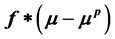 are well defined for suitable functions f, where
  is the predictable compensator of
 . Concerning the stochastic integral
 , it is well defined without any compensating of the integer valued measure
 .
.
Keywords:
Random Measures, Semimartingales, Stochastic Integrals, Predictable Stopping Times

1. Introduction
Stochastic calculus deals with stochastic integrals and stochastic processes constructed by making use of these integrals.
Initially the stochastic integrals were defined with respect to the Wiener process and the Poisson measures by K. Ito (see [1] ). An important contribution in the theory of stochastic processes based on stochastic integrals belongs to A. V. Skorokhod [2] (see also I. I. Gihman and A. V. Skorokhod [3] ).
The Poisson measures are generated by jumps of stochastically continuous independent increments processes (IIP’s). Note that up to subtract a deterministic function, any IIP is a semimartingale. These processes may admit a countable number of small jumps on any finite time interval. For any such process X, the series of jumps
 (1)
(1)
diverges a.s. for any , where
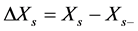 . This kind of series converges only in the case when the jumps are bounded from zero, i.e.
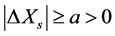 . As consequence, if
  is the Poisson measure generated by X:
 (2)
(2)
where 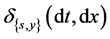 is the Dirac measure at
 , then the stochastic integral
 (3)
(3)
does not exist in general case, where E is the state space of X (in particular, for , this integral equals the above series of jumps). For this reason, one must use the compensated Poisson measure
  with
with
 (4)
(4)
Then the stochastic integral
 (5)
(5)
is well defined, for a suitable predictable function . This process possesses the properties:
 (6)
(6)
 (7)
(7)
 (8)
(8)
when the stochastic integral exists.
Multiple applications of the stochastic calculus have needed an extension of random measures and stochastic integrals, in particular, to consider the integer-valued measures generated by semimartingales.
A general class of random measures suitable for construction of stochastic integrals was studied by J. Jacod [4] , R. Liptser and A. Shiryaev [5] (see also Jacod J. and Shiryaev A. [6] ). Without loss of generality, we con- sider random measures generated by jumps of càdlàg semimartingales.
Let  be an integer-valued measure generated by jumps of a semimartingale X, i.e.
 (9)
(9)
Similarly to case of the Poisson measure, the stochastic integral of kind  does not exist (except a particular case). For this reason, in [5] [7] for a suitable functions h, a stochastic integral
  is defined, where
  is a predictable compensator of the measure
 . The properties of this integral are different of those of the above integral with respect to the Poisson measure. In particular,
 (10)
(10)
We propose an alternative approach defining stochastic integrals with respect to random measures generated by jumps of semimartingales.
For any semimartingale X, there exist sequences

of totally inaccessible and predictable, respectively, stopping times (s.t.’s) which absorb all jumps of X. The graphs of all  and
and  are disjoint (see [1] ).
The important property of jumps of X at predictable s.t.’s is that, for any , the series
 (11)
(11)
converges a.s. (in contrast with the series  which diverges).
This result implies that one can define a stochastic integral with respect to the integer-valued measure generated by the jumps at predictable s.t.’s without making use of the predictable compensator.
In the paper we consider the integer-valued measures  and
and  generated by jumps of a semimartingale X at totally inaccessible and predictable, respectively, s.t.’s, and define stochastic integrals
  and
and . Note that the second integral is a local martingale or a semimartingale according to properties of the function h. For this second integral, we give necessary and sufficient conditions on the function h for which the process
  is a semimartingale. Such result was not considered earlier.
Concerning the our integral with respect to the measure  it is the same as in [4] [5] if the measure
  there has been generated only by the jumps at totally inaccessible s.t.’s, that is the process generating the measure
  has not the jumps at predictable s.t.’s.
It should be clarified the difference in results of applying the construction of stochastic integrals with respect to the measure  given in [4] [5] and that proposed in this paper for the measure
 . It turns out that the
first construction leads to addition and subtraction of the term  as, for
example, in the exponential semimartingale (see (29) and Proposition 4). In some other applications the first construction leads to addition and subtraction of the integral with respect to the compensator,  , as in the Ito formula. In our construction such a kind of addition and subtraction of some terms is not used.
As application, we revise some basic results of stochastic calculus by making use of this construction of stochastic integrals.
One of consequences of this approach is the following innovation representation of any semimartingale (see Theorem 11 and the formula (71)):
 (12)
(12)
where  are continuous processes, v is of finite variation, m is a local martingale,
  is an integer valued measure with continuous compensator
 . Note that the innovation representation is important in statistics of random processes. It was used in nonlinear filtering of diffusion processes (see R. Liptser and A. Shiryaev [8] ). The representation is similar to that of IIP’s.
This representation implies that any semimartingale X can be presented as  where
where
 , and
, and  is a quasi left continuous semimartingale,
 .
.
The paper is organized as follows.
In Section 2, we give some necessary general notions. In Section 3, the convergence of series of semi- martingale jumps at predictable s.t.’s is proved and some direct applications are discussed. Section 4 contains the construction of stochastic integrals with respect to the measures  and
and  generated by a semi- martingale X. Sections 5-6 contain the innovation presentation of semimartingales and the Ito formula, respectively, revised by using the given construction of stochastic integrals.
2. Some General Notions
Let  be a filtered probability space with
  -completed right-continuous filtration
 .
.
We denote  (resp.
 ) the optional (resp. the predictable) s-field on the product-space
 . Remind that
  is generated by the F-adapted right continuous processes having left-side limits (càdlàg );
  is generated by the F-adapted continuous processes.
Denote E the state space (usually  or
or ) and
) and  (resp.
 ) the s-field on the pro- duct-space
 :
:
 (13)
(13)
Let X be a semimartingale, . We denote
  the continuous martingale component of X and [X,X] the optional quadratic variation:
 (14)
(14)
2.1. Optional and Predictable Projections
Let X be a bounded or positive F-adapted process. There exists an  -measurable process
  (resp.
  -measurable process
 ) such that
 (15)
(15)
a.s. for any s.t. T (resp.
 (16)
(16)
a.s. for any predictable s.t. S).
The process  (resp.
 ) is called the optional (resp. the predictable) projection of X on the optional (resp. predictable) s-field. Each of these projections is unique to within modification on a P-null set (see [9] ).
2.2. Random Measures
We begin this subsection with some notions and results about random measures (see the book by J. Jacod [4] for details).
Let  be the Lusin space with the borelian s-algebra (really, we use the case when
 ). A random measure
  is a family of s-finite measures
  on
on .
.
A random measure  is called to be integer-valued if
1) 
2) 
The measure  is optional (resp. predictable) if the process
  is optional (resp. predictable) for any function
  (resp.
 ).
).
2.3. Dual Predictable Projection of a Random Measure
Now we give a basic result on existence of a dual predictable projection (a predictable compensator) of a random measure.
Theorem 1. Let  be a random measure for which there exists
  -predictable partition
  of
of  such that
 , for any n. Then there exists a unique predictable measure
  (called a pre- dictable compensator of
 ) verifying the property:
1) (17)
(17)
for  with
with  for any n.
2) If  -measurable function W is such that the process
  is of locally integrable variation,
  , then the property 1) is equivalent to the following one:
 (18)
(18)
where  is the dual predictable projection of the process
 .
.
If  is an integer-valued measure generated by a semimartingale X, then for any predictable s.t. S,
 (19)
(19)
3. Convergence of Series of Semimartingale Jumps at Predictable s.t.’s
Let  be a semimartingale,
 (20)
(20)
where m is a local martingale,  , A is a process of finite variation on any finite interval a.s.,
  ,
,
i.e.  a.s. for any
 .
.
There exist the sequences
 (21)
(21)
of totally inaccessible and predictable stopping times (s.t.’s), respectively, which absorb all jumps of X. The graphs of all  and
and  are disjoint.
From finiteness of the optional quadratic variation  it follows that, for any
 ,
,
 (22)
(22)
For the jumps at the predictable s.t.’s we get the following stronger result.
Theorem 2. Let  be a semimartingale from (20) and
  be the sequence of predictable s.t.’s from (21). Then the series
 (23)
(23)
converges a.s. for any , and the process
  is a semimartigale,
 .
.
Proof. We consider some particular cases (see [7] ). For any ,
, .
.
1) The series  converges absolutely a.s.. Hence the process
  is of finite
variation on any finite interval.
2) Let m belongs to . Even if it means localizing we suppose
  with
with . This norm is equivalent to
 . We set
 . Then, for
 ,
,
 (24)
(24)
when , where the second equality follows from orthogonality of martingales
 (25)
(25)
and convergence to 0 follows from integrability of optional quadratic variation, . Hence
  converges in
 . Choosing a subsequence of indexes n we obtain that this series converges a.s. Hence the process
  is a martingale from
 .
.
This two cases imply that the process  is a semimartingale.
3) Let m be from . Due to the Davis decomposition, there exists a sequence of s.t.’s
  such that
  a.s. and , for any k, one has
 , where
  (see [10] ). The pre- vious particular cases provide, for any k,
 (26)
(26)
Since  a.s., we obtain the statement of theorem. ,
3.1. Applications of Theorem 2
We shall give two applications of this result.
Proposition 3. Let X be a semimartingale from (20) and  be the sequence of predictable s.t.’s from (21). Then X admits a decomposition
 (27)
(27)
where  is a quasi left continuous semimartingale,
 (28)
(28)
The decomposition is unique to within modification on a  -null set.
Proof. The semimartingale  absorbs all jumps of X at predictable s.t.’s. Hence the process
  is a quasi left continuous semimartingale. ,
The exponential semimartingale. Let X be a semimartingale. It is well-known the exponential semi-martingale (called the Dolean exponential)
 (29)
(29)
where the infinite product converges a.s. for any  and it is the process of finite variation. The semi- martingale Z is a unique solution of the equation
 (30)
(30)
The following result gives an other form of the solution of Equation (30) taking into account the Theorem 2.
Proposition 4. Let X be a semimartingale from (20) and  be the sequences of predictable and totally inaccessible, respectively, s.t.’s from (21). Then the exponential semimartingale
 (31)
(31)
is the solution of the Equation (30), where , the product
  con- verges a.s. for any
  and it is a semimartingale, the product
  is the process of
finite variation for any .
.
In particular, if the semimartingale X has the jumps only at predictable s.t.’s :
:
 (32)
(32)
then the exponential semimartingale  is as follows:
 (33)
(33)
Proof. Due to Theorem 2 and Proposition 3, the Dolean exponential (29) can be presented as  in (31).
One has to show only that the product  converges a.s. and it is a semimartingale. To that
end, note that there is a finite number of jumps such that . Hence the process
  with
with
 (34)
(34)
is of finite variation for any .
.
Denote
 (35)
(35)
For the process  one has
 (36)
(36)
where . The first series on the right-hand size converges a.s. and it is a semimartingale, due to Theorem 2, and the second one converges absolutely and it is a process of finite variation being bounded by the series
 (37)
(37)
Therefore, the process  is a semimartingale and by the Ito formula (see Lemma 2), the processes
is a semimartingale as well. The equality  yields the result. ,
Remark 1. It should be noted that in the exponential (29) the term  is presented two
times: the first time in the first exponential, since , and the second time it is in the infinite product as
 . By dropping these two terms we come to (31).
4. Stochastic Integrals with Respect to the Random Measures m − mp and p
Let X be a semimartingale with values in E.
On the product space , we define two integer-valued random measures
 (38)
(38)
where  is the Dirac measure,
  is the indicator of the set
 .
.
Let us set
 (39)
(39)
We denote by  (resp.
 ) the predictable compensator of
  (resp., of
 ). Since X has not a jump at the time
 ,
,
 (40)
(40)
Proposition 5. The measure  is continuous, i.e. the process
  is continuous for any
 .
.
Proof For any predictable s.t. S and any , one has
  since
since . This
implies . From here it follows that
  a.s., since
 . This
means that the process  has not jumps at any predictable stopping time. ,
Proposition 6. The set  is sparse. Moreover
 (41)
(41)
Proof. The definition of  implies
 . Hence J is sparse.
Let S be a predictable s.t. such that . Then
  a.s. That is
if , then
 . This implies
 . Reciprocally, let S be a predictable s.t. such that
 . Then
  a.s.. This implies
  a.s. and this means that J is a predictable support of
 . Note that
  means
means , where
  is the projection of the set
  onto
onto . ,
. ,
Our aim is to define stochastic integrals of following kinds:

where  denotes the space of purely discontinuous local martingales.
In order to define a stochastic integral which is a purely discontinuous local martingale, the following result is the basic one.
Lemma 1. Let Y be an optional process. For existence a unique process  possessing the property
  it is necessary and sufficiently that
1) ,
,
2) .
.
For the proof of this result (see J. Jacod [4] , Theorem 2.45).
4.1. Stochastic Integrals with Respect to the Random Measures m − mp.
Let us introduce the functional spaces, for ,
,
 (42)
(42)
where  (resp.
 ) denote the space of processes of integrable (resp. locally integrable) variation.
By making use of Lemma 1, we obtain the following results about stochastic integrals with respect to the random measure . This integral is the same that is given in [4] [5] , when the predictable compensator
  is continuous (see Proposition 5).
Theorem 7. Let f be  -measurable function. For existence a unique process
  possessing the property
 (43)
(43)
it is necessary and sufficiently that .
.
The process Z is called to be the stochastic integral .
.
Proof. Sufficiency: Since , one has to prove that the predictable projection

Taking into account that, for any predictable stopping time S and any totally inaccessible stopping time T,  , we obtain
 (44)
(44)
 (45)
(45)
Due to Lemma 1, this condition and that of  provide existence of unique
  which is called the stochastic integral
 .
.
Necessity: It follows from Lemma 1. ,
Remark 2. We have for optional quadratic variation of :
:
 (46)
(46)
Remark 3. If , then
  is a square integrable martingale,
  , and
, and
 (47)
(47)
The condition  is an optional integrability condition with respect to the measure
 . The next result gives predictable integrability conditions.
Proposition 8. Let f be  -measurable function and
 . The following conditions are equivalent:
1) 
2) 
3 
4) 
Proof. Due to Theorem 1, for any  -measurable function W,
 (48)
(48)
1)Û2): Denote . It is easy to see the following equivalences
 (49)
(49)
where  is the space of the optional processes of locally finite variation.
1) Þ 2): Even if it means localizing, we suppose . This implies
  by (49). The sequence of s.t.’s
  increases a.s. to
  and
and
 (50)
(50)
since  due to the inequality
 .
.  being integrable, one has
 .
.
This and (48) imply (ii).
1) Ü 2): Even if it means localizing, we suppose . This implies
  by (49). The sequence of s.t.’s
  increases a.s. to
 . Since
 , one has
 (51)
(51)
This implies , hence 1).
The equivalences 2Û 3), 2)Û 4) follow from the inequalities:
 (52)
(52)
and if ,
,
 (53)
(53)
4.2. Stochastic Integrals with Respect to the Random Measure p
Now we consider stochastic integrals with respect to the measure p which is a purely discontinuous local martingale.
Theorem 9. Let h be  -measurable function. Denote, for
 ,
,
 (54)
(54)
where
 (55)
(55)
For existence a unique process  possessing the property
 (56)
(56)
it is necessary and sufficiently that .
.
The process Z is called to be the stochastic integral .
.
Proof. We have to verify only the condition . One has
 (57)
(57)
Due to Theorem 1, . This implies
 . Now the result follows from Lemma 1. Note that
 (58)
(58)
since .
.
Remark 4. In the defined stochastic integral , the random measure
  is not a martingale measure. One can define a stochastic integral
  of predictable function h with respect to a martingale measure
 . Indeed, due to Lemma 1 for existence a unique process
  possessing
the property , it is necessary and sufficiently that
 .
.
The process Z is called to be the stochastic integral  (see [4] [5] ). Since the jumps are the same,
  , we have two different forms of the same process
  and
and .
.
Remark 5. For the optional quadratic variation of  one gets:
 (59)
(59)
If , then one has for the predictable quadratic variation
 (60)
(60)
4.3. Semimartingale Stochastic Integrals
We have studied stochastic integrals which are local martingales. Now we consider a stochastic integral with respect to the integer-valued measure p that is a semimartingale.
Denote by  the space of semimartingales that are purely discontinuous with jumps at predictable s.t.’s and by
  the sub-set of special semimartingales,
 .
.
We denote  the space of
  -measurable functions h:
 (61)
(61)
Theorem 10. Let  be
be  -predictable function. For existence a unique semimartingale
  with the jumps at predictable s.t.’s
 (62)
(62)
it is necessary and sufficiently that  and
and .
.
The semimartingale Z is denoted .
.
Proof (Þ): Let  with jumps
 (63)
(63)
at predictable s.t.’s S. Since Z is a special semimartingale,  , where
 . One has
 . From here, since
  and A is predictable, we get
 (64)
(64)
Therefore,  and
and .
.
Further,  , since
  where
where
 ,
,  is the complement of J. Therefore, as
 , one has
 (65)
(65)
(Ü): Conditions of theorem implies existence of martingale  with jumps at pre- dictable s.t.s. The process
 (66)
(66)
Corollary 1. Let  be
be  -predictable function. For existence a unique semimartingale
  with the jumps at predictable s.t.’s
 (67)
(67)
it is necessary and sufficiently that  and
and , for some
 .
.
The semimartingale Z is denoted .
.
5. Innovation Presentation of Semimartingales
Let , i.e.
 (68)
(68)
where . Denote
  the filtration generated by the semi-
martingale X, . By
. By  we denote the filtration obtained from
  by making right-hand continuity and completeness.
Let  (resp.
 ) be the optional (resp. predictable) s-field on
  related to the filtration
 . Note that in (68), the right-hand terms A and M are not
  -measurable in contrast with the left-hand process X. We shall give the so-called innovation presentation of X that provides the decomposition of X in the sum of
  -measurable components. This presentation is important, for example, in statistics, when every estimator based on X should be presented in terms of
  -measurable components of X.
We begin with sequences  and
and  of predictable and totally inaccessible, respectively,
  - stopping times which absorb all discontinuity times of X. Define two random integer-valued measures
  and
and  on
on :
:
 (69)
(69)
 (70)
(70)
Denote by  the
the  -predictable compensator of the measure
 .
.
The next result clarifies the  -structure of X.
Theorem 11. Let  be a semimartingale. Then
 (71)
(71)
where
 (72)
(72)
 (73)
(73)
 (74)
(74)
where  are continuous processes,
 .
.
Proof. From the definition of the measure , one has, for any
 ,
,
 (75)
(75)
and due to Theorem 1, the stochastic integral in the right-hand side is a  -measurable semimartigale,
 .
.
Denote
 (76)
(76)
The process  is a
is a  -measurable semimartigale being the sum of a
  -local martingale and a
  -measurable process of locally finite variation.
  absorbs all jumps of X at times
 . Indeed
 (77)
(77)
Then the process
 (78)
(78)
is an  -special continuous semimartingale. Therefore
 , v is continuous and belongs to
 . Taking the
  -duel predictable projection we obtain
 (79)
(79)
Remark 6. Taking into account that the last term in (71) has the form
 (80)
(80)
one can say that the structure of càdlàg semimartigales is similar to that of càdlàg processes with independent increments.
Indeed, up to subtraction a deterministic function, any càdlàg process with independent increments Y can be presented as follows
 (81)
(81)
where  is a deterministic continuous process of finite variation,
  is a continuous local gaussian martingale,
  is a Poisson measure,
  and
and  is a sequence of deterministic s.t.’s (see [11] [12] ).
Remark 7. It is known that the semimartigale property is stable with respect to a narrowed filtration (see, for example, [4] ). In our case, the result claims that any  -measurable process from
  belongs also to
 .
.
6. The Ito Formula
Lemma 2. Let  be a twice continuously differentiable function and Y be a semimartingale,
 (82)
(82)
where  are the components in the innovation presentation (71) of a semi-
martingale X;  are predictable functions,
  a.s. for any
 ;
;
 . Then the process
  is a semimartingale and, for any
 ,
,
 (83)
(83)
where .
.
Proof. The Ito formula is well known when the semimartingale (82) has not the last term .
.
We explain only that the last term in (83) is well defined and it is a semimartingale. Denote
 and
and . Let
. Let . One has
 (84)
(84)
where
 (85)
(85)
For  we have to verify the conditions of corollary of theorem 10. One has
 (86)
(86)
 (87)
(87)
Taking into account that  a.s. and the property
  yield
yield .
.
Let us show that . One has
 (88)
(88)
since  a.s., and
 (89)
(89)
since the process  has a finite number of jumps in absolute value greater than 1 on any finite time interval. As
 , one obtains
 . ,
. ,
7. Conclusion
We have proposed an alternative approach to constructing stochastic integrals with respect to random measures generated by the jumps of semimartingales. We consider two random measures,  (resp.
 ) is generated by the jumps at totally inaccessible (resp. predictable) s.t.’s, and we define stochastic integrals
  and
and . The first stochastic integral possesses the properties similar to that of integral with respect to the Poisson measure. The integral
  can be a local martingale or semimartingale following the properties of the function h. The last integral is a series of random variables, since the measure
  and the compensator
  are discrete on the time space. These properties of stochastic integrals make more clear the structure of semi-martingales and make easier their applications to discontinuous phenomena, in particular, to financial problems.
Acknowledgements
The author thanks the referee for valuable comments and suggestions, and the Editor for kind invitation to this Special Issue.
Cite this paper
Leonid Galtchouk, (2016) About Stochastic Calculus in Presence of Jumps at Predictable Stopping Times. Journal of Mathematical Finance,06,443-456. doi: 10.4236/jmf.2016.63035
References
- 1. Ito, K. (1951) On Stochastic Differential Equations. Memoirs of the American Mathematical Society, 4, 1-51.
http://dx.doi.org/10.1090/memo/0004 - 2. Skorokhod, A.V. (1965) Studies in the Theory of Random Processes. Addison-Wesley, Reading.
- 3. Gihman, I.I. and Skorokhod, A.V. (1968) Stochastic Differential Equations. Naukova Dumka, Kiev.
- 4. Jacod, J. (1979) Calcul stochastique et problème de martingales. Springer-Verlag, NY.
http://dx.doi.org/10.1007/BFb0064907 - 5. Liptser, R. and Shiryaev, A. (1986) Theory of Martingales. Nauka, Moscow.
- 6. Jacod, J. and Shiryaev, A. (1987) Limit Theorems for Random Processes. Springer-Verlag, NY.
http://dx.doi.org/10.1007/978-3-662-02514-7 - 7. Galtchouk, L. (1980) On the Predictable Jumps of Martingales. Control and Information, 25, 50-56.
http://dx.doi.org/10.1007/bfb0003997 - 8. Liptser, R. and Shiryaev, A. (1974) Statistics of Random Processes. Nauka, Moscow.
- 9. Dellacherie, K. (1972) Capacités et processus stochastiques. Springer-Verlag, NY.
- 10. Meyer, P.A. (1976) Un cours sur les integrales stochastiques. In: Seminaire de Probabilités de Strasbourg, Lecture Notes in Math, Vol. 511, Springer-Verlag, NY, 245-400.
- 11. Loeve, M. (1963) Probability Theory. 3 Edition, D. Van Nostrand Co., Ind., Princeton, NJ.
- 12. Galtchouk, L. (1976) Représentation des martingales engendrées par un processus à accroissements indépendants (Cas des martingales de carré intégrables). Ann. Inst. Henri Poincarè, XII, 199-211.