

Open Journal of Statistics
Vol.06 No.02(2016), Article ID:65872,9 pages
10.4236/ojs.2016.62024
Optimal Investment and Risk Control Strategy for an Insurer under the Framework of Expected Logarithmic Utility
Tingyun Wang
Department of Statistics, Jinan University, Guangzhou, China

Copyright © 2016 by author and Scientific Research Publishing Inc.
This work is licensed under the Creative Commons Attribution International License (CC BY).
http://creativecommons.org/licenses/by/4.0/



Received 2 March 2016; accepted 23 April 2016; published 26 April 2016
ABSTRACT
In this paper, we consider an insurer who wants to maximize its expected utility of terminal wealth by selecting optimal investment and risk control strategies. The insurer’s risk process is modeled by a jump-diffusion process and is negatively correlated with the returns of securities and derivatives in the financial market. In the financial model, a part of insurers’ wealth is invested into the financial market. Using a martingale approach, we obtain an explicit solution of optimal strategy for the insurer under logarithmic utility function.
Keywords:
Jump-Diffusion Process, Logarithmic Utility, Martingale Approach

1. Introduction
In the past two decades, more and more attention has been paid to the problem of optimal investment in financial markets for an insurer. Indeed, this is a very important portfolio selection problem for the insurer from a point of finance theory. Merton (1969) [1] first used stochastic control theory to solve consumption and investment problem in framework of continuous financial market. Based on the Merton’s work, Zhou and Yin (2004) [2] , and Sotomayor and Cadenillas (2009) [3] considered consumption/investment problem in a financial market with regime switching. Under the mean-variance criterion and the utility maximization criterion, respectively, they obtained explicit solutions. In view of an external risk which can be insured against by purchasing insurance policy into Merton’s framework, Moore and Young (2006) [4] cooperated and studied optimal consumption, investment and insurance problem. Following Moore and Young (2006) [4] , Perera (2010) [5] resolved the same problem in a more general Levy market. Along the same work, many researchers applied an uncontrollable risk process to Merton’s model, such as Yang and Zhang (2005) [6] . They considered stochastic control problem for optimal investment strategy without consumption under a certain criteria.
For an insurer, since reinsurance is an important tool to manage its risk exposure, optimal reinsurance problem should be considered carefully. This issue implies that the insurer has to select reinsurance payout for certain financial objectives. The classical model for risk in the insurance literatures is Cramer-Lundberg model, which uses a compound Poisson process to measure risk. Based on the limiting process of compound Poisson process, Taksar (2000) [7] wrote the paper about optimal risk and dividend distribution control. Following his same vein, recent researches started to model the risk by diffusion process or a jump-diffusion process; see, e.g. Wang (2007) [8] and Zou (2014) [9] . Considering both proportional reinsurance and step-loss reinsurance, Kaluszka (2001) [10] researched optimal reinsurance in discrete time under the mea-variance criterion. What’s more, recent generalizations in modeling optimal reinsurance process include incorporating regime switching, and interest rate risk and inflation risk; see Zhuo et al. (2013) [11] Guan and Liang (2014) [12] respectively.
In this paper, the model and optimization problem are different from others. Firstly, it is not total wealth of insurer invested, but a part of wealth invested. So in this model, we can obtain the optimal property of the total wealth. Secondly, different from Merton’s work, we use a jump-diffusion process to model an insurer’s risk. Lastly, we regulate the insurer’s risk by controlling the number of polices.
This paper is organized as follow. In Section 2, we formulate investment and risk control problem and describe the financial model and risk process model. The explicit solution of optimal investment and risk control strategy for logarithmic utility is derived in Section 3. In Section 4, we conduct a sensitive analysis. Conclusions of the research are reached in Section 5.
2. The Financial Model and the Risk Process Model
Suppose that there are two assets for investment in the financial market. One is a riskless asset with price process  and the other is a risky asset with price process
 . The dynamic of
  and
and  are give by
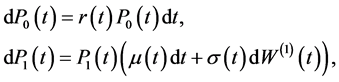 (2.1)
(2.1)
respectively, where  and
and  are positive bounded functions and
  is a standard Brownian motion. The initial conditions are
  and
and 
For an insurer, most of its incomes come from writing insurance policies, and we denote the total outstanding number of policies at time t by . To simplify our analysis, we assume that the insurer’s average premium for per policy is p, so the total incomes from selling insurance policies over the time period
  is given by
A classical risk model for claims is compound Poisson model, in which the claim for per policy is given by  where
where  is a series of independent and identically distributed random variables, and
  is a Poisson process independent of
 . If the mean of
  and the intensity of
  are finite, such compound Poisson process is a Levy process with finite Levy measure. According to Oksendal and Sulem (2005, Theorem 1.7) [13] , a Levy process can be decomposed into three components, a linear drift part, a Brownian motion part and a pure jump part. Based on this theorem, we suppose the insurer’s risk for per policy is given by
 (2.2)
(2.2)
where  is a standard Brownian motion and N is a Poisson process defined on the given filtered space, respectively. We assume that
  are all positive constants. As Stein (2012) [14] considered, we assume
 (2.3)
(2.3)
where  and
and  is another standard Brownian motion, independent of
 . We also suppose that the Poisson process N has a constant intensity
 , and is independent of both
  and
and .
.
For an insurer, it should be noted that it is impossible for an insurer to invest its total wealth. At time t, we denote  as a part of the insurance wealth invested. Under this consideration, we let
  and
and  be the amount invested in the risky asset and the total liabilities respectively. For a strategy
  the terminal wealth process
  is driven by the following SDE:
 (2.4)
(2.4)
with initial wealth 
Following Stein (2012, chapter 6) [14] , we define the liability radio of liabilities over surplus as 
 . We denote
  as the total proportion of wealth invested,
  as the proportion of wealth invested in the risky asset at time t. Then for a control
 , we have
 . Then we can rewrite SDE (2.4) as
 (2.5)
(2.5)
with initial wealth .
.
In this model, as Zou (2014) [9] considered, to compensate extra risk by extra return, the coefficients must satisfy the following conditions:  and
and .
.
Define the criterion function as , where
  is the terminal time, and
  is a
is a
conditional expectation under probability measure P given . The utility function U is assumed to be a strictly increasing and concave. In this paper, the choice for the utility function in economics and finance is
 . We denote
  as the set of all admissible controls with initial wealth
 . In Section 3, we give the formal definition of
  when
when  and choose either u or
  to be a control. The value function is defined by
 (2.6)
(2.6)
where u will be changed accordingly if the control we choose is .
.
3. The Analysis for 
Firstly formulate the stochastic control problem. The problem in this model is to select an admissible control  (or
(or ) that attains the value function
 . The control
  (or
(or ) is called an optimal control or an optimal policy. We choose u as an admissible control and for every
  is progressively measurable and
  satisfies the following conditions,
 . (3.1)
Furthermore, we assume  while
while  to avoid the possibility of bankruptcy at jumps.
As we know that for , the SDE (2.5) satisfies the linear growth condition and Lipschitz continuity condition, thus by Theorem 1.19 in Oksendal and Sulem (2005) [13] , there exists a unique solution
  such
such
that  for all
Applying Ito’s formula to , we can obtain that
 (3.2)
(3.2)
where  is the compensated Poisson process of N and is a martingale under P. Let
 (3.3)
(3.3)
Proposition 3.1. The associated optimal terminal wealth  is strictly positive with probability 1 under optimal control
 .
.
Proof. According to (2.5) and the Doleans-Dade exponential formula, we have that
 (3.4)
(3.4)
From (3.4), to prove  with probability 1, we just need to prove
  with probabili-
ty 1. For any ,
,  and
and  or 0, we have
  So we can obtain that
 . This implies that
  with probability 1.
Next, we will use the martingale method to get an optimal control for the SDE (2.5). To begin with, we give two important Lemmas. Lemma 3.1 gives the condition that optimal control must satisfy while Lemma 3.2 is a generalized version of martingale representation theorem.
Lemma 3.1. (Wang (2007) [8] ) If there exists a control  such that
  is con-
stant over all admissible controls, then  is optimal control.
Lemma 3.2. (Wang (2007) [8] ) There exists a predicable process  for any P-martingale Z such that for all
 for all
 . (3.5)
Now for the value function  we obtain optimal control by 3 steps.
Step 1: Conjecture candidates for optimal control .
.
Following the definition in Zou (2014) [9] , we also define that
 and
and  (3.6)
(3.6)
for any stopping time  almost surely. According to the Proposition 3.1, the process Z is a strictly positive and square-integral martingale under P with
 , for all
 . Define a new measure Q by
 .
.
From the SDE (2.4), we have
 (3.7)
(3.7)
From the above expression of X and Lemma 3.1, for all admissible strategies, we have
 (3.8)
(3.8)
is constant.
Define . Since Z is a P-martingale, so is C.
According to Lemma 3.2, there exists a predictable process  such that
 (3.9)
(3.9)
From the Doleans-Dade exponential formula, we can obtain that
 (3.10)
Through Girsanov’s Theorem,  is a Brownian motion under Q and
 is a martingale under Q.
For a stopping time  let
let , that is
  and
and ,which is an admissible
control. By substituting this control into (3.8), we have  is a constant for all
 which implies that
  is a Q-martingale.
So  must satisfy the equation that
 (3.11)
Let  and
and . By a similar way as above, we have
 (3.12)
is a Q-martingale, which in turn yields that
 (3.13)
From the SDE (2.5), we can derive to ,
,
 (3.14)
Comparing the  and
and  terms in (3.10) with (3.14), we obtain that
 (3.15)
By substituting (3.15) into (3.11) and (3.13), we have that
 (3.16)
 (3.17)
which the coefficients define as
 (3.18)
With the conditions above, solve the Equation (3.17) to get . Since
 ,
,
 , (3.19)
where 
According to the (3.19), we can derive  with (3.16).
Then we choose that  and
and  to get
 . Similarly, by substituting this control into (3.8), we have
 (3.20)
so we can have  by the Equation (3.20).
Step 2: Verify that ZT defined by (3.10) is consistent with its definition, for  given in (3.15) and
 defined by (3.16), (3.17) and (3.20).
First rewrite (3.14) as
 (3.21)
where
 (3.22)
Then substituting (3.15) back into (3.10), we can obtain  where
where
 (3.23)
is constant.
According to the (3.6), Z is a P-martingale and , then
 . Therefore,
 (3.24)
so Z given by (3.10) with  provided by (3.15) is the same as the definition in (3.6).
Step 3: Prove that  satisfies the Lemma 3.1.
For any , we give a definition for a new process
  as follows
 (3.25)
From the Equation (3.13), the above  issue will be 0, and then the process
  is a local martingale. As
 is a deterministic and bounded, Z is a square-integral martingale under P, that is to say
 . Meantime, for all
 , we can obtain that
 , so is
 . Therefore, we can derive
 , (3.26)
which make possible for us to conclude that the family  is uniformly integral under Q for any stopping time
 . Thus
  is indeed a martingale under Q with
  for any
 . So we can prove that Lemma 3.1 is satisfied. Therefore, we have an optimal control for the function
 .
.
4. Sensitive Analysis
In this part, we analyze the influence of the market parameters on the optimal control. To simplify the analysis, we assume that the coefficients are constant in the financial market and the parameters are given in Table 1 which was also used in Zou (2014) [9] . From Table 1, we know that the variables  and
and  are not fixed, so we shall analyze the impact of
  and
and  on the optimal control.
Firstly, we fix  to research the influence of
 . The optimal control of
  are given by (3.16), (3.17), (3.20), respectively. We draw the graph of optimal control with different values of
  in Figure 1. From Figure 1, we can know that optimal investment proportion in the securities
  is an increasing function of
 , and the optimal liability ratio
  is like a convex function of
 . Besides, the optimal total proportion of wealth invested
  is decreasing when
  and then increasing. What’s more, the graph shows that
 . The reason for this behavior comes from the equations of R and
  in (2.2). For our parameters, there is much uncertainty in the insurance market when
  belongs to the interval
 , and hence
  takes a minimum value in that interval. While
  takes value near 0 there is little uncertainty, so
  takes a maximum value. Since
  is calculated from the equation (3.16),
  also takes a maximum value when
  takes value near 0.
Secondly, we fix  to analyze the impact of
 . Consider
  which include the previous situation
 . We have a graph of optimal control with different value of
  in Figure 2. Figure 2 shows that the optimal investment proportion in the securities
  is an increasing function of
 , and the optimal total proportion of wealth invested
  and the optimal liability ratio
  are both decreasing function of
 . This situation is supported by the economic interpretation of
 . In this model, the greater
 , the more risk for insurers. So, when
  rises, a risk averse insurer reduces its optimal liability ratio. As the optimal investment expressions (3.17), we know that when
  raises,
  increases as well. Besides, according to the optimal total proportion of wealth invested
  and the optimal liability ratio
  expressions (3.20) and (3.17) respectively, we know that when
  rises,
  and
and  decreases however.
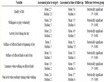
Table 1. Market parameters.

Figure 1. Impact of  on the optimal control.

Figure 2. Impact of  on the optimal control.
5. Conclusions
In our model, the insurer’s risk process obeys a jump-diffusion process, and it is not total its capital to invest but a part of wealth to invest in financial market. Besides, we consider that an insurer wants to maximize its expected utility of terminal wealth by selecting optimal control. According to the sensitive analysis, we know that the optimal total proportion of wealth invested  and the optimal liability ratio
  are convex functions of
 , but they are both decreasing functions of
 . The optimal investment proportion in the securities or derivatives
  is an increasing function for both
  and
and , and
, and . Furthermore, we find that the higher risk insurers get, the lower liability ratio insurers select.
The limitation in this paper is that the liability is an average for per policy, which conflicts with the fact that the premium for per policy changes all the time for different insurance. Therefore we can research the liability described with a linear function in the model. Besides, the model proposed in the paper can be further explored in another ways as well, something we plan to do in future work.
Acknowledgments
The author thanks to the editor and the reviewers for their thoughtful comments that help the author improve a prior version of this article.
Cite this paper
Tingyun Wang, (2016) Optimal Investment and Risk Control Strategy for an Insurer under the Framework of Expected Logarithmic Utility. Open Journal of Statistics,06,286-294. doi: 10.4236/ojs.2016.62024
References
- 1. Merton, R. (1969) Lifetime Portfolio Selection under Uncertainty: The Continuous Time Case. Review of Economics and Statistics, 51, 227-257.
http://dx.doi.org/10.2307/1926560 - 2. Zhou, X.Y. and Yin, G. (2004) Markowitz’s Mean-Variance Portfolio Selection with Regime Switching: A Continuous-Time Model. SIAM Journal on Control and Optimization, 42, 1466-1482.
http://dx.doi.org/10.1137/S0363012902405583 - 3. Sotomayor, L. and Cadenillas, A. (2009) Explicit Solutions of Consumption Investment Problems in Financial Market with Regime Switching. Mathematical Finance, 19, 251-279.
http://dx.doi.org/10.1111/j.1467-9965.2009.00366.x - 4. Moore, K. and Young, V. (2006) Optimal Insurance in a Continuous-Time Model. Insurance: Mathematics and Economics, 39, 47-48.
http://dx.doi.org/10.1016/j.insmatheco.2006.01.009 - 5. Perera, R. (2010) Optimal Consumption, Investment and Insurance with Insurable Risk for an Investor in a Levy Market. Insurance: Mathematics and Economics, 46, 479-484.
http://dx.doi.org/10.1016/j.insmatheco.2010.01.005 - 6. Yang, H. and Zhang, L. (2005) Optimal Investment for Insurer with Jump-Diffusion Risk Process. Insurance: Mathematics and Economics, 37, 615-634.
http://dx.doi.org/10.1016/j.insmatheco.2005.06.009 - 7. Taksar, M. (2000) Optimal Risk and Dividend Distribution Control Models for an Insurance Company. Mathematical Methods of Operations Research, 51, 1-42.
http://dx.doi.org/10.1007/s001860050001 - 8. Wang, Z., Xia, J. and Zhang, L. (2007) Optimal Investment for an Insurer: The Martingale Approach. Insurance: Mathematics and Economics, 40, 322-334.
http://dx.doi.org/10.1016/j.insmatheco.2006.05.003 - 9. Zou, B. and Cadenillas, A. (2014) Optimal Investment and Risk Control Policies for an Insurer: Expected Utility Maximization. Insurance: Mathematics and Economics, 58, 57-67.
http://dx.doi.org/10.1016/j.insmatheco.2014.06.006 - 10. Kaluszka, M. (2001) Optimal Reinsurance under Mean-Variance Premium Principles. Insurance: Mathematics and Economics, 28, 61-67.
http://dx.doi.org/10.1016/s0167-6687(00)00066-4 - 11. Zhuo, J., Yin, G. and Wu, F. (2013) Optimal Reinsurance Strategies in Regime-Switching Jump Diffusion Model: Stochastic Differential Game Formulation and Numerical Methods. Insurance: Mathematics and Economics, 53, 733-746.
http://dx.doi.org/10.1016/j.insmatheco.2013.09.015 - 12. Guan, G.H. and Liang, Z.X. (2014) Optimal Reinsurance and Investment Strategies for Insurer under Interest Rate and Inflation Risks. Insurance: Mathematics and Economics, 55, 105-115.
http://dx.doi.org/10.1016/j.insmatheco.2014.01.007 - 13. Oksendal, B. and Sulem, A. (2005) Applied Stochastic Control of Jump Diffusions. Springer, New York.
- 14. Stein, J. (2012) Stochastic Optimal Control and the U.S. Financial Debt Crisis. Springer, New York.
http://dx.doi.org/10.1007/978-1-4614-3079-7