

Journal of Applied Mathematics and Physics
Vol.04 No.07(2016), Article ID:68918,14 pages
10.4236/jamp.2016.47135
p-Capitulation over Number Fields with p-Class Rank Two
Daniel C. Mayer
Graz, Austria



Received 12 May 2016; accepted 12 July 2016; published 15 July 2016

ABSTRACT
Theoretical foundations of a new algorithm for determining the p-capitulation type  of a number field K with p-class rank
  are presented. Since
  alone is insufficient for identifying the second p-class group
  of K, complementary techniques are deve- loped for finding the nilpotency class and coclass of
 . An implementation of the complete algorithm in the computational algebra system Magma is employed for calculating the Artin pattern
  of all 34631 real quadratic fields
 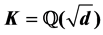 with discriminants
  and 3-class group of type (3, 3). The results admit extensive statistics of the second 3-class groups
  and the 3-class field tower groups
 .
.
Keywords:
Hilbert p-Class Field Tower, Maximal Unramified Pro-p Extension, p-Capitulation of Class Groups, Real Quadratic Fields (3, 3)

1. Introduction
Let p be a prime number. Suppose that K is an algebraic number field with p-class group  and p-elementary class group
 . By class field theory ([1] Cor. 3.1, p. 838), there exist precisely
 distinct (but not necessarily non-isomorphic) unramified cyclic extensions
 ,
,  , of
, of
degree p, if K possesses the p-class rank . For each
 , let
, let  denote the class extension homomorphism induced by the ideal extension monomorphism ([2] 1, p. 74). We let
 , resp.
 , be the group of units of K, resp.
 .
.
Proposition 1.1. (Order of )
)
The kernel  of the class extension homomorphism associated with an unramified cyclic extension
  of degree
  is a subgroup of the p-elementary class group
  and has the
  -dimension
 (1)
(1)
Proof. The proof of the inclusion  was given in ([2] 1, p. 74) for
 , and generally in ([3] Prop. 4.3.(1), p. 484). The relation
  for the unramified extension
  is equivalent to the Theorem on the Herbrand quotient ([4] Thm. 3, p. 92) and was proved in [[3] Prop. 4.3, pp. 484-485]. According to Hilbert’s Theorem 94 ([5] p. 279), the kernel
  cannot be trivial. □
Definition 1.1. For each , the elementary abelian p-group
  is called the p-capitulation kernel of
 . We speak about total capitulation [6] [7] if
 , and partial capitulation if
 .
.
If  is an odd prime, and
  is a quadratic field with fundamental discriminant
  and p-class rank
 , then there arise the following possibilities for the p-capitulation kernel in any of the un- ramified cyclic relative extensions
  of degree p, which are absolutely dihedral extensions
  of degree 2p, according to ([3] Prop. 4.1, p. 482).
Corollary 1.1. (Partial and total p-capitulation over  with
with )
)
 (2)
(2)
The p-capitulation over K is total if and only if K is real with , and
, and  is of type
 .
.
Proof. In this special case of a quadratic base field K, the extensions ,
,  , are pairwise non- isomorphic although they share a common discriminant which is the pth power
  of the fundamental discriminant of K [[1] Abstract, p. 831]. If K is complex, the unit norm index equals 1, since the cyclotomic quadratic fields do not possess unramified cyclic extensions of odd prime degree. If K is real, we have

 is of type
 , and
, and 

 is of type
  [[3] Prop. 4.2, pp. 482-483]. □
The organization of this article is the following. In §2, basic theoretical prerequisites for the new capitulation algorithm are developed. The implementation in Magma [8] consists of a sequence of computational techniques whose actual code is given in §3. The final §4 demonstrates the results of an impressive application to the case , presenting statistics of all 3-capitulation types
 , Artin patterns
 , and second 3-class groups
  of the 34631 real quadratic fields
  with discriminants
  and 3-class group of type
 , which beats our own records in [3] §6 and [9] §6. Theorems concerning 3-tower groups
  with derived length
  perfect the current state of the art.
2. Theoretical Prerequisites
In this article, we consider algebraic number fields K with p-class rank , for a given prime number p. As explained in §1, such a field K has
  unramified cyclic extensions
  of relative degree p.
Definition 2.1. By the Artin pattern of K we understand the pair consisting of the family  of the p-class groups of all extensions
  as its first component (called the transfer target type) and the p-capitulation type
  as its second component (called the transfer kernel type),
 (3)
(3)
Remark 2.1. We usually replace the group objects in the family , resp.
 , by ordered abelian type invariants, resp. ordered numerical identifiers ([10] Rmk. 2.1).
We know from Proposition 1.1 that each kernel  is a subgroup of the p-elementary class group
  of K. On the other hand, there exists a unique subgroup
  of index p such that
 , according to class field theory. Thus we must first get an overview of the connections between subgroups of index p and subgroups of order p of
 .
.
Lemma 2.1. Let p be a prime and A be a finite abelian group with positive p-rank and with Sylow p-subgroup . Denote by
  the complement of
  such that
 . Then, any subgroup
  of index p is of the form
  with a subgroup
  of index p.
Proof. Any subgroup S of  is of the shape
  with
with  and
and . We have
 . Since
  is coprime to p, we conclude that
  and
and . □
. □
An application to the particular case  and
and  shows that
  with
with .
.
Three cases must be distinguished, according to the abelian type of the p-class group . We first consider the general situation of a finite abelian group A with type invariants
  having p-rank
 , that is,
  ,
,  ,
,  , but
, but  for
for . Then the Sylow p-subgroup
  of A is of type
  with integer exponents
 , and the p-elementary subgroup
  of A is of type
 . We select generators
  of
of  such that
  and
and .
.
Lemma 2.2. Let p be a prime number.
Suppose that G is a group and  is an element with finite order
  divisible by p.
Then the power  with exponent
  is an element of order
 .
.
Proof. Generally, the order of a power  with exponent
  is given by
 (4)
(4)
This can be seen as follows. Let , and suppose that
  and
and , then
  . We have
 , and thus
  is a divisor of
 . On the other hand,
  , and thus
  divides
 . Consequently,
  divides
 , and thus necessarily
  divides n, since
 . This yields
 , as claimed.
Finally, put , then
 . □
. □
Now, we apply Lemma 2.2 to the situation where A is a finite abelian group with type invariants  having p-rank
 , that is,
  ,
,  ,
, .
.
Proposition 2.1. (p-elementary subgroup)
If A is generated by , then the p-elementary subgroup of A is given by
 .
.
Proof. Let generators of A corresponding to the abelian type invariants  be
be , in particular, the trailing two generators have orders
  and
and  divisible by p. Ac- cording to Lemma 2.2, the powers
  and
and  have exact order p and thus generate the p-elementary subgroup of A. □
Proposition 2.2. (Subgroups of order p)
If the p-elementary subgroup  of A is generated by
 , then the subgroups of
  of order p can be given by
  and
and  for
for .
.
Proof. According to the assumptions,  is elementary abelian of rank 2, that is, of type
 , and con- sists of the
  elements
 , in particular,
  is the neutral element. A possible
selection of generators for the  cyclic subgroups
  of order p is to take
  and
and
 for
for , since the two cycles of powers of
  and
and  for
for  meet in the neutral element only. □
Proposition 2.3. (Connection between subgroups of index p, resp. order p)
1) If , which is equivalent to
 , then
 .
.
2) If , then there exists a unique bicyclic subgroup
  of index p which contains
 . The other p subgroups U of index p are cyclic of order
 , and they only contain the unique subgroup
  of
of  generated by the
  th powers.
3) If , then each subgroup
  of index p completely contains the p -elementary subgroup
 .
.
Proof. If , then
 . Thus,
  implies
  , for each proper subgroup U.
If , then a subgroup U of index p is either of type
 , i.e., cyclic, or of type
 .
.
If , then each subgroup U of index p is either of type
  or of type
  .
.
Theorem 2.1. (Taussky’s conditions A and B, see Formula (5))
Let  be an unramified cyclic extension of prime degree p of a base field K with p-class rank
 . Suppose that
  and
and  are the subgroups of index p associated with
 , according to class field theory.
Then, we generally have , and in particular:
1) If , then
L is of type A if either  or
or , and
, and
L is of type B if .
.
2) If , let
, let  denote the unique bicyclic subgroup of index p, then
L is of type A if either  or
or  or
or  and
and , and
, and
L is of type B if  and
and .
.
3) If , then L is always of type A.
Proof. This is an immediate consequence of Proposition 2.3. □
Theorem 2.2. (Orbits of TKTs expressing the independence of renumeration)
1) If , then
  if and only if
  for some permutation
  and its ex- tension
  with
with .
.
2) If , then
  if and only if
  for two permutations
  and the ex- tensions
  with
with ,
,  , and
, and  with
with .
.
3) If , then
  if and only if
  for two permutations
  and the ex- tension
  with
with .
.
Proof. The proof for the case  was given in ([2] p. 79) and ([11] Rmk. 5.3, pp. 87-88). It is the unique case where subgroups of index p coincide with subgroups of order p, and a renumeration of the former enforces a renumeration of the latter, expressed by a single permutation
  and its inverse
 .
.
If , then the distinguished subgroups
  of index p, and
  of order p, should have the fixed subscript
 . The other p subgroups
 , resp.
 , can be renumerated completely independently of each other, which can be expressed by two independent permutations
 . For details, see ([11] Rmk. 5.6, p. 89).
In the case , finally, the
  subgroups of index p of
  and the
  subgroups of order p of
  can be renumerated completely independently of each other, which can be expressed by two in- dependent permutations
 . □
. □
3. Computational Techniques
In this section, we present the implementation of our new algorithm for determining the Artin pattern  of a number field K with p-class rank
  in MAGMA [8] [12] [13], which requires version V2.21-8 or higher. Algorithm 3.1 returns the entire class group
  of the base field K, together with an invertible mapping
  from classes to representative ideals.
Algorithm 3.1 (Construction of the base field K and its class group C)
Input: The fundamental discriminant d of a quadratic field .
.
Code:

Output: The conditional class group  of the quadratic field K, assuming the GRH.
Remark 3.1. By using the statement K: =QuadraticField(d); the quadratic field  is constructed directly. However, the construction by means of a polynomial
  executes faster and can easily be generalized to base fields K of higher degree.
For the next algorithm it is important to know that in the MAGMA computational algebra system [8], the composition ,
,  , of an abelian group A is written additively, and abelian type invariants
  of a finite abelian group A are arranged in non-decreasing order
 .
.
Given the situation in Proposition 2.1, where A is a finite abelian group having p-rank , Algorithm 3.2 defines a natural ordering on the subgroups S of A of index
  by means of Proposition 2.2, if the Sylow p-subgroup
  is of type
 .
.
Algorithm 3.2. (Natural ordering of subgroups of index p)
Input: A prime number p and a finite abelian group A with p-rank .
.
Code:


Output: Generators  of the p-elementary subgroup
  of A, two indicators, NonCyc for one or more non-cyclic maximal subgroups of
 , Cyc for one or more cyclic maximal subgroups of
 , an ordered sequence seqS of the
  subgroups of A of index p, and, if there are only cyclic maximal subgroups of
 , an ordered sequence seqI of numerical identifiers for the elements S of seqS.
Proof. This is precisely the implementation of the Propositions 2.1, 2.2 and 2.3 in MAGMA [8]. □
Remark 3.2. The modified statement seqS: =Subgroups(A: Quot:=[p,p]); yields the biggest subgroup of A of order coprime to p, and can be used for constructing the Hilbert p-class field  of the base field K in Algorithm 3.3, if the p-class group
  is of type
 .
.
The class group  in the output of Algorithm 3.1 is used as input for Algorithm 3.2. The resulting sequence seqS of all subgroups of index p in C, together with the pair
 , forms the input of Algorithm 3.3, which determines all unramified cyclic extensions
  of relative degree p using the Artin corre- spondence as described by Fieker [14].
Algorithm 3.3. (Construction of all unramified cyclic extensions of degree p).
Input: The class group  of a base field K and the ordered sequence seqS of all subgroups S of index p in C.
Code:

Output: Three ordered sequences, seqRelOrd of the relative maximal orders of , seqAbsOrd of the corresponding absolute maximal orders of
 , and seqOptAbsOrd of optimized representations for the latter.
Remark 3.3. Algorithm 3.3 is independent of the p-class rank  of the base field K. In order to obtain the adequate coercion of ideals, the sequence seqRelOrd must be used for computing the transfer kernel type
  in Algorithm 3.4. The trailing three lines of Algorithm 3.3 are optional but highly recommended, since the size of all arithmetical invariants, such as polynomial coefficients, is reduced considerably. Either the sequence seqAbsOrd or rather the sequence seqOptAbsOrd should be used for calculating the transfer target type
  in Algorithm 3.5.
Algorithm 3.4. (Transfer kernel type, ).
).
Input: The prime number p, the ordered sequence seqRelOrd of the relative maximal orders of , the class group mapping
  of the base field K with p-class rank
 , the generators
  of the p- elementary class group
  of K, and the ordered sequence seqI of numerical identifiers for the
  subgroups S of index p in the class group C of K.
Code:

Output: The transfer kernel type TKT of K.
Remark 3.4. In 2012, Bembom investigated the 5-capitulation over complex quadratic fields K with 5-class group of type  ([15] p. 129). However, his techniques were only able to distinguish between permutation types and nearly constant types, since he did not use the crucial sequence of numerical identifiers. We refined his results in ([16] §3.5, pp. 445-451) by determining the cycle decomposition and, in particular, the fixed points of the permutation types, which admitted the solution of an old problem by Taussky ([16] §3.5.2, p. 448).
Algorithm 3.5. (Transfer target type, ).
).
Input: The prime number p and the ordered sequence seqOptAbsOrd of the optimized absolute maximal orders of .
.
Code:

Output: The conditional transfer target type TTT of K, assuming the GRH.
With Algorithms 3.4 and 3.5 we are in the position to determine the Artin pattern  of the field K. For pointing out fixed points of the transfer kernel type
  it is useful to define a corresponding weak TKT
  which collects the Taussky conditions A, resp. B, of Theorem 2.1, for each extension
 :
:
 (5)
(5)
Algorithm 3.6. (Weak transfer kernel type,  , containing Taussky’s conditions A, resp. B)
Input: The indicators NonCyc, Cyc, and the TKT.
Code:

Output: The weak transfer kernel type TAB of K.
Proof. This is the implementation of Theorem 2.1 in MAGMA [8]. □
4. Interpretation of Numerical Results
By means of the algorithms in §3, we have computed the Artin pattern  of all 34,631 real quadratic fields
  with
with  in the range
  of fundamental discriminants. The results are presented in the following four tables, arranged by the coclass
  of the second 3-class group
 . Each table gives the type designation, distinguishing ground states and excited states
 , the transfer kernel type
 , the transfer target type
 , the absolute frequency AF, the relative frequency RF, that is the percentage with respect to the total number of occurrences of the fixed coclass, and the minimal discriminant MD ([17] Dfn. 5.1). Additionally to this experimental information, we have identified the group
  by means of the strategy of pattern recognition via Artin transfers ([10] §4), and computed the factorized order of its automorphism group
  and its relation rank
  . Groups are specified by their names in the SmallGroups Library [18] [19]. The nilpotency class
  and coclass
  were determined by means of ([20] Thm. 3.1, p. 290, and Thm. 3.2, p. 291), resp. ([17] Thm. 3.1).
4.1. Groups  of Coclass
The 31,088 fields whose second 3-class group  is of maximal class, i.e. of coclass
 , constitute a contribution of 89.77%, which is dominating by far. This confirms the tendency which was recogized for the
restricted range  already, where we had
  in ([3] Tbl. 2, p. 496) and ([9] Tbl. 6.1, p.
451). However, there is a slight increase of 0.37% for the relative frequency of  in the extended range.
Theorem 4.1. (Coclass 1) The Hilbert 3-class field tower of a real quadratic field K whose second 3-class group  is of coclass
  has exact length
 , that is, the 3-class tower group
  is isomorphic to
 , and
, and .
.
Proof. This is Theorem 5.3 in [17]. □
In Table 1, we denote two crucial mainline vertices of the unique coclass-1 tree  by
by  and
and , and we give the results for
 .
.
The large scale separation of the types a.2 and a.3, resp. a.2 and a.3, in Table 1 became possible for the first time by our new algorithm. It refines the results in ([3] Tbl. 2, p. 496) and ([9] Tbl. 6.1, p. 451), and consequently also the frequency distribution in ([16] Fig. 3.2, p. 422).
Inspired by Boston, Bush and Hajir’s theory of the statistical distribution of p-class tower groups of complex quadratic fields [21], we expect that, in Table 1 and in view of Theorem 4.1, the asymptotic limit of the relative frequency RF of realizations of a particular group  is proportional to the reciprocal of the order
  of its automorphism group. In particular, we state the following conjecture about three do-
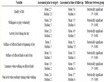
Table 1. Statistics of 3-capitulation types  of fields K with
 .
.
minating types, a.3*, a.3 and a.2.
Conjecture 4.1. For a sufficiently extensive range  of fundamental discriminants, both, the absolute and relative frequencies of realizations of the groups
 ,
,  and
and , resp.
 ,
,  and
and , as 3-class tower groups
  of real quadratic fields
  satisfy the proportion
 .
.
Proof. (Attempt of an explanation) A heuristic justification of the conjecture is given for the ground states by the relation for reciprocal orders

which is nearly fulfilled by , resp.
 , for the bound
 , and disproves our oversimplified conjectures at the end of ([10] Rmk. 5.2).
For the first excited states, we have the reciprocal orders

but here no arithmetical invariants are known for distinguishing between  and
and , whence we
have , resp.
 , with cumulative factor
 . □
. □
4.2. Groups  of Coclass
The 3328 fields whose second 3-class group  is of second maximal class, i.e. of coclass
 , constitute a moderate contribution of 9.61%. The corresponding relative frequency for the restricted range
 is
is , which can be figured out from ([3] Tbl. 4-5, pp. 498-499) or, more easily, from
([9] Tbl. 6.3, Tbl. 6.5, Tbl. 6.7, pp. 452-453). So there is a slight decrease of 0.49% for the relative frequency of  in the extended range.
Theorem 4.2. (Section D) The Hilbert 3-class field tower of a real quadratic field K whose second 3-class group  is isomorphic to either of the two Schur
  -groups
  or
or  has exact length
 , that is, the 3-class tower group
  is isomorphic to
 , and
, and  .
.
Proof. This statement has been proved by Scholz and Taussky in ([22] 3, p. 39). It has been confirmed with different techniques by Brink and Gold in ([23] Thm. 7, pp. 434-435), and by Heider and Schmithals in ([24] Lem. 5, p. 20). All three proofs were expressed for complex quadratic base fields K, but since the cover ([25] Dfn. 5.1, p. 30) of a Schur  -group
  consists of a single element,
  , the statement is actually valid for any algebraic number field K, in particular also for a real quadratic field K. □
Table 2 shows the computational results for , using the relative identifiers of the ANUPQ package [26] for groups
  of order
 , resp. G of order
 . The possibilities for the 3-class tower group G are complete for the TKTs c.18, c.21, E.6, E.8, E.9 and E.14, constituting the cover of the corresponding metabelian group
 . For the TKTs c.18, c.21, the cover
  is given in ([25] Cor. 7.1, p. 38, and Cor. 8.1, p. 48), and for E.6, E.8, E.9 and E.14, it has been determined in ([27] Cor 21.3, p. 187). A selection of densely populated vertices is given for the sporadic TKTs G.19* and H.4*, according to ([17] Tbl. 4-5). We denote two important branch vertices of depth 1 by
  for
for .
.
Whereas the sufficient criterion for  in Theorem 4.4 is known since 1934 already, the following statement of 2015 is brand-new and constitutes one of the few sufficient criteria for
 , that is, for the long desired three-stage class field towers [28].
Theorem 4.3. (Section c) The Hilbert 3-class field tower of a real quadratic field K whose second 3-class group  is one of the six groups
 ,
,  ,
,  ,
,  ,
,  ,
,  has exact length
 , that is,
 .
.
Proof. This is the union of Thm. 7.1, Cor. 7.1, Cor 7.3, Thm 8.1, Cor 8.1, and Cor 8.3 in [25]. □
Table 2. Statistics of 3-capitulation types  of fields K with
 .
.
A sufficient criterion for  similar to Theorem 4.3 has been given in ([29] Thm. 6.1, pp. 751-752) for complex quadratic fields with TKTs in section E. Due to the relation rank
  of the involved groups, only a weaker statement is possible for real quadratic fields with such TKTs.
Theorem 4.4. (Section E) The Hilbert 3-class field tower of a real quadratic field K whose second 3-class group  is one of the twelve groups
 ,
,  ,
,  ,
,  has either length
 , that is,
  , or length
 , that is,
 .
.
Proof. This is the union of Thm. 4.1 and Thm. 4.2 in [17]. □
Example 4.1. That both cases  occur with nearly equal frequency has been shown for the ground states in Thm. 5.5 and Thm. 5.6 of [17]. Due to our extended computations, we are now in the position to prove that the same is true for the first excited states. We have
  for the two fields
  with
with , type E.14, and
 , type E.6, but only
  for the three fields with
 , type E.9, and
 , both of type E.8,
Recently, we have provided evidence of asymptotic frequency distributions for three-stage class field towers, similar to Conjecture 4.1 for two-stage towers.
Conjecture 4.2. For a sufficiently extensive range  of fundamental discriminants, both, the absolute and relative frequencies of realizations of the groups
  and
and , resp.
  and
and  as 3-class tower groups
  of real quadratic fields
  satisfy the proportion
 .
.
Proof. (Attempt of a heuristic justification of the conjecture)
For the first two groups, which form the cover of , we have the reciprocal order relation

which is nearly fulfilled by the statistical information , resp.
 , given in ([25] Thm. 7.2, pp. 34-35) for
 .
.
For the trailing two groups, which form the cover of , only arithmetical invariants of higher order are known for distinguishing between
  and
and . It would have been too time consuming to compute these invariants for ([25] Thm. 8.2, p. 45). □
Conjecture 4.3. For a sufficiently extensive range  of fundamental discriminants, both, the absolute and relative frequencies of realizations of the groups
 ,
,  ,
,  and
and  as 3-class tower groups
  of real quadratic fields
  satisfy the proportion
 .
.
Proof. (Attempt of an explanation) All groups are contained in the cover of . We have the following relations between reciprocal orders


Unfortunately, no arithmetical invariants are known for distinguishing between  and
and . Therefore, we must replace the two values in the middle of the proportion
  by a cumulative value
 , resp.
 . The resulting proportion is fulfilled approximately by the statistical information
 , resp.
 , given in ([17] Thm. 5.7) for
 . However, a total of 24 individuals cannot be viewed as a statistical ensemble yet. □
4.3. Groups  of Coclass
There are 190 fields whose second 3-class group  is of coclass
 . They constitute a very small con-
tribution of 0.55%. The corresponding relative frequency for the restricted range  is
is ,
,
which can be figured out from ([3] Tbl. 5, p. 499) or, more easily, from ([9] Tbl. 6.2, p. 451). Thus, there is a slight increase of 0.15% for the relative frequency of  in the extended range.
For the groups  of coclass
 , the problem of determining the corresponding 3-class tower group G is considerably harder than for
 , and up to now it is still open.
In Table 3, we denote two important mainline vertices of the coclass-2 tree  by
by  and
and , and we give the statistics for
 .
.
4.4. Groups  of Coclass
We only have 25 fields whose second 3-class group  is of coclass
 . They constitute a negligible contribution of 0.07%. The corresponding relative frequency for the restricted range
  is
is
 , which can be seen in ([9] Tbl. 6.9, p. 454). So there is a slight decrease of 0.03% for the relative
frequency of  in the extended range.
In Table 4, we denote some crucial mainline vertices of coclass-4 trees  by
by
 and
and ,
,  ,
,  ,
,
 ,
,  ,
,
a sporadic vertex by , and we give the computational results for
 .
.
For the essential difference between the location of the groups  as vertices of coclass trees for the types d.25* and d.25, see ([30] Thm. 3.3-3.4 and Exm. 3.1, pp. 490-492).
The single occurrence of type H.4 belongs to the irregular variant (i), where . This is
Table 3. Statistics of 3-capitulation types  of fields K with
 .
.
Table 4. Statistics of 3-capitulation types  of fields K with
 .
.
explained in ([3] p. 498) and ([9] pp. 454-455). It is the only case in Table 4 where  is determined uniquely.
Acknowledgements
The author gratefully acknowledges that his research is supported by the Austrian Science Fund (FWF): P 26008-N25.
Cite this paper
Daniel C. Mayer, (2016) p-Capitulation over Number Fields with p-Class Rank Two. Journal of Applied Mathematics and Physics,04,1280-1293. doi: 10.4236/jamp.2016.47135
References
- 1. Mayer, D.C. (1992) Multiplicities of Dihedral Discriminants. Mathematics of Computation, 58, 831-847 and S55-S58.
- 2. Mayer, D.C. (1990) Principalization in Complex S3-Fields. Congressus Numerantium, 80, 73-87. Proceedings of the 12th Manitoba Confer-ence on Numerical Mathematics and Computing, Winnipeg.
- 3. Mayer, D.C. (2012) The Second p-Class Group of a Number Field. International Journal of Number Theory, 8, 471- 505.
- 4. Herbrand, J. (1932) Sur les théorèmes du genre principal et des idéaux principaux. Abhandlungen aus dem Mathematischen Seminar der Universität Hamburg, 9, 84-92. http://dx.doi.org/10.1007/BF02940630
- 5. Hilbert, D. (1897) Die Theorie der algebraischen Zahlkörper. Jber. der DMV, 4, 175-546.
- 6. Chang, S.M. (1977) Capitulation Problems in Algebraic Number Fields. Ph.D. Thesis, University of Toronto, Toron-to.
- 7. Chang, S.M. and Foote, R. (1980) Capitulation in Class Field Extensions of Type . Canadian Journal of Mathematics, 32, 1229-1243.
- 8. The MAGMA Group (2016) MAGMA Computational Algebra System. Version 2.22-1, Sydney. http://magma.maths.usyd.edu.au
- 9. Mayer, D.C. (2014) Principalization Algorithm via Class Group Structure. Journal de Théorie des Nombres de Bordeaux, 26, 415-464.
- 10. Mayer, D.C. (2016) Three-Stage Towers of 5-Class Fields. Journal of Number Theory. arXiv:1604.06930v1 [math.NT]
- 11. Mayer, D.C. (2016) Artin Transfer Patterns on Descendant Trees of Finite p-Groups. Advances in Pure Mathematics, 6, 66-104. Special Issue on Group Theory Research, January 2016.
- 12. Bosma, W., Cannon, J. and Playoust, C. (1997) The Magma Algebra System. I. The User Language. Journal of Symbolic Computation, 24, 235-265. http://dx.doi.org/10.1006/jsco.1996.0125
- 13. Bosma, W., Cannon, J.J., Fieker, C. and Steels, A. (2016) Handbook of Magma Functions. Edition 2.22, Sydney.
- 14. Fieker, C. (2001) Computing Class Fields via the Artin Map. Mathematics of Computation, 70, 1293-1303.
- 15. Bembom, T. (2012) The Capitulation Problem in Class Field Theory. Dissertation, Georg-August-Universität Göt-tingen, 2012.
- 16. Mayer, D.C. (2013) The Distribution of Second p-Class Groups on Coclass Graphs. Journal de Théorie des Nombres de Bordeaux, 25, 401-456.
- 17. Mayer, D.C. (2016) Index-p abelianization Data of p-Class Tower Groups, II. Journal de Théorie des Nombres de Bordeaux. arXiv:1601.00179v1 [math.NT]
- 18. Besche, H.U., Eick, B. andO’Brien, E.A. (2002) A Mil-lennium Project: constructing Small Groups. International Journal of Algebra and Computation, 12, 623-644. http://dx.doi.org/10.1142/S0218196702001115
- 19. Besche, H.U., Eick, B. and O’Brien, E.A. (2005) The Small Groups Library—A Library of Groups of Small Order, 2005, an Accepted and Refereed GAP Package. MAGMA.
- 20. Mayer, D.C. (2015) Index-p Abelianization Data of p-Class Tower Groups. Advances in Pure Mathematics, 5, 286-313. Special Issue on Number Theory and Cryptography, April 2015.
- 21. Boston, N., Bush, M.R. and Hajir, F. (2014) Heuristics for p-Class Towers of Imaginary Quadratic Fields. Mathematische Annalen. arXiv:1111.4679v2 [math.NT]
- 22. Scholz, A. and Taussky, O. (1934) Die Hauptideale der kubischen Klassenkörper imaginär quadratischer Zahlkörper: ihre rechnerische Bestimmung und ihr Einfluß auf den Klassenkörperturm. Journal für die Reine und Angewandte Mathematik, 171, 19-41.
- 23. Brink, J.R. and Gold, R. (1987) Class Field towers of Imaginary Quadratic Fields. Manuscripta Mathematic, 57, 425- 450.
- 24. Heider, F.-P. and Schmithals, B. (1982) Zur Kapitulation der Idealklassen in unverzweigten primzyklischen Erweiterungen. Journal für die reine und Angewandte Mathematik, 336, 1-25.
- 25. Mayer, D.C. (2015) New Number Fields with Known p-Class Tower. Tatra Mountains Mathematical Publications, 64, 21-57.
- 26. Gamble, G, Nickel, W. and O’Brien, E.A. (2006) ANU p-Quotient—p-Quotient and p-Group Generation Algorithms, 2006, an Accepted GAP Package. MAGMA.
- 27. Mayer, D.C. (2015) Periodic Bifurcations in Descendant Trees of Finite p-Groups. Advances in Pure Mathematics, 5, 162-195. Special Issue on Group Theory, March 2015.
- 28. Bush, M.R. and Mayer, D.C. (2015) 3-Class Field Towers of Exact Length 3. Journal of Number Theory, 147, 766- 777. http://dx.doi.org/10.1016/j.jnt.2014.08.010
- 29. Mayer, D.C. (2015) Periodic Sequences of P-Class Tower Groups. Journal of Ap-plied Mathematics and Physics, 3, 746-756.
- 30. Mayer, D.C. (2012) Transfers of Metabelian p-Groups. Monatshefte für Mathematik, 166, 467-495.