

Applied Mathematics
Vol.05 No.17(2014), Article ID:50464,15 pages
10.4236/am.2014.517257
Assessing the Influence of Quiescence Eggs on the Dynamics of Mosquito Aedes aegypti
Hyun Mo Yang
UNICAMP, IMECC, DMA Praça Sérgio Buarque de Holanda, Campinas, Brazil
Email: hyunyang@ime.unicamp.br
Copyright © 2014 by author and Scientific Research Publishing Inc.
This work is licensed under the Creative Commons Attribution International License (CC BY).
http://creativecommons.org/licenses/by/4.0/



Received 26 July 2014; revised 28 August 2014; accepted 12 September 2014
ABSTRACT
The anthropophilic and peridomestic female Aedes aegypti bites humans to suck blood to maturate fertilized eggs, which are laid in appropriate recipients (breeding sites). These eggs can hatch in contact with water releasing larvae, or can be stored in a dormant state (quiescence), which last for extended periods. Taking into account this ability of eggs of A. aegypti mosquitoes, mathematical model is developed taking into account four successive quiescence stages. The analysis of the model shows that the ability of the eggs surviving in dormant state in adverse abiotic conditions, depending on the model parameters, can increase the fitness of mosquito population; in other words, the capacity of the mosquitoes generating offsprings is increased.
Keywords:
Compartmental Modeling, Basic Offspring Number, Stability Analysis, Fitness, Seasonality

1. Introduction
The population dynamics of mosquitoes Aedes aegypti is clearly dependent on abiotic factors, with serious implications for dengue transmission. By using estimated entomological parameters dependent on temperature, including the dependency of these parameters on rainfall, the seasonally varying population size of mosquito A. aegypti was evaluated by a mathematical model [1] . However, eggs are known to be the most resistant stages during development, allowing a long survival of the mosquitoes under unfavorable climatic conditions, such as lower temperatures and dry seasons [2] [3] .
The eggs of the mosquito A. aegypti possess the ability to undergo an extended quiescence hosting a fully developed 1st instar larvae within the chorion, and this life history traitpharate larvae can withstand months of quiescence inside the egg where they depend on stored maternal reserves. Therefore, the duration of quiescence and extent of nutritional depletion may affect the physiology and survival of larvae that hatch in a suboptimal habitat [4] .
Silva and Silva [5] carried out laboratorial experiments in order to determine the influence of the quiescence eggs on the life cycle of A. aegypti. Their experiments allow classifying the quiescence eggs in roughly four categories according to their ability to hatch larvae (see Section 4 for details). In this paper, these four stages of quiescence eggs are included in the modelling of the dynamics of A. aegypti [6] , aiming to assess their influences on the size of mosquito population. This assessment is performed by determining the improvement of the fitness of mosquito population due to the quiescence eggs.
The paper is structured as follows. In Section 2, a model for A. aegypti population is formulated encompassing quiescence eggs, and in Section 3 the model is analyzed, determining the equilibrium points, and performing the stability analysis of these points. Section 4 presents discussion, and conclusion is given in Section 5.
2. Model Formulation
Embryonic development of the eggs of the mosquito A. aegypti is completed approximately within 3 days after oviposition, and a fully developed 1st instar larva resides within the chorion of the egg in a dormant state referred to as quiescence. Pharate 1st instar quiescent larvae will hatch out immediately upon exposure to the appropriate stimulus; in this way quiescence differs from diapause, which is a hormonally controlled and pre-programmed state of developmental arrest in which the larvae are refractory to hatching stimuli for an extended period of time. As a result of this life history trait, A. aegypti produce eggs that, in addition to being desiccation resistant, can withstand months of dormancy depending on stored maternal reserves [4] . The influence of these quiescence eggs on the population dynamics of A. aegypti mosquitoes is assessed by mathematical modelling.
The life cycle of A. aegypti encompasses an aquatic phase (egg, larva and pupa) followed by winged (adult) form. In Yang et al. [6] , a mathematical model considering the compartments of aquatic phase (encompassing larvae and pupae) and adult mosquitoes was analyzed. However, the model developed here takes into account the compartment of eggs. Hence, the dynamics of mosquito population encompasses three phases in the life cycle of A. aegypti: eggs, aquatic phase and adult mosquitoes. The model considers only female mosquitoes , and two different stages of eggs (the quiescence eggs
 and hatchable eggs E), distributed in four compartments according to the period of time they are quiescence (
 and
 , for
 ), while aquatic phase comprises larva and pupa stages
 . The passage from
 to
 is dictated by external stimuli (such as temperature, humidity, nutrients, etc.) and is irreversible. See the flow chart in Figure 1.
In the modelling, it is assumed that all eggs laid by mosquitoes enter in the first quiescence stage, which number at time t is designated as . The rate at which eggs are produced is given by
 , the oviposition rate, and among them a fraction
 will originate female mosquitoes. These eggs are transferred to second quiescence stage
 after a period of time
 , where
 is the transition rate from
 to
 ; or, they enter to hatchable state
 at rate
 . The eggs in the hatchable state
 hatch as larvae at eclosion rate
 , and enter to the aquatic phase A. Another route is the death (inviabilization) of hatchable eggs at mortality rate
 , but

Figure 1. The flow chart of mosquito’s life cycle in- cluding quiescence eggs.
it is assumed that the eggs in quiescence stage  are not under mortality. The number of aquatic forms is constrained by breeding sites and nutrients, which is designated by
 , the carrying capacity. In aquatic phase, larvae develop to pupae, and emerge as adult
 at rate
 , or they (in larval and pupal phases) die at mortality rate
 . Finally, the adult mosquitoes die at mortality rate
 . Notice that the inverse of the mortality rate
 is the average period of surviving in the state
 , where
 stands for all compartments except quiescence stages; and the mating between male and female mosquitoes is not considered in the modelling [7] .
The above descriptions are also valid for the quiescence eggs  and hatchable eggs
 , for
 . The definitions of the parameters are the same described above, changing the subscript for 2, 3 or 4. Being the fourth stage of eggs the last,
 . The entomological parameters

 ,
 ,
 ,
 ,
 ,
 and
 are strongly dependent on temperature (consequently on time t), but
 do not.
Based on the foregoing descriptions of model parameters and variables, the dynamics of mosquito population encompassing quiescence eggs is described by the system of differential Equations
 (1)
This system of equations is analyzed in the steady state. A simplified version of this modelling is given in Appendix.
3. Analysis of the Model
The system of Equations (1) is dealt with determining the equilibrium points, and assessing the stability of these points.
3.1. Equilibrium Points
Before determining the equilibrium points, let the following parameters be defined. The quiescence eggs at stage i can go to next quiescence stage  or to hatchable state i, with probabilities of transition from quiescence stage i to stage

 and to hatchable stage i
 being given by
 (2)
for , with
 . Notice that
 and
 , due to
 . The average periods of time that eggs stay at quiescence
 and hatchable
 stages i are
 (3)
for . Finally, the probability of eggs surviving the hatchable stage i and hatch as larvae
 , and the probability of aquatic forms (larvae and pupae) surviving the aquatic phase and emerging as adult mosquitoes
 are
 (4)
for .
There are two equilibrium points. The first equilibrium is the absence of mosquito population, designated by , given by

which is referred to the trivial equilibrium point.
The second equilibrium is the mosquito population being well established in a region (or community), the non-trivial equilibrium , given by

The coordinates of the non-trivial equilibrium are written in terms of the previously defined parameters, which are

and the number of adult mosquitoes  is

where  is the basic offspring number defined by
 (5)
with  being given by
 (6)
which is the overall production of larvae by all compartments of eggs. Clearly, the non-trivial equilibrium point is biologically feasible if .
Let  be interpreted biologically. Suppose that a fertilized female mosquito is introduced in a region completely free of mosquitoes. The term
 is the average number of (female) eggs produced by this mosquito. These eggs are spread out among the four compartment with different probabilities of hatching according to the period of time they are stored as quiescence stage. Average number of eggs that survive these compartments and hatch as larvae is given by
 , which must survive also the aquatic phase and emerge as adult (female) mosquitoes, with probability
 . Hence,
 is the average number of offsprings originated by a single female mosquito introduced in a region free of mosquitoes.
The overall production of eggs  also deserves interpretation. All eggs enter into the class
 . Among these eggs, a fraction
 enters to the hatchable state
 and, when surviving this stage with probability
 , become larvae, resulting in
 aquatic forms produced by the eggs following the route
 and
 . But, the complementary fraction
 is transferred to quiescence stage
 . Among these eggs,
 enters to the hatchable state
 and complementary fraction
 is transferred to quiescence stage
 . Following previously definition,
 is the average number of larvae produced by eggs that remained quiescence without entering in the first hatchable state
 , but entered in the second hatchable state
 and survived this state
 . This is the path of eggs following the route
 ,
 and
 before hatching. The third (
 , following the route
 ,
 ,
 and
 before hatching) and fourth (
 , following the route
 ,
 ,
 ,
 and
 before hatching) terms follow similar interpretation. Hence
 is the overall production of aquatic forms by the four quiescence and hatchable compartments.
3.2. Stability Analysis of the Equilibrium Points
The stability analysis of the equilibrium points  and
 are assessed by the application of Routh-Hurwitz criteria to the characteristic Equation corresponding to the Jacobian matrix of Equation (1).
The Jacobian matrix evaluated at the equilibrium point , named
 , results in

where the  matrices
 , with
 , are

with ,
 ,
 ,
 and
 ,


with , and

with ,
 and
 . The local stability of the equilibrium points is assessed by the eigenvalues of the characteristic Equation
 [8] , or

which can be written as

a polynomial of  degree.
The independent term of the characteristic Equation, designated by L0, which is given by , is written as

where  is given by

For the trivial equilibrium ,
 , and for the non-trivial equilibrium
 ,
 , resulting in

Hence, according to Leite et al. [9] , the trivial equilibrium point  is locally asymptotically stable for
 , and the non-trivial equilibrium
 is stable for
 .
4. Discussion
The results obtained in previous section are dealt with to assess the influence of the quiescence eggs in the size of A. aegypti population. First, the study is done qualitatively, and, then, the results are confronted with experimental data.
4.1. Assessing Qualitatively the Effects of Quiescence
The basic offspring number , given by Equation (5), is the average number of offsprings generated by a single fertilized mosquito considering four different stages of quiescence. Let this threshold parameter be compared with
 , the basic offspring number without quiescence stages, which is given by
 (7)
Notice that this is obtained by letting  (consequently,
 ) in Equation (5). The difference between
 and
 is taken as a measure of fitness of mosquito population by adopting the strategy of quiescence: If
 , then there is a gain in the fitness promoted by quiescence eggs; if not, there is loss of fitness.
Let first be defined the productivity of each hatchable stage , with
 . Suppose an initial number of hatchable eggs
 is in the stage i, and there is no influx. Hence, the number of eggs at time
 is given by
 . The number of eggs hatching to larvae between t and
 is given by
 , as well as the
number of died eggs is . The quocient between the total numbers of production of larvae and died eggs
 is
 (8)
 , which is called the productivity index of hatchable state
 . This index does not reflect the velocity of transitions from hatchable state to aquatic phase, but only the ratio between eclosion and mortality of eggs.
The difference between  and
 , Equations (5) and (7), is

where  is given by

and  is given by

where
 (9)
with  being the solution of
 . Hence, the signal of
 will be determined by the signal of
 .
Notice that the parameters ,
 and
 do not appear in
 , showing that these parameters do not affect in the change of fitness of the mosquito population. (These parameters affects in the magnitude of the difference
 .) The parameters
 ,
 and
 can be increased by increasing the parameters
 and
 , and
 (10)
There are four hatchable states , originating from quiescence stages of eggs
 , with different productivity of larvae
 . The gain in the fitness promoted by quiescence eggs is studied taking into account the productivity index
 . When
 changes the productivity with any other state
 ,
 , it is assumed that
 remains producing more larvae than other two stages.
A. ,
 and
 —The first hatchable state
 is the most proficuous in larvae production.
In this case,  and
 , resulting in
 . Hence
 , and the quiescence eggs decrease the fitness of mosquito population.
B. ,
 and
 —The second hatchable state
 is the most proficuous in larvae production.
In this case,  and
 , resulting in two possibilities:
B.1. —the third hatchable state
 is more proficuous than
 .
In this case,  , according to Equation (10), and the threshold of
 is defined by
 . In this case,
 (11)
Hence, the quiescence eggs increase the fitness of mosquito population  in two situations: 1) when the influx is at lower level
 in quiescence stage
 , and 2) the influx is at moderate level
 and the outflux is lower
 in quiescence stage
 .
B.2. —The fourth hatchable state
 is more proficuous than
 .
In this case,  , according to Equation (10), and the threshold of
 is defined by
 . In this case,
 (12)
Hence, the quiescence eggs increase the fitness of mosquito population  in two situations: 1) when the influx is at lower level
 in quiescence stage
 , and 2) the influx is at moderate level
 and the outflux is higher
 in quiescence stage
 .
C. ,
 and
 —The third hatchable state
 is the most proficuous in larvae pro- duction.
In this case,  and
 , and the threshold of
 is given by
 . In this case,
 (13)
Hence, the quiescence eggs increase the fitness of mosquito population  when the influx is at higher level
 but the outflux is lower
 in quiescence stage
 .
D. ,
 and
 —The fourth and last hatchable state
 is the most proficuous in larvae production.
In this case,  and
 , and the threshold of
 is given by
 . In this case,
 (14)
Hence, the quiescence eggs increase the fitness of mosquito population  when both influx
 and outflux
 in quiescence stage
 are at higher levels.
Summarizing, the quiescence eggs increase the fitness of mosquito population if one of hatchable stages from ,
 and
 is more proficuous (higher productivity index p) than E1. Besides the productivity indexes
 , the parameters
 and
 , which are the influx and outflux rates in the quiescence stage
 , play important role in the fitness. The quiescence eggs increase the fitness of mosquito population if: a) the second hatchable state
 is the most proficuous in larvae production, and
 assumes lower values and
 assumes lower or higher values according to the relative productivities of
 and
 , Equations (11) and (12); b) the third hatchable state
 is the most proficuous in larvae production, and
 assumes higher values, while
 assumes lower values, Equation (13); and c) the fourth hatchable state
 is the most proficuous in larvae production, and
 and
 assume higher values, Equation (14).
The transition parameters , with
 , depend strongly on the abiotic factors. In contrast,
 , with
 , are fixed. However, the corresponding thresholds of
 and
 are allowed to vary by varying
 and
 according to Equation (9). For this reason the threshold parameters
 (which can be
 or
 ) and
 are varied in order to
 and
 be situated at higher or lower values with respect to corresponding thresholds. Hence, the thresholds of
 and
 are obtained for fixed values of
 and
 , that is, letting
 and
 in Equation (9). The resulting thresholds of
 and
 are
 (15)
Hence, depending on the productivity index , the parameters
 and
 can be settle below or above the thresholds
 which can be
 or
 ) and
 , in order to the thresholds
 and
 be situated above or below the values of
 and
 , respectively. If one of the conditions given by Equations (11), (12), (13) and (14) is satisfied, then the quiescence eggs increase the fitness of A. aegypti population.
4.2. Comparing with Experimental Data
The theoretical results obtained in foregoing section are compared with the results of the experiments carried out by Silva and Silva [5] , which are reproduced in Table 1. The laboratory experiments to determine the influence of different periods of quiescence on eclosion of eggs to larvae were performed in a biological chamber kept at 28˚C, 80% relative humidity and 12 hours of photophase.
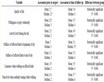
Table 1. Reproduction of the results obtained by silva and silva [1] .
Based on Table 1, Table 2 presents the estimation of the per-capita eclosion and mortality rates according to  and
 , where
 , N and
 are, respectively, the number of eggs, total eclosion rate and percentage of eclosion (columns
 ,
 and
 of Table 1).
Observing the last column of Table 1, the 11 experiments can be clustered as follows: Experiment number 1 as quiescence stage 1, experiment numbers 2 to 4 as quiescence stage 2, experiment number 5 as quiescence stage 3, and, finally, experiment numbers 7 to 11 as quiescence stage 4. In Table 3, the mean eclosion  and mortality
 rates, the productivity index
 , transition rate
 and hatchable rate
 are presented. With respect to transition rate, it is assumed that the average periods of time (days) in quiescence stages are
 ,
 and
 (notice that
 , since this is the last stage). With respect to hatchable rate, it is set arbitrarily as
 (see appendix). Notice that the third quiescence stage is the most proficuous in larvae production
 , which was also observed by other authors [10] [11] , and it corresponds to the case C shown in preceding section.
The estimated eclosion  and mortality
 rates of aquatic phase, the mortality rate of adult female mosquitoes
 and the oviposition rate per female
 are given in Table 4 [6] . These rates are given for two different temperatures (16˚C and 28˚C), in order to mimic favorable (summer or wet) and unfavorable (winter or dry) seasons. To the favorable seasons, the temperature of 28˚C was chosen due to the laboratorial experiments in [5] .
Table 2. Calculation of the per-capita eclosion and mortality rates.
Table 3. Estimation of the parameters σi, μi, calculation of the productivity indexes , αi and εi, for i = 1, ···, 4.
Table 4. The estimated values of the parameters σa, μa, μf and f for 16 and 28 degree Celsius (˚C) [2] .
Table 5 presents the values of the critical parameters and the basic offspring number. Using values of parameters given in Table 3 and Table 4, the threshold values ( ) of
 and
 are

and  (second column), and the corresponding basic offspring number is
 . Since
 , from the case C described above,
 for all
 , resulting in
 , where
 was calculated using Equation (7). Hence, using
 and
 (Table 3), the quiescence eggs decrease the fitness of mosquito population.
Table 5 additionally shows that the threshold values ( ) of
 and
 are
 and
 . Remembering that the values of
 and
 are fixed, while
 and
 are allowed to vary, the thresholds
 and
 changed appropriately in order to satisfy
 , which is true if the conditions
 and
 are verified, according to Equation (13). From the case C described above,
 (the quiescence eggs increase the fitness of mosquito population) is possible when
 and
 . Since
 and
 are arbitrary values, the first condition
 is satisfied for all
 that satisfy
 . For this reason, only the value of
 is changed in Table 3, or

 , in order to decrease
 and to satisfy the first condition. In this case, the new threshold (
 ) is
 (other critical values are given in the third column of Table 5), and the corresponding basic offspring number is
 , smaller than the previous case. Similarly, the second condition is satisfied if
 , which is the reason to choose

 . This additional change alters only
 (fourth column of Table 5), but the corresponding basic offspring number is
 , slightly higher than
 . The partial contributions of all eggs compartments to the overall
 are given in Table 6.
The contribution of the first stage of quiescence eggs in all cases, as shown in Table 6, does not change due to change occurring in  and
 . With the new values
 and
 (
 ), the contribution of the third quiescence eggs compartment increased in almost 10 times, and became the highest contributor, displacing the first stage. The basic offspring number corresponding to the simplified model is given by the first row of Table 6 (see Appendix).
Summarizing, assuming that ,
 and
 do not change, when the values of
 and
 (
 ) in Table 3 (0.0277 and 0.0181) are changed to 0.001 and 0.5, respectively, then the quiescence eggs increase the fitness of mosquito population. Notice that the values of
 and
 do not matter in this issue.
Up to now the model was discussed considering constant values for the model parameters. But, the effect of
Table 5. Calculation of the critical values ,
 ,
 ,
 ,
 and
 , where “dnc” stands for value that does not change with respect to the contiguous column. The critical values in column labelled as Table 3 corresponds to values of model parameters given in Table 3. In columns labelled as Table 3 (ε2) and Table 3 (ε2, ε3) correspond to critical values calculated by changing only the value(s) of parameter(s) between parenthesis.
Table 6. The basic reproduction number Q0 calculated using the values given in Table 3 and Table 4. The basic repro- duction number corresponding to a unique eggs compartment is  = 81.158.
quiescence eggs in the size of mosquito population becomes important in tropical (wet and dry seasons) and temperate (rigorous winter seasons) regions.
The experiments carried out by Silva and Silva [5] showed that eggs of A. aegypti presented more productivity index after being stored for 4 months. This period encompasses the unfavorable seasons (dry or/and cold). After this period, in the beginning of favorable seasons, mosquito population can be settled quickly at higher infestation levels. Table 7 shows the partial contributions of quiescence eggs to overall basic offspring number. Two seasons (summer, 28˚C, and winter, 16˚C) and two extreme abiotic conditions, the favorable (high) and unfavorable (low), according to equal  hatchable rates
 and
 (
 ), respectively. The values of eclosion and mortality rates
 and
 are maintained fixed in all seasons, because the experiments in [5] were carried out for a unique temperature (28˚C).
In a favorable abiotic conditions (high ), the partial contribution of first stage of quiescence eggs is almost the overall offspring number. However, in hostile abiotic conditions (low
 ), the quiescence stages 2, 3 and 4, in this order, contribute more than first quiescence stage to overall offspring number. This behavior has important influence in seasonality of abiotic conditions. For instance, in the end of favorable seasons, more eggs are transferred to quiescence stages than to hatchable states, due to decreasing in the hatchable rates
 (for instance, the row labelled “summer (low)” of Table 7,
 ). After the passage of unfavorable season (“winter (low)” of Table 7,
 ), eggs are allowed to hatch in the beginning of next favorable season (“winter (high)” of Table 7,
 ), remembering that these eggs have been stored for around 4 months. However, these quiescence eggs are highly proficuous in originating larvae (high productivity index of hatching). During this transition of seasons, these quiescence eggs contribute mainly to recolonize the region quickly. Sinceafter, the population of mosquitoes is maintained at the infestation level due to the increasing of hatchable rates
 to the previous values (“summer (high)” of Table 7,
 ). Notice that the variation of
 times in
 resulted only in a variation of 10 times in
 .
5. Conclusions
A mathematical model encompassing four quiescence stages was analyzed. From the model, it was concluded that under certain conditions, the quiescence eggs can improve the fitness of A. aegypti population.
The capacity of the A. aegypti eggs being stored during hostile abiotic factors and, then, hatching to larvae in favorable season with increased fitness, is essential to sustain A. aegypti population to face seasonality. When the quiescence eggs having approximately 120 days are allowed to hatch, these eggs presented the most producible capacity to originate larvae [5] . This period of 4 months corresponds to approximately the worst abiotic conditions to A. aegypti to survive. Hence, the quiescence of eggs of 4 months joined to the higher capacity of hatching seems to be an important strategy to A. aegypti population to persist in seasonally varying environment.
Another aspect is regarded to dengue transmission, due to the possibility of the eggs infected with dengue virus sustaining dengue epidemics [12] . For this reason, it is important to analyze dengue transmission modelling taking into account the infected and non-infected quiescence eggs. One of the possible applications of this kind of modelling is the assessment of biological control by intracellular bacterium Wolbachia [13] .
Quantitative analyses, such as the dynamical trajectories, are left to further work. For instance, the dynamical trajectories of the system of Equations (1) are obtained numerically considering the initial conditions, at t = 0, given by
Table 7. The basic offspring number Q0 calculated using the values given in Table 3 and Table 4, varying only the transition rates εi for two seasons: Summer (28˚C) and winter (16˚C). Two values are used for i = 1, ···, 4 (days−1): εi = 5.0 (high) and εi = 0.001 (low). The basic reproduction number corresponding to a unique eggs compartment is  = 5.327 for winter season (for summer, the values is that provided in Table 6).

which corresponds to the introduction of one mosquito in a previously uninfested region. In other words, the equilibrium point before the introduction of infectious case is given by . Depending on the value of the basic offspring number, the mosquito population goes to extinction (
 , when
 ), or colonizes successfully (
 , when
 ).
Conflict of Interests
The author(s) declare(s) that there is no conflict of interests regarding the publication of this article.
Funding
Projeto temático FAPESP grant 09/15098-0.
References
- Yang, H.M., Boldrini, J.L., Fassoni, A.C., Lima, K.K.B., Freitas, L.F.S., Gomez, M.C., Andrade, V.R. and Freitas, A.R.R. (2014) Abiotic Effects on Population Dynamics of Mosquitoes and Their Influences on the Dengue Transmission. In: Ferreira, C.P. and Godoy, W.A.C., Eds., Ecological Modelling Applied to Entomology, Springer, Berlin.
- Calado, D.C. and Silva, M.A.N. (2002) Evaluation of the Temperature Influence on the Development of Aedes albopictus. Revista de Saúde Pública, 36, 173-179.
- Monteiro, L.C.C., Souza, J.R.B. and Albuquerque, C.M.R. (2007) Eclosion Rate, Development and Survivorship of Aedes albopictus (Skuse) (Diptera: Culicidae) under Different Water Temperatures. Neotropical Entomology, 36, 966- 971. http://dx.doi.org/10.1590/S1519-566X2007000600021
- Perez, M.H. and Noriega, F.G. (2012) Aedes aegypti Pharate 1st Instar Quiescence Affects Larval Fitness and Metal Tolerance. Journal of Insect Physiology, 58, 824-829. http://dx.doi.org/10.1016/j.jinsphys.2012.03.005
- Silva, H.H.G. and Silva, I.G. (1999) Influence of Eggs Quiescence Period on the Aedes aegypti (Linnaeus, 1762) (Diptera, Culicidae) Life Cycle at Laboratory Conditions. Revista da Sociedade Brasileira de Medicina Tropical, 32, 349- 355. http://dx.doi.org/10.1590/S0037-86821999000400003
- Yang, H.M., Macoris, M.L.G., Galvani, K.C. and Andrighetti, M.T.M. (2011) Follow up Estimation of Aedes aegypti Entomological Parameters and Mathematical Modellings. Biosystems, 103, 360-371. http://dx.doi.org/10.1016/j.biosystems.2010.11.002
- Esteva, L. and Yang, H.M. (2000) Mathematical Model to Assess the Control of Aedes aegypti Mosquitoes by The Sterile Insect Technique. Mathematical Biosciences, 198, 132-147. http://dx.doi.org/10.1016/j.mbs.2005.06.004
- Edelstein-Keshet, L. (1988) Mathematical Models in Biology. Birkhäuser Mathematics Series, McGraw-Hill Inc., New York.
- Leite, M.B.F., Bassanezi, R.C. and Yang, H.M. (2000) The Basic Reproduction Ratio for a Model of Directly Transmitted Infections Considering The Virus Charge and the Immunological Response. IMA Journal of Mathematics Applied in Medicine and Biology, 17, 15-31.
- Shannon, R.C. and Putnam, P. (1993) The Biology of Stegomyia under Laboratory Conditions. 1. The Analysis of Factors Which Influences Larval Development. Proceedings of the Entomological Society of Washington, 36, 185-216.
- Silva, H.H.G., Silva, I.G., Elias, C.N., Lemos, S.P.S. and Rocha, A.P. (1995) Idade fisiológica dos ovos de Aedes (Stegomyia) aegypti (Linnaeus, 1762) (Diptera, Culicidae). Revista de Parasitologia Tropical, 24, 269-273.
- Yang, H.M. (2014) Assessing the Contribution of Transovarial Transmission in the Dynamics of Dengue Infection. BioMed Research International.
- McMeniman, C.J. and O’Neill, S.L. (2010) A Virulent Wolbachia Infection Decreases the Viability of the Dengue Ve- ctor Aedes aegypti during Periods of Embryonic Quiescence. PLoS Neglected Tropical Disases, 4. http://dx.doi.org/10.1371/journal.pntd.0000748
Appendix
Simplified Model
The model described by system of Equations (1) can be simplified joining the quiescence and hatchable stages. For instance, calling , then (for
 ,
 )

is approximated as

for . This simplification allows the system to eliminate four equations. The simplified system is

where the prime was dropped out.
Defining the average period of time that eggs stay at stage i  as

with , and the probabilities of eggs at stage i going to next stage i + 1
 or to hatch at stage i
 , and probability of surviving aquatic phase
 as

for , two equilibrium points are given.
The first equilibrium is the absence of mosquito population, the trivial equilibrium , given by

The non-trivial equilibrium  is given by

where the coordinates written in terms of the previously defined parameters are

and the number of adult mosquitoes  is

The basic offspring number  is defined by
 (16)
with  being given by

which is the overall production of larvae by all compartments of eggs. Clearly, the non-trivial equilibrium point is biologically feasible if .
Letting , the basic offspring number
 without quiescence stages is equal to Equation (7), which can be obtained by letting
 in Equation (16). The difference between
 and
 is

where  is given by

and  is given by

where

with

Notice that  and
 are the critical values given by Equation (9) dropping out the factor
 , while for
 , the absent factor is
 . For this reason, in Table 3, the values for
 ,
 , were set
 . Using values given in Table 3 and Table 4, from the second column of Table 5, the inequality
 is always true. Remember that
 and
 .
Conversely to the general model, the simplified version of the model does not allow the change in the critical values ,
 and
 in order to obtain situations where
 (see Equations (11), (12), (13) and (14), corresponding to cases B, C and D in main text).
NOTES

*Corresponding author.