

International Journal of Astronomy and Astrophysics
Vol.05 No.04(2015), Article ID:62225,11 pages
10.4236/ijaa.2015.54032
Distribution of Mass and Energy in Closed Model of the Universe
Fadel A. Bukhari
Department of Astronomy, Faculty of Science, King Abdulaziz University, Jeddah, Saudi Arabia

Copyright © 2015 by author and Scientific Research Publishing Inc.
This work is licensed under the Creative Commons Attribution International License (CC BY).
http://creativecommons.org/licenses/by/4.0/



Received 2 February 2015; accepted 21 December 2015; published 25 December 2015
ABSTRACT
The universe’s horizon distance and volume are constructed in the closed cosmic model. The universe horizon distance distribution increases constantly for t < tme and decreases for t > tme. However, the universe’s horizon volume shows a sudden reduction in the range t = 0.5 Gyr − tme due to the change of the universe space from flat to curved then closed in the interval 15.1261 Gyr ≤ t ≤ tme. On the other hand, this distribution exhibits an abrupt rise in the range t = tme − t* due to the change of the universe space from closed then curved to flat in the interval 39.3822 ≤ t ≤ 40.7521 Gyr. The mass of radiation, matter and dark energy within the horizon volume of the universe are also investigated. These distributions reveal similar noticeable changes as the universe’s horizon volume distribution for the same reasons. The mass of radiation dominates up to t = 53221.5 yr, then the mass of matter becomes larger. Afterwards, both distributions of radiation and matter decrease while the distribution of dark energy rises until t = 10.1007 Gyr, where the mass of dark energy prevails up to t = tme. Hence, the distribution of dark energy reduces until t = 40.2892 Gyr, where the mass of matter becomes prominent again. At t = 53.6246 Gyr the masses of both matter and radiation become appreciably high such that the intercluster space will vanish and clusters of galaxies interfere with each other. Furthermore, not only the intergalactic medium will disappear, but also galaxies will collide and merge with each other to form extremely dense and close cosmological bodies. These very dense bodies will undergo further successive collisions and mergers under the action of central gravity, where the interstellar medium will vanish and the universe would develop to big crunch at tbc = 53.6251 Gyr. It is interesting to note that the horizon distance of the universe in the closed model at t = tme is in very good agreement with the maximum horizon distances in the five general cosmic models.
Keywords:
Dark Energy, Radiation, Closed Cosmic Model

1. Introduction
The distribution of density parameters of radiation, matter and dark energy in the closed cosmic model were investigated in a previous study [1] , where we discovered the main epochs of the universe history in this model. It is worthy now to study the distributions of equivalent mass of radiation, mass of matter and equivalent mass of dark energy within the horizon volume of the universe to get deeper sight of the universe evolution in the closed model.
The reason for considering the equivalent mass of radiation in this study is the significant value of the radiation density parameter in the early universe and before the big crunch as we have seen in [1] .
Therefore, it is vital to develop the distributions of the horizon distance and horizon volume of the universe in the closed model at various time ranges depending on the bases presented in [2] . Description of methodology is illustrated in Section 2, while algorithm would be shown in Section 3. Results and discussion are displayed in Section 4. Conclusion is given in Section 5.
2. Methodology
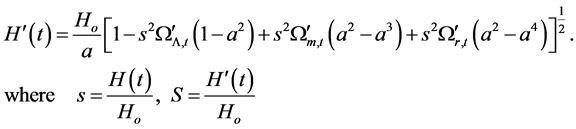
It is obvious from [2] that the horizon distance and horizon volume of the universe in closed cosmic model at the present time are respectively
 (1)
(1)
 (2)
(2)
where ,
,  and
and  are given by
 (3)
(3)
 (4)
(4)
 (5)
(5)
 (6)
(6)
 (7)
(7)
 (8)
(8)
 (9)
(9)
 (10)
(10)
 (11)
(11)
 (12)
(12)
 (13)
(13)
 (14)
(14)
 (15)
(15)
where t is the cosmic time in Gyr.
 (16)
(16)
The horizon distance of the universe in the closed cosmic model at any given time is given by
 (17-a)
Consequently, the change in the horizon distance of the universe in the time interval between two instants of scale factors  is written as
 (17-b)
The horizon volume of the universe in the closed model at any given time is expressed as
 (18)
(18)
Equation (18) indicates that the horizon volume of the universe at t is a function of  and the curvature of space k at t. Since this curvature could be flat, open and closed from the big bang to big crunch as evident from Table 3 in [1] . Thus, the low of
  can be determined according to the value of k at t, as explained in the following cases:
(1) Flat space ( )
)
We have seen in [2] that the horizon volume of the universe at time t in this case is given by
 (19)
(19)
Therefore, it is obvious from Table 3 in [1] that Equation (19) is used in the time intervals ,
,  ,
,  , and
, and .
.
(2) Closed space ( )
)
We recall the equation of proper distance of extragalactic object
 (20)
(20)
where
 (21)
(21)
And the volume of space within  is expressed as
 (22)
(22)
where  are defined as in [3] [4] . For
 , Equations (21), (20) and (22) yield
 (23)
(23)
Hence Equation (22) gives
 (24)
(24)
Assume
 (25)
(25)
Substituting by (25) in (24) we get
 (26)
(26)
Let
 (27)
(27)
Substituting by (27) in (26) we have
 (28)
(28)
Substituting by (23) in (28) yields
 (29)
(29)
Suppose , hence
  and Equation (29) becomes
 (30)
(30)
Thus, the horizon volume of the universe in the closed cosmic model at time t in this case is expressed as
 (31)
(31)
It is evident form Table 3 in [1] that Equation (23) is used in two time intervals extending through 
(3) Open space ( )
)
Equations (21), (20) and (22) give
 (32)
(32)
 (33)
(33)
Assume
 (34)
(34)
Substituting by (34) in (33) we have
 (35)
(35)
Let
 (36)
(36)
Substituting by (36) in (35) we get
 (37)
(37)
Substituting by (32) in (37) yields
 (38)
(38)
When , Equation (38) reduces to
 (39)
(39)
Therefore, the horizon volume of the universe in closed cosmic model at time t in this case is written as
 (40)
(40)
It is clear form Table 3 in [1] that Equation (40) is used in the time intervals ,
, .
.
The total density of the universe in the closed cosmic model at time t is
 (41)
(41)
Substituting by (3)-(5) in (41) we get

 (42)
(42)
where
 (43)
(43)
From Equation (19), (30), (40) and (42) the total mass of the universe within the horizon volume in closed cosmic model at time t is
 (44)
(44)
The masses of matter, radiation and dark energy within the horizon volume of the universe in closed cosmic model at time t are respectively
 (45)
(45)
 (46)
(46)
 (47)
(47)
The time interval between two instants with scale factors  during the universe expansion is given by Equation (16) in [4] [5] as
 (48)
(48)
However, during the universe contraction if  then modulus of the right hand side of (50) should be taken.
3. Algorithm
In determination of the distributions of  we use the following steps:
(1) Stage of the universe expansion.
a) Set  and insert the value of
  for t ≤ 0.5 Gyr,
  ,
,  for
for .
.
b) Calculate 
c) Start general DO loop , J which includes the following sub steps:
d) 
e) Compute new value of cosmic time t numerically using (48), where .
.
f) Obtain new value of the universe horizon distance  numerically using (17-b), where
 .
.
g) Determine the corresponding values of  using (19), (31) and (40), in addition to the values of
  and
and  using (7), (6), (4), (5), (3), (43), (42), (44), (45), (46) and (47) respectively.
h) Continue the general DO loop.
(2) Stage of the universe contraction
a) Set ,
,  , and insert the values of
  for
for ,
,  for
for .
.
b) Evaluate .
.
c) Start general DO loop ,
,  which includes the following sub steps:
d) Set 
e) Obtain new value of cosmic time t numerically using (48), where .
.
f) Compute new value of the universe horizon distance  numerically using (17-b), where
 .
.
Sub steps (g) and (h) are similar to (g), (h) mentioned above in the stage of the universe expansion.
4. Results and Discussion
The distribution of the universe horizon distance in the closed cosmic model until  is shown in Figure 1(a). The distribution increases quite slowly up to
 , then the distribution starts raising rapidly. However, the distribution of the universe horizon distance in the range
  increases very fast until about
 . Afterwards, it raises gradually as indicated in Figure 1(b). Furthermore, the distribution of the universe horizon distance in the range
 , where
 , decreases quite slowly up to
 , hence it decreases relatively fast as presented in Figure 1(c). Nevertheless, the distribution of the universe horizon distance in the range
  decreases slowly until
 ,
,  , then it starts reduction sharply towards
  as displayed in Figure 1(d).
The distribution of the universe horizon volume in the closed cosmic model up to  is shown in Figure 2(a). The distribution increases very slowly until
 . Afterwards, the distribution starts raising appreciably. During this cosmic time range the space of universe is flat. The distribution of the universe horizon volume continues raising up to
 , hence the distribution suddenly decreases until
 , then it increases gradually up to
  as seen is Figure 2(b). The sharp decrease of the distribution in the range
  because the space of the universe changes from flat to curved then closed in the interval
 .
.
The distribution of the universe horizon volume in the range  is disclosed in Figure 2(c). The distribution decreases until
 , hence it shows abrupt raising up to
 , hence it reduces again until
 . The abrupt increase of the distribution in the range
  is due to
 (a) (b)
 (c) (d)
Figure 1. (a) The distribution of the universe horizon distance in the closed cosmic model up to t = 0.5 Gyr; (b) The distribution of the universe horizon distance in the closed cosmic model in the range t = 0.5 Gyr - tme; (c) The distribution of the universe horizon distance in the closed cosmic model in the range t = tme - t*; (d) The distribution of the universe horizon distance in the closed cosmic model in the range t = t* - tn.
 (a) (b)
 (c) (d)
Figure 2. (a) The distribution of the universe horizon volume in the closed cosmic model up to t = 0.5 Gyr; (b) The distribution of the universe horizon volume in the closed cosmic model in the range t = 0.5 Gyr - tme; (c) The distribution of the universe horizon volume in the closed cosmic model in the range t = tme - t*; (d) The distribution of the universe horizon volume in the closed cosmic model in the range t = t* - tn.
the fact that the universe space changes from closed then curved to flat in the interval  The distribution of the universe horizon volume in the range
  is presented in Figure 2(d), which is reducing gradually towards
 .
.
The distribution of mass and energy within the horizon volume of the universe in the closed cosmic model until  is shown in Figure 3(a). The distributions of radiation and total mass decrease very slowly up to
  and
and  respectively, then they reduce more rapidly. However, the distribution of matter increases so slowly until
  and it decreases rapidly afterwards. This distribution intersects with the distribution of radiation at
  and coincides with the distribution of total mass at
 . The distribution of dark energy increases continuously towards
 . The distribution of mass and energy within the horizon volume of the universe in the closed model in the range
  is illustrated in Figure 3(b). It is noticeable that the distribution of radiation intersects the distribution of dark energy at
 , hence it reduces very fast up to
 . Afterwards, it raises gradually until
 , then it decreases abruptly up to
 , where it starts increasing again towards
 . The distribution of matter decreases up to
 , hence it raises very slowly towards
 . This distribution coincides with the distribution of total mass up to
 , and intersects with the dark energy distribution at
 . The matter distribution indicates obvious decrease in the range
  . The distribution of dark matter increases until
 , hence it also shows marked decrease up to
 . Afterwards, it raises slightly towards
 . The total mass distribution reduces up to
 , then it decreases abruptly until
 . Hence, this distribution increases gradually towards
 . The noticeable decrease of all four distributions in the range about
  is due to the change of the universe space from flat to curved then closed in the range
 .
.
The distribution of mass and energy within the horizon volume of the universe in the closed model in the range  is illustrated in Figure 3(c). The distribution of radiation reduces very slowly until
  , then it raises suddenly up to
 . Hence, this distribution decreases again until
  where it intersects with the distribution of dark energy, then it starts raising towards
 . The matter distribution increases so slowly up to
 , hence it exhibits marked raise until
  and intersects with the dark energy distribution at
 . Afterwards, the distribution of matter shows substantial increase towards
  and coincides with the total mass distribution at
  hence forth. The dark energy distribution reduces gradually until
  where it displays outstanding raise up to
 , hence it decreases again towards
 . The total mass distribution reduces also gradually until
 , then it exhibits obvious increase up to
 . Afterwards, it raises very fast as the matter distribution. The prominent increase of the four distributions in the interval about
  is owing to the change of the universe space from closed then curved
 (a) (b)
 (c) (d)
Figure 3. (a) The distribution of mass and energy in the closed cosmic model up to t = 0.5 Gyr; (b) The distribution of mass and energy in the closed cosmic model in the range t = 0.5 Gyr - tme; (c) The distribution of mass and energy in the closed cosmic model in the range t = tme - t*; (d) The distribution of the mass and energy in the closed cosmic model in the range t = t* - tn.
to flat in the range . The distribution of mass and energy within the horizon volume of the universe in the closed model in the range
  is displayed in Figure 3(d). The radiation distribution increases quite slowly until
 , hence it starts raising appreciably fast.
The distribution of both matter and total mass coincide on each other and lie over the radiation distribution. The two distributions increase gradually up to , then they raise up. However, the dark energy distribution decreases so slowly until
 , afterwards it reduces substantially.
Estimations of  and the equivalent number of the Coma-like clusters to the mass of matter within the universe horizon volume
  in the closed cosmic model at special times are presented in Table 1. It is interesting to note that at
 , the horizon volume of the universe
 .
.
Since the radius of the Coma cluster is  [5] , then
 , where
  is the Coma cluster volume. However, the mass of matter within the horizon volume of the universe at
  is
is .This indicates very clearly that the intercluster medium will disappear at
  and galaxy clusters will interfere with each other. Furthermore, the radius of the Milky Way galaxy is
  [6] . Thus,
  , where
  is the Milky Way galaxy volume. Nevertheless, it is found that
 . Therefore, not only the intergalactic spaces will vanish at
 , but also galaxies will collide and merge with each other to form extremely dense and close cosmological bodies. These very dense bodies will undergo further successive collisions and mergers under the action of central gravity, where the interstellar medium will vanish and the universe would develop to big crunch at
 .
.
It is also interesting to note from Table 1 that the horizon distance of the universe at maximum expansion is . This horizon distance is in very good agreement with the maximum value of the universe horizon distance in the observed general cosmic model A,
  , where
 .
.
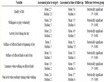
Table 1. Estimations of the horizon distance, horizon volume, mass of radiation, mass of matter, mass of dark energy and the equivalent number of the Coma-like clusters to the mass of matter within the universe horizon volume in the closed cosmic model at special times.
where , u1 = (Gpc)3, u2 = (10 Gpc)3,
  and
and .
.
The value of  is also in high agreement with the values of
  in the other four general cosmic models as shown from Table 1 in [7] .
5. Conclusions
In this paper we have investigated the distributions of the universe horizon distance and the universe horizon volume in the closed cosmic model. It is found that the universe horizon distance distribution increases constantly for  and decreases for
 . However, the universe horizon volume distribution shows sudden reduction in the range
  due to the change of the universe space from flat to curved then closed in the interval
 . On the other hand, this distribution exhibits abrupt raise in the range
  because of the change of the universe space from closed then curved to flat in the interval
  .
.
Distributions of mass of radiation, matter and dark energy within the horizon volume of the universe were also investigated in the closed cosmic model. These distributions reveal similar noticeable changes as the universe horizon volume distribution for the same reasons. The mass of radiation dominates up to , then the mass of matter becomes larger. Afterwards, both distributions of radiation and matter decrease while the distribution of dark energy rises until
 , where the mass of dark energy prevails up to
 . Hence, the distribution of dark energy reduces until
  where the mass of matter becomes prominent again. At
  the masses of both matter and radiation become appreciably high such that the intercluster space will vanish and clusters of galaxies will interfere with each other. Furthermore, not only the intergalactic medium will disappear, but also galaxies will collide and merge with each other to form extremely dense and close cosmological bodies. These very dense bodies will undergo further successive collisions and mergers under the action of central gravity, where the interstellar medium will vanish and the universe would develop to big crunch at
 .
.
Cite this paper
Fadel A.Bukhari, (2015) Distribution of Mass and Energy in Closed Model of the Universe. International Journal of Astronomy and Astrophysics,05,291-301. doi: 10.4236/ijaa.2015.54032
References
- 1. Bukhari, F.A. (2013) A Closed Model of the Universe. International Journal of Astronomy and Astrophysics, 3, 189-198.
http://dx.doi.org/10.4236/ijaa.2013.32022 - 2. Bukhari, F.A. (2013) Cosmological Distances in Closed Model of the Universe. International Journal of Astronomy and Astrophysics, 3, 199-203.
http://dx.doi.org/10.4236/ijaa.2013.32023 - 3. Bukhari, F.A. (2013) Cosmological Distances in Five General Cosmic Models. International Journal of Astronomy and Astrophysics, 3, 183-188.
http://dx.doi.org/10.4236/ijaa.2013.32021 - 4. Bukhari, F.A. (2013) Five General Cosmic Models. Journal of King Abdulaziz University: Science, 25.
- 5. Ryden, B. (2003) Introduction to Cosmology. Addison & Wesley, Boston.
- 6. Schneider, P. (2010) Extragalactic Astronomy and Cosmology. Springer, New York.
- 7. Bukhari, F.A. (2015) Distribution of Mass and Energy in Five General Cosmic Models. International Journal of Astronomy and Astrophysics, 5, 20-27.
http://dx.doi.org/10.4236/ijaa.2015.51004