

Applied Mathematics
Vol.07 No.11(2016), Article ID:68676,12 pages
10.4236/am.2016.711110
Convergence Analysis of General Version of Gauss-Type Proximal Point Method for Metrically Regular Mappings
Md. Asraful Alom1,2, Mohammed Harunor Rashid1, Kalyan Kumer Dey1
1Department of Mathematics, University of Rajshahi, Rajshahi, Bangladesh
2Department of Mathematics, Faculty of Civil Engineering, Khulna University of Engineering & Technology, Khulna, Bangladesh

Copyright © 2016 by authors and Scientific Research Publishing Inc.
This work is licensed under the Creative Commons Attribution International License (CC BY).
http://creativecommons.org/licenses/by/4.0/



Received 7 January 2016; accepted 17 July 2016; published 20 July 2016
ABSTRACT
We introduce and study in the present paper the general version of Gauss-type proximal point algorithm (in short GG-PPA) for solving the inclusion , where T is a set-valued mapping which is not necessarily monotone acting from a Banach space X to a subset of a Banach space Y with locally closed graph. The convergence of the GG-PPA is present here by choosing a sequence of functions
  with
with , which is Lipschitz continuous in a neighbourhood O of the origin and when T is metrically regular. More precisely, semi-local and local convergence of GG-PPA are analyzed. Moreover, we present a numerical example to validate the convergence result of GG-PPA.
Keywords:
Set-Valued Mappings, Metrically Regular Mappings, Lipschitz-Like Mapping, Local and Semi-Local Convergence

1. Introduction
We are concerned in this study with the problem of finding a point  satisfying
 (1)
(1)
where  is a set-valued mapping and X and Y are Banach spaces. This type of inclusion is an abstract model for a wide variety of variational problems including complementary problems, system of nonlinear equations and variational inequalities. In particular, it may characterize optimality or equilibrium problems. Choose a sequence of functions
  with
with  which is Lipschitz continuous in a neighbor- hood O of the origin.
Martinet [1] proposed the following algorithm for the first time for applying it to convex optimization by considering a sequence of scalars , which are different from zero:
 (2)
(2)
Rockafellar [2] thoroughly explored the method (2) in the general framework of maximal monotone inclu- sions. In particular, Rockafellar ( [2] , Theorem 1) shows that when  is an approximate solution of (2) and T is maximal monotone, then for a sequence of positive scalars
  the iteration (2) generates a sequence
  which is weakly convergent to a solution of (1) for any starting point
 . In [3] , Aragón Artacho et al. have been presented the general version of the proximal point algorithm (GPPA) (see Algorithm 1), for the case of nonmonotone mappings, for solving the inclusion (1).
Let . The subset of X, denoted by
 , is defined by
 (3)
(3)
Thus we have the following algorithms which have been presented by Aragón Artacho et al. [3] :
Note that, for a starting point near to a solution, the sequences generated by Algorithm 1 are not uniquely defined and not every sequence is convergent. The results obtained in [3] guarantee the existence of one sequence, which is convergent. Therefore, from the viewpoint of numerical computation, we can assume that these kinds of methods are not suitable in practical application. This drawback motivates us to introduce a method “so- called” general version of Gauss-type proximal point algorithm (GG-PPA). The difference between Algorithm 1 and our proposed Algorithm 2 is that the GG-PPA generates sequences, whose every sequence is convergent, but this does not happen for Algorithm 1. Thus we propose here the GG-PPA as follows:
We observe, from Algorithm 2, that
1) if  and then we assume
  a Hilbert space, this algorithm reduces to the classical pro- ximal point algorithm defined by (2).
2) if , Algorithm 2 is equivalent to the classical Gauss-type proximal point method, which has been introduced by Rashid et al. [4] .
A large number of authors have been studied on proximal point algorithm and have also found applications of this method to specific variational problems. Most of the study on this subject have been concentrated on various versions of the algorithm for solving inclusions involving monotone mappings, and specially, on monotone variational inequalities (see in [5] - [8] ). Spingarn [9] has been studied first weaker form of monotonicity and for details see in [10] .
There have a large study on local convergence analysis about Algorithm 1 (cf. [3] [11] [12] ), but there is no semilocal analysis for Algorithm 1. A huge number of contributions have been studied on semilocal analysis for the Gauss-Newton method (cf. [4] [13] - [16] ). In [4] , Rashid et al. have given a semilocal convergence analysis for the classical Gauss-type proximal point method. As our best knowledge, there is no study on semilocal analysis for Algorithm 2. Therefore we conclude that the contributions presented in this study are seems new.
In the present paper, our aim is to study the semilocal convergence for the GG-PPA defined by Algorithm 2. The metric regularity property and Lipschitz-like property for set-valued mappings are mainly used in our study. The main results are convergence analysis, established in section 3, which based on the attraction region around the initial point and provide some sufficient conditions ensuring the convergence to a solution of any sequence generated by Algorithm 2. As a consequence, local convergence results for GG-PPA are obtained.
This paper is arranged as follows. In Section 2, some necessary notations, notions and preliminary results are presented. In Section 3, we consider the GG-PPA which is introduced in Section 1 and by using the concept of metric regularity property for the set valued mapping T, we will show the existence and present the convergence of the sequence generated by Algorithm 2. In Section 4, we present a numerical experiment to validate the semilocal convergence of Algorithm 2. In the last Section, we will give a summary of the major results to close our paper.
2. Notations and Preliminary Results
In the whole paper, we assume that X and Y are Banach spaces. Let F be a set-valued mapping from X into the subsets of Y, denoted by . Let
. Let  and
and . The closed ball centered at x with radius r is denoted by
 . The domain
 , the inverse
  and the graph
  of F are respectively defined by


and

All the norms are denoted by . Let
. Let  and
and . The distance from x to A is defined by

while the excess from the set C to the set A is defined by

From [4] , we recall the following definition of metric regularity for set-valued mapping.
Definition 1 Let  be a set-valued mapping and let
 . Let
. Let  and
and . Then F is said to be
1) metrically regular at  on
on  with constant
  if
if
 (4)
(4)
2) metrically regular at  if there exist constants
  and
and  such that F is metrically regular at
  on
on  with constant
 .
.
The infimum of the set of values  for which (4) holds is the modulus of metric regularity, denoted by
 . The absence of metric regularity at
  for
for  corresponds to
 . The inequality (4) has direct use in providing an estimate for how far a point x is from being a solution to the generalized equation
  and the expression
  measures the residual when
 .
.
Recall the definition of Lipschitz-like continuity for set-valued mapping from [17] . This notion was introduced by Aubin in [18] and has been studied extensively.
Definition 2 Let  be a set-valued mapping and let
 . Let
. Let  and
and . Then
  is said to be Lipchitz-like at
  on
on  with constant M if the following inequqlity hold:
 (5)
(5)
The following result establish the equivalence relation between metric regularity of a mapping F at  and the Lipschitz-like continuity of the inverse
  at
at , which is obtained from the idea in [19] [20] .
Lemma 1 Let  be a set valued mapping and
 . Let
. Let , then F is metrically regular at
  on
on  if and only if its inverse
  is Lipschitz-like at
  on
on  with constant
  such that

We recall the following statement of Lyusternik-Graves theorem for metrically regular mapping from [21] . This theorem plays an important role in the theory of metric regularity and proves the stability of metric regularity of a generalized equation under perturbations. For its statement, we use that a set  is locally closed at
  if there exists
  such that the set
  is closed.
Lemma 2 Consider a mapping  and any
  at which
  is locally closed. Let F be metrically regular at
  for
for  with constant
 . Consider also a function
  which is Lipschitz continuous at
  with Lipschitz constant
  such that
 . Then the mapping
  is metric-
ally regular at  for
for  with constant
 .
.
We finished this section with the following lemma, which is known as Banach fixed point theorem proved in [22] .
Lemma 3 Let  be a set-valued mapping. Let
 ,
,  and
and  be such that
 (6)
(6)
and
 (7)
(7)
Then  has a fixed point in
 , that is, there exists
  such that
 . If
. If  is additionally single-valued, then the fixed point of
  in
in  is unique.
3. Convergence Analysis of GG-PPA
In this section, we assume that  is a set-valued mapping with locally closed graph at
  such that T is metrically regular at
  with constant
 . Let
. Let  be a (single-valued) function such that
 , which is Lipschitz continuous in a neighborhood O of 0 with a Lipschitz constant
  Let
Let  and define a mapping
  by
by
 (8)
(8)
Then we obtain the following equivalence
 (9)
(9)
In particular,
 (10)
(10)
Let  and let
 . Since
  is Lipschitz continuous on
 , app- lying the Lyusternik-Graves theorem (see Lemma 2) we assume that the mapping
  is metrically regular at
 with constant
 , that is, by Lemma 1 we have the following inequality
 (11)
(11)
Write
 (12)
(12)
Then
 (13)
(13)
The following lemma plays an important role for convergence analysis of the GG-PPA, which is due to [23] .
Lemma 4 Suppose that  is metrically regular at
  on
on  with constant
  such that (12) and (13) are satisfied. Let
  and
and . Then
  is Lipschitz-like at
  on
on  with constant
 , that is,

For our convenience, we consider a sequence of functions  with
with  which are Lipschitz continuous in a neighbourhood O of 0, the same for all k, with Lipschitz constants
  satisfying
 (14)
(14)
We rewrite the mapping  in (8) by substituting
  instead of g as follows:
 (15)
(15)
Since  by (14), then by Lyusternik-Graves theorem (see Lemma 2) and Lemma 1 we obtain that the mapping
  is Lipschitz-like at
  on
on  with constant
  satisfying (11) and hence we have
 (16)
(16)
Furthermore, we define, for each , the mapping
  by
by
 (17)
(17)
and the set-valued mapping  by
by
 (18)
(18)
Then
 (19)
(19)
The main result of this study given as follows, which provides some sufficient conditions ensuring the convergence of the GG-PPA with initial point .
.
Theorem 1 Suppose  and that
  is metrically regular at
  on
on  with constant
 , and let
  be defined in (12). Let
  and
and  be such that
a) ,
,
b) ,
,
c) .
.
Suppose that
 (20)
(20)
Then there exists some  such that any sequence
  generated by Algorithm 2 with initial point in
  converges to a solution
  of (1), that is,
  satisfies that
 .
.
Proof. Let
 (21)
(21)
Then by assumption (b), (21) gives us
 (22)
(22)
Assumption (c) and (20) allow us to take  so that
 (23)
(23)
We will proceed by mathematical induction and show that Algorithm 2 generates at least one sequence and any sequence  generated by Algorithm 2 satisfies the following assertions
 (24)
(24)
and
 (25)
(25)
for each . Define
 (26)
(26)
Since , by assumption (b) and (c), we have
 (27)
(27)
It is trivial that (24) is true for . For showing that (25) is true for
 , we need to prove that
  exists, that is,
 . We will prove
  by applying Lemma 3 to the mapping
  with
with
 . Let us check that both assertions (6) and (7) of Lemma 3 are hold with
  and
and . Noting that
 by (10). Then by the mapping
  in (18) and the definition of excess e, we have
 (28)
(28)
(noting that ). Now, by the choice of
 , we have
 (29)
(29)
Since , by the fact
  in assumption (a) and
  in assumption (c), for each
 , (29) implies that
 (30)
(30)
that is, for each ,
, . In particular,
 (31)
(31)
Hence by using (31) and Lemma 1 for Lipschitz-like property in (28), we have

This shows that assertion (6) of Lemma 3 is satisfied. Now, we show that the assertion (7) of Lemma 3 is satisfied. Let . Then by assumption (a) and (27), we have
and  by (30). By assumed Lipschitz-like property of
 , we have
 (32)
(32)
Applying (19) in (32), we obtain
 (33)
(33)
Then by (14), (33) reduces to

This implies that the assertion (7) of Lemma 3 is also satisfied. Since both assertions (6) and (7) of Lemma 3 are fulfilled, we can deduce there exists a fixed point  such that
 , which translates to
 , that is,
  and hence
 .
.
Now, we show that (25) is hold for .
.
Note that  by assumption (a). Then (13) is valid for (14). Since
  is Lipschitz-like at
  on
on , it follows from Lemma 4 that the mapping
  is Lipschitz-like at
  on
on
 with constant
  for each
 . In particular,
  is Lipschitz-like at
  on
on  with constant
  as
as  by assumption (a) and the choice of
 . Furthermore, assumptions (a) and (c) imply that
 (34)
(34)
It seems that . Then by Lemma 1 we can say that the mapping
  is metrically regular on
 relative to
  with constant
 . Thus by applying Lemma 1, we have
 (35)
(35)
and (23) implies that
 (36)
(36)
Then from (16) and using (36), we obtain that
 (37)
(37)
From Algorithm 2 and using (21) and (37), we obtain that
 (38)
(38)
This implies that (25) is hold for .
.
Suppose that the points  have been obtained, and (24) and (25) are true for
 . We will show that there exists a point
  such that (24) and (25) also hold for
 . Since (24) and (25) are true for each
 , we have the following inequality
 (39)
(39)
This reflects that (24) holds for . Now with almost the same argument as we did for the case when
 , we can find that the mapping
  is also Lipschitz-like at
  on
on  with
with
constant . Then by applying again Algorithm 2, we have
 (40)
(40)
This shows that (25) holds for . Therefore, the proof is completed.
In the particular case, when  is a solution of (1), that is,
  , Theorem 1 is reduced to the following corollary, which gives the local convergence of the sequence generated by the GG-PPA defined by Algorithm 2.
Corollary 1 Suppose that  and that
  satisfies
  and that
  is metrically regular at
 with constant
 . Let
. Let  be such that
  and suppose that
 (41)
(41)
Then there exists some  such that any sequence
  generated by Algorithm 2 with initial point in
  converges to a solution
  of (1), that is,
  satisfies that
 .
.
Proof. Since  is metrically regular at
 , there exist constants
 ,
,  and
and  such that
  is metrically regular at
  on
on  with constant
 . Then, for each
 , one has that
 (42)
(42)
Let  be such that
 . Choose
  such that
  and
and  Then
Then
 (43)
(43)
and
 (44)
(44)
Thus we can choose  such that
 (45)
(45)
Now it is routine to check that inequalities (a)-(c) of Theorem 1 are hold. Thus Theorem 1 is applicable to complete the proof of the corollary.
4. Numerical Experiment
We will provide, in this section, a numerical example to validate the semilocal convergence results of GG-PPA.
Example 1 Let . Define a set-valued mapping T on
  by
by . Consider a sequence of Lipschitz continuous function
  with
with , which is
defined by . Then Algorithm 2 generates a sequence which is converges to
 .
.
It is obvious from the statement that T is metrically regular at  and
and  is Lipschitz continuous on the neighborhood of 0 with Lipschitz constant
 . Consider
 . Then from (3), we have that

On the other hand, if  we obtain that

Thus from (40), we obtain that

For the given values of , we see that
 . Thus, this implies that the sequence generated
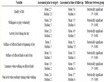
by Algorithm 2 converges linearly. Then the following Table 1, obtained by using Mat lab program, indicates that the solution of the generalized equation is 0.5 when .
.
Moreover, in the case when , we can sketch the following Figure 1:
5. Conclusions
In this study, we have established semi-local and local convergence results for the general version of Gauss-type proximal point algorithm for solving generalized equation under the assumptions that , a sequence of functions
  with
with  which is Lipschitz continuous in a neighbourhood O of the origin

Figure 1. Graphical representation of .
.
Table 1. Finding a solution of generalized equation.
and T is metrically regular. Moreover, we have presented a numerical experiment to validate the semilocal convergence result for Algorithm 2. For the case where , the question, whether the results are true for GG-PPA, is a little bit complicated. However, from the proof of the main theorem, one sees that all the results obtained in the present paper remain true provided that, for any
 , the following implication holds:

To see the detail proof of the above implication, one can refer to [17] .
Acknowledgements
We thank the editor and the referees for their comments. Research of this work is funded by the Ministry of Science and Technology, Bangladesh, grant No. 39.009.002.01.00.053.2014-2015/EAS-19. This support is greatly appreciated.
Cite this paper
Md. Asraful Alom,Mohammed Harunor Rashid,Kalyan Kumer Dey,1 1, (2016) Convergence Analysis of General Version of Gauss-Type Proximal Point Method for Metrically Regular Mappings. Applied Mathematics,07,1248-1259. doi: 10.4236/am.2016.711110
References
- 1. Martinet, B. (1970) Régularisation d’inéquations variationnelles par approximations successives. Revue Fran?aise D’automatique, Informatique, Recherche Opérationnelle, 3, 154-158.
- 2. Rockafellar, R.T. (1976) Monotone Operators and the Proximal Point Algorithm. SIAM Journal on Control and Optimization, 14, 877-898.
http://dx.doi.org/10.1137/0314056 - 3. Aragón Artacho, F.J., Dontchev, A.L. and Geoffroy, M.H. (2007) Convergence of the Proximal Point Method for Metrically Regular Mappings. ESAIM: Proceedings, 17, 1-8.
http://dx.doi.org/10.1051/proc:071701 - 4. Rashid, M.H., Wang, J.H. and Li., C. (2013) Convergence Analysis of Gauss-Type Proximal Point Method for Metrically Regular Mappings. Journal of Nonlinear and Convex Analysis, 14, 627-635.
- 5. Auslender, A. and Teboulle, M. (2000) Lagrangian Duality and Related Multiplier Methods for Variational Inequality Problems. SIAM Journal on Optimization, 10, 1097-1115.
http://dx.doi.org/10.1137/S1052623499352656 - 6. Bauschke, H.H., Burke, J.V., Deutsch, F.R., Hundal, H.S. and Vanderwerff, J.D. (2005) A New Proximal Point Iteration that Converges Weakly But Not in Norm. Proceedings of the American Mathematical Society, 133, 1829-1835.
http://dx.doi.org/10.1090/S0002-9939-05-07719-1 - 7. Anh, P.N., Muu, L.D., Nguyen, V.H. and Strodiot, J.J. (2005) Using the Banach Contraction Principle to Implement the Proximal Point Method for Multivalued Monotone Variational Inequalities. Journal of Optimization Theory and Applications, 124, 285-306.
http://dx.doi.org/10.1007/s10957-004-0926-0 - 8. Yang, Z. and He, B. (2005) A Relaxed Approximate Proximal Point Algorithm. Annals of Operations Research, 133, 119-125.
http://dx.doi.org/10.1007/s10479-004-5027-9 - 9. Spingarn, J.E. (1982) Submonotone Mappings and the Proximal Point Algorithm. Numerical Functional Analysis and Optimization, 4, 123-150.
http://dx.doi.org/10.1080/01630568208816109 - 10. Iusem, A.N., Pennanen, T. and Svaiter, B.F. (2003) Inexact Variants of the Proximal Point Algorithm without Monotonicity. SIAM Journal on Optimization, 13, 1080-1097.
http://dx.doi.org/10.1137/S1052623401399587 - 11. Aragón Artacho, F.J. and Geoffroy, M.H. (2007) Uniformity and Inexact Version of a Proximal Point Method for Metrically Regular Mappings. Journal of Mathematical Analysis and Applications, 335, 168-183.
http://dx.doi.org/10.1016/j.jmaa.2007.01.050 - 12. Pennanen, T. (2002) Local Convergence of the Proximal Point Algorithm and Multiplier Methods without Monotonicity. Mathematics of Operations Research, 27, 170-191.
http://dx.doi.org/10.1287/moor.27.1.170.331 - 13. Li, C. and Ng, K.F. (2007) Majorizing Functions and Convergence of the Gauss-Newton Method for Convex Composite Optimization. SIAM Journal on Optimization, 18, 613-642.
http://dx.doi.org/10.1137/06065622X - 14. Li, C., Zhang, W.H. and Jin, X.Q. (2004) Convergence and Uniqueness Properties of Gauss-Newton’s Method. Computers & Mathematics with Applications, 47, 1057-1067.
http://dx.doi.org/10.1016/S0898-1221(04)90086-7 - 15. He, J.S., Wang, J.H. and Li, C. (2007) Newton’s Method for Underdetermined Systems of Equations under the Modified ?-Condition. Numerical Functional Analysis and Optimization, 28, 663-679.
http://dx.doi.org/10.1080/01630560701348509 - 16. Xu, X.B. and Li, C. (2008) Convergence Criterion of Newton’s Method for Singular Systems with Constant Rank Derivatives. Journal of Mathematical Analysis and Applications, 345, 689-701.
http://dx.doi.org/10.1016/j.jmaa.2008.04.009 - 17. Rashid, M.H., Yu, S.H., Li, C. and Wu, S.Y. (2013) Convergence Analysis of the Gauss-Newton-Type Method for Lipschitz-Like Mappings. Journal of Optimization Theory and Applications, 158, 216-233.
http://dx.doi.org/10.1007/s10957-012-0206-3 - 18. Aubin, J.P. and Frankowska, H. (1990) Set-Valued Analysis. Birkh?user, Boston.
- 19. Rockafellar, R.T. and Wets, R.J-B. (1997) Variational Analysis. Springer-Verlag, Berlin.
- 20. Ioffe, A.D. (2000) Metric Regularity and Subdifferential Calculus. Russian Mathematical Surveys, 55, 501-558.
http://dx.doi.org/10.1070/RM2000v055n03ABEH000292 - 21. Dontchev, A.L., Lewis, A.S. and Rockafellar, R.T. (2002) The Radius of Metric Regularity. Transactions of the AMS, 355, 493-517.
http://dx.doi.org/10.1090/S0002-9947-02-03088-X - 22. Dontchev, A.L. and Hager, W.W. (1994) An Inverse Mapping Theorem for Set-Valued Maps. Proceedings of the American Mathematical Society, 121, 481-498.
http://dx.doi.org/10.1090/S0002-9939-1994-1215027-7 - 23. Rashid, M.H. (2014) Convergence Analysis of Gauss-Type Proximal Point Method for Variational Inequalities. Open Science Journal of Mathematics and Application, 2, 5-14.