
Advances in Pure Mathematics
Vol.05 No.06(2015), Article ID:56188,14 pages
10.4236/apm.2015.56033
The Distribution of Prime Numbers and Finding the Factor of Composite Numbers without Searching
Dagnachew Jenber
School of Interdisciplinary Program, Mathematics Division, Addis Ababa Science and Technology University, Addis Ababa, Ethiopia
Email: djdm_101979@yahoo.com
Copyright © 2015 by author and Scientific Research Publishing Inc.
This work is licensed under the Creative Commons Attribution International License (CC BY).
http://creativecommons.org/licenses/by/4.0/


Received 26 March 2015; accepted 2 May 2015; published 8 May 2015
ABSTRACT
In this paper, there are 5 sections of tables represented by 5 linear sequence functions. There are two one-variable sequence functions that they are able to represent all prime numbers. The first one helps the last one to produce another three two-variable linear sequence functions. With the help of these three two-variable sequence functions, the last one, one-variable sequence function, is able to set apart all prime numbers from composite numbers. The formula shows that there are infinitely many prime numbers by applying limit to infinity. The three two-variable sequence functions help us to find the factor of all composite numbers.
Keywords:
The nth Sequence of an Arithmetic Sequence, Number of Elements of the Set, Sequence Functions

1. Introduction
A prime number (or a prime) is a natural number greater than 1 that has no positive divisors other than 1 and itself. A natural number greater than 1 that is not a prime number is called a composite number. For example, 5 is prime because 1 and 5 are its only positive integer factors, whereas 6 is composite because it has the divisors 2 and 3 in addition to 1 and 6. The fundamental theorem of arithmetic establishes the central role of primes in number theory: any integer greater than 1 can be expressed as a product of primes that is unique up to ordering. The uniqueness in this theorem requires excluding 1 as a prime because one can include arbitrarily many instances of 1 in any factorization, e.g., 3, 1 × 3, 1 × 1 × 3, etc. are all valid factorizations of 3. The property of being prime (or not) is called primality. A simple but slow method of verifying the primality of a given number n is known as trial division. It consists of testing whether n is a multiple of any integer between 2 and . Algorithms much more efficient than trial division have been devised to test the primality of large numbers. Particularly fast methods are available for numbers of special forms, such as Mersenne numbers. As of April 2014, the largest known prime number has 17,425,170 decimal digits. There are infinitely many primes, as demonstrated by Euclid around 300 BC. There is no known useful formula that sets apart all of the prime numbers from composites. However, the distribution of primes, that is to say, the statistical behaviour of primes in the large, can be modelled. The first result in that direction is the prime number theorem, proven at the end of the 19th century, which says that the probability that a given, randomly chosen number n is prime is inversely proportional to its number of digits, or to the logarithm of n. Many questions regarding prime numbers remain open, such as Goldbach’s conjecture (that every even integer greater than 2 can be expressed as the sum of two primes), and the twin prime conjecture (that there are infinitely many pairs of primes whose difference is 2). Such questions spurred the development of various branches of number theory, focusing on analytic or algebraic aspects of numbers. Primes are used in several routines in information technology, such as public-key cryptography, which makes use of properties such as the difficulty of factoring large numbers into their prime factors. Prime numbers give rise to various generalizations in other mathematical domains, mainly algebra, such as prime elements and prime ideals [1] .
In this paper I am going to prove that:
1) 1 is prime number, so the definition of prime number becomes “A prime number (or a prime) is a natural number greater than or equal to 1 that has no positive divisors other than 1 and itself.”
2) There is useful formula that sets apart all of the prime numbers from composites or the distribution of primes.
3) Goldbach’s conjecture and the twin prime conjecture.
4) Finding the factor of any odd composite numbers without searching.
For example to find the factor of composite number
n = 114381625757888867669235779976146612010218296721242362562561842935706935245733897830597 123563958705058989075147599290026879543541 [2] the only thing we need to have is microsoft Excel soft-
ware with big cell and a little bit big screen computer and track the number  from the two tables using
two functions that we will discuss. My paper is important to find the factor composite numbers and prime numbers as we want as fast as possible and faster than trial division and algorithmic methods and perfect.
2. Preliminary
Definition (When Is a Number Divisible by 3) [3] .
If the sum of the digits of a number is divisible by 3 , then the original number is divisible by 3.
Definition (When Is a Number Divisible by 5) [3] .
If the last digit of the number being inspected for divisibility is either a 0 or 5, then the number itself will be divisible by 5.
Definition (When Is a Number Divisible by 7) [3] .
Delete the last digit from the given number and then subtract twice this deleted digit from the remaining number. If the result is divisible by 7, the original number is divisible by 7. This process may be repeated if the result is too large for simple inspection of divisibility of 7.
Definition (The  term of Arithmetic sequence).
The  term of an Arithmetic sequence is given by
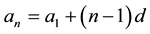 , where
 is the first term of the sequence and d is the common difference of the sequence.
Definition (Multivariable sequence function).
A function  is a real valued multi-variable sequence function defined on the set of
 natural numbers,
 , where
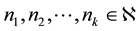 and number of elements in the range
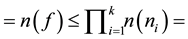 the product of number of elements of

Example: If  for
 , that is,
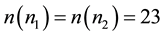 , then
number of elements of , here I take combination
because addition is commutative from  the term
 there- fore order is not considered.
But if , then the number of elements of
 , here I take permutation because sub-
traction is not commutative from  the term
 therefore order is considered.
3. Tables
Theorem 1. The linear sequence function  represents all odd numbers from 1 to 103 for
 , where
 .
Proof. The sequence function  is an arithmetic sequence function of decreasing odd numbers from 103 to 1 with common difference 2 and initial term 103, that is,
 □
Theorem 2. The linear sequence function  represents all odd numbers greater than 105 for natural number

Proof. The function  is an arithmetic sequence function that represents all odd numbers greater than 105 with common difference 2 and initial term 107, that is
 □
Theorem 3. The linear sequence function  represents all odd numbers greater than 105 except a number which are multiples of 3, 5 and 7 for natural numbers p and n suchthat
 and 7n.
Proof. Since , then
 and 7n for all p and n suchthat
 and 7n. □
Theorem 4. The linear sequence function  represents all prime numbers from 1 to 103 except 2, 5 and 7 for natural numbers p and n suchthat
 and 7n, and
 , that is, 1 is prime number.
Proof. See Table 1. □
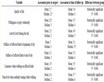
Table 1. My magical table.
Theorem 5. The sequence function  represents 1128 different natural numbers for natural numbers
 and
 .
Proof. From combination of objects  and
 we have
 since
 .
Thus  represents 1128 different natural numbers. □
Theorem 6. If , then
 is composite numbers with factors
 and
 , where
 and
 are stated from above Theorem-5.
Proof. Since  , then
 is composite numbers with factors
 and
 . □
Theorem 7. The sequence function  represents 276 different natural numbers which are not multiples of 3, 5 and 7 for natural numbers
 and n suchthat
 and 7n and
 .
Proof. Since , that is,
 , then

See the following table, where  represents the
 column and
 represents the
 row. □
Example: For Theorem 7 see the following Table 2, Table 3 which represents  for
 where
 represents the first column and
 represents the first row.
Table 2. Tabular proof for theorem 7.
Table 3. Tabular proof for theorem 7 continued.
Theorem 8. If the sequence function,  , then the sequence function
 represents composite numbers with factors
 and
 , where
 ,
 ,
 .
Proof. Since , then
 is composite numbers with factors
 and
 for
 and
 . □
Theorem 9. If the sequence function,  and 7n, where
 , then the sequence function
 represents composite numbers which are not multiples of 3, 5 and 7 with factors
 and
 , where
 ,
 ,
 and
 where
 .
Proof. If  and 7n then
 and 7n this implies that
 and 7n.
Thus  and 7n this implies that
 and 7n for
 and 7n and composite numbers with factors
 and
 .
Example: For Theorem 9 see the following Table 4, Table 5 which represents  for
 where
 represents the first column and
 represents the first row.
Table 4. Examples for theorem 9.
Table 5. Examples for theorem 9 continued.
Theorem 10. If the sequence function,  , then the sequence function
 represents composite numbers with factors
 and
 , where
 ,
 .
Proof. Since  this implies that
 is composite numbers with factors
 and
 for
 . □
Theorem 11. If the sequence function,  and 7n, where
 , then the sequence function
 represents composite numbers which are not multiples of 3, 5 and 7 with factors
 and
 , where
 ,
 and
 where
 .
Proof. If  and 7n then
 and 7n this implies
 and 7n.
Thus  and 7n this implies that
 and 7n for
 and 7n and is composite numbers with factors
 and
 . □
Example: For Theorem 11 see the following Tables 6-8 which represents  for
 where
 represents the first column and
 represents the first row.
Table 6. Examples for theorem 11.
Table 7. Examples for Theorem 11 continued.
Table 8. Examples for Theorem 11 continued.
Theorem 12. The union of three sequence functions,  ,
 ,
 ,
 , and
 ,
 represents the set of natural numbers.
Proof. Let  and
 be disjoint subsets of the set of natural numbers whose union is equal to the set of natural numbers, then there exists
 and
 such that
 this implies that
 for

 this implies that
 for

 this implies that
 for

Therefore .
Theorem 13. If  then the sequence functions
 ,
 and
 represents all odd composite numbers greater than 107, where
 ,
 ,
 ,
 and
 ,
 are defined from above Theorem-12.
Proof. Since  for

or  for

or  for
 and from the above Theorem-12 we have
 , then
 represents the set of all odd composite numbers. □
Theorem 14. The sequence function,  , represents all prime numbers greater than or equal to 107 for
 and
 where
 ,
 for
 ,
 for
 , and
 for
 .
Proof. Suppose  represents all prime numbers for
 and 7n.
But  or
 or
 or
 or
 or
 represents all odd composite numbers then this contradicts our supposition.
Therefore, there exists a number  and 7n suchthat
 represents all prime numbers. □
Theorem 15. There are infinitely many prime numbers.
Proof. Since , then there are infinitely many prime numbers. □
Theorem 16. (Goldbach’s theorem)
Every even integer greater than or equal to 2 can be expressed as the sum of two primes.
Proof. Suppose  for
 ,
 for
 , and
 for
 .
 for
 ,
 for
 , and
 for

Thus for all  and 7n for
 there always exists
 or
 or
 such that
 or
 or
 this implies that
 or or (1)
Or for all  and 7n for
 and
 and
 for
 there always exists
 or
 or
 such that
 or
 or
 this implies that
 or or (2)
Or for all  and
 for
 there always exists
 or
 or
 such that
 or
 or
 this implies that
 or or (3)
Therefore from Equations (1), (2), and (3) we have
 or
 or
 for
 , where
 and

Thus every even integer greater than or equal to 2 can be expressed as the sum of two primes. □
Theorem 17. (Twin prime theorem)
There are infinitely many pairs of primes whose difference is 2.
Proof. Suppose there are infinitely many numbers , and
 such that
 , where
 for
 ,
 for
 ,
 , and
 for
 ,
 .
Thus  and
 represents prime numbers and
 and
 . □
Theorem 18. Suppose ,
 ,
 ,
 ,
 ,
 ,
 , where
 are multiples of
 and 105 respectively and
 for,
 for,
and  for
 .
If ,
 is the given
 term prime number, then n can be calculated as:
 , where
 are the first term of which is less than p and
 number of elements of
 less than p,
 number of elements of
 less than p and
 number of elements of
 less than p.
Proof. Since  is prime number for
 and
 and
 .
Now let  and
 be in the set of natural numbers such that
 where

 is the first term less than p, this implies that
 . Thus we have
 number of terms which are multiples of 3.
 where

 is the first term less than p, this implies that
 . Thus we have
 number of terms which are multiples of 5.
 where

 is the first term less than p, this implies that
 . Thus we have
 number terms which are multiples of 7.
 where

 is the first term less than p, this implies that
 . Thus we have
 number of terms which are multiples of 15.
 where

 is the first term less than p, this implies that
 . Thus we have
 number of terms which are multiples of 21.
 where

 is the first term less than p, this implies that
 . Thus we have
 number of terms which are multiples of 35.
 where

 is the first term less than p, this implies that
 . Thus we have
 number of terms which are multiples of 105.
Thus we have to eliminate  number of terms between 1 and p to find the
 term of prime numbers.
Therefore we have  number of prime numbers between 1 and p including 107 and
 .
Since we have 24 number of prime numbers less than 107, hence
 , that is, the
 prime number is
 . □
Example: For Theorem 12 - 18 see the following Tables 9-16. Where the bold face numbers are elements of  for
 ,
 for
 and
 , and
 for
 . and
 for
 .
Table 9. Examples for theorem 12 - 18.
Table 10. Examples for theorem 12 - 18 continued.
Table 11. Examples for theorem 12 - 18 continued.
Table 12. Examples for theorem 12 - 18 continued.
Table 13. Examples for theorem 12 - 18 continued.
Table 14. Examples for theorem 12 - 18 continued.
Table 15. Examples for theorem 12 - 18 continued.
Table 16. Examples for theorem 12 - 18 continued.
Acknowledgements
I thank the editors and the referee for their comments and thanks to my brothers, colleagues and friends: Adem Gulma, Dereje Wasihun, Natnael Nigussie, Ketsela Hailu, Yadeta Chimdessa, Solomon Tesfaye and Abebe Tamrat for thier encouragement and advice next to God and my family.
References
- (2015) http://en.wikipedia.org/wiki/Prime_number
- Posametier, A.S. (2003) Math Wonders to inspire Teachers and Students.
- Crandall, R. and Pomerance, C.B. (2005) Prime numbers: A Computational Perspective. 21.