
Advances in Pure Mathematics
Vol.4 No.1(2014), Article ID:41731,8 pages DOI:10.4236/apm.2014.41003
Common Fixed Points for a Countable Family of Set-Valued Mappings with Quasi-Contractive Conditions on Metrically Convex Spaces
Yuexi Jin, Ailian Jin, Yongjie Piao*Department of Mathematics, College of Science, Yanbian University, Yanji, China
Email: yuexi1004@163.com, aljin@ybu.edu.cn, *pyj6216@hotmail.com
Copyright © 2014 Yuexi Jin, et al. This is an open access article distributed under the Creative Commons Attribution License, which permits unrestricted use, distribution, and reproduction in any medium, provided the original work is properly cited. In accordance of the Creative Commons Attribution License all Copyrights © 2014 are reserved for SCIRP and the owner of the intellectual property Yuexi Jin, et al. All Copyright © 2014 are guarded by law and by SCIRP as a guardian.
Received December 10, 2013; revised January 10, 2014; accepted January 17, 2014
Keywords:Common Fixed Point; Quasi-Contractive; Metrically Convex; Complete
ABSTRACT
In this paper, we consider a countable family of set-valued mappings satisfying some quasi-contractive conditions. We also construct a sequence by the quasi-contractive conditions of mappings and the boundary condition of a closed subset of a metrically convex space, and then prove that the unique limit of the sequence is the unique common fixed point of the mappings. Finally, we give more generalized common fixed point theorems for a countable family of single-valued mappings. The main results generalize and improve many common fixed point theorems for a finite or countable family of single valued or set-valued mappings with quasi-contractive conditions.
1. Introduction
There have appeared many fixed point theorems for a single-valued self map of a closed subset of a Banach space. However, in many applications, the mapping under considerations is not a self-mapping on a closed subset. In 1976, Assad [1] gave sufficient condition for such single valued mapping to obtain a fixed point by proving a fixed point theorem for Kannan mappings on a Banach space and putting certain boundary conditions on the mapping. Similar results for multi-valued mappings were respectively given by Assad [2] and Assad and Kirk [3]. On the other hand, many authors discussed common fixed point problems [4-7] for finite single or multi-valued mappings on a complete 2-metric convex space or a complete cone metric space respectively. And some authors also discussed common fixed point problems [8-13] for a countable family of self-single-valued mappings with contractive or quasi-contractive conditions on a metric space or a metrically convex space respectively. These results improved and generalized many previous works.
In this paper, we will discuss the existent problems of common fixed points for a countable family of surjective set-valued mappings, which satisfy certain quasi-contractive condition, defined on a complete metrically convex space and obtain some important theorems. The main results in this paper further generalize and improve many common fixed point theorems for single valued or multi-valued mappings with quasi-contractive type conditions.
Through this paper,  (or
(or ) is a metric space. Let
  denote the families of all bounded closed subset of
 .
.
Let , the distance between
  and
and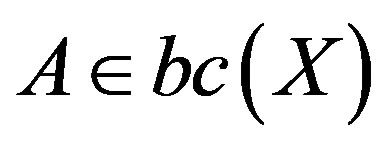 .
.
Definition 1.1. ([8-10]) A metric space  is said to be metrically convex, if any
 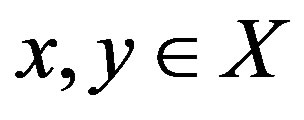 with
with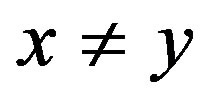 , there exists
 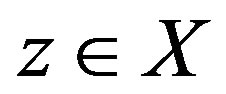 such that
 ,
,  and
and .
.
Lemma 1.1. ([3,8]) If  is a nonempty closed subset of a complete metrically convex space
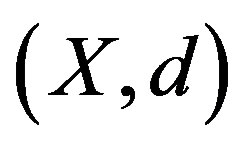 , then for any
 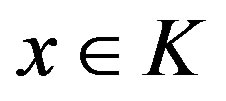 and
and , there exists
 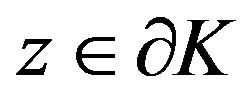 which satisfies
 .
.
Lemma 1.2. ([13]) If  is a complete metric space and
 , then
 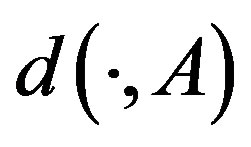 is continuous on
 . Moreover, we have :
1) ;
;
2) 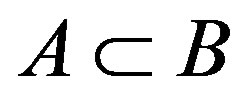 if and only if
 ,
, ;
;
3) for any ,
, .
.
2. Main Results
Theorem 2.1. Let  be a nonempty closed subset of a complete metrically convex space
 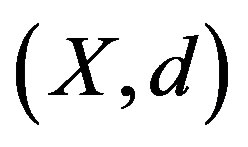 with
with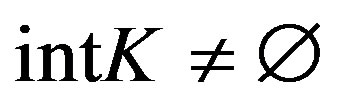 ,
, 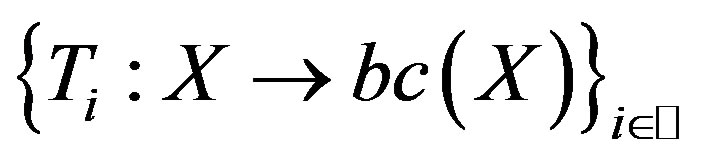 a countable family of surjective set-valued mappings with nonempty values such that for any
 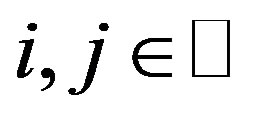 with
with , any
, any ,
,
 (1)
(1)
where  and
and  is a constant number.
Furthermore, if  for all
 , and for each
 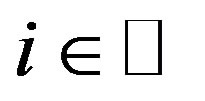 and
and  and any
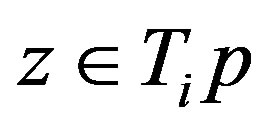 , there exists
 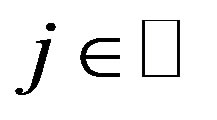 such that
 , then
 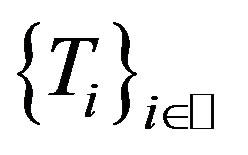 has a unique common fixed point in
 .
.
Proof Take . We will construct two sequences
 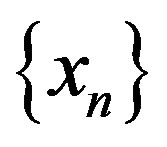 and
and 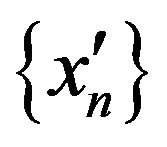 in the following manner. Since
  is on-to, there exists
 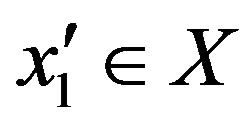 such that
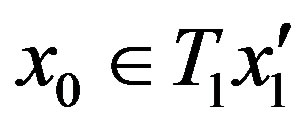 . If
. If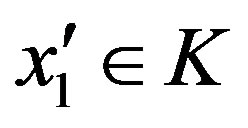 , then put
 ; if
; if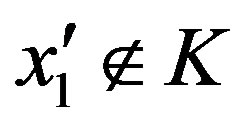 , then by Lemma 1.1 there exits
 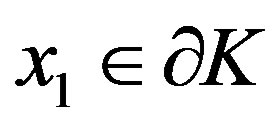 such that
 . For
. For , since
  is on-to, there exists
  such that
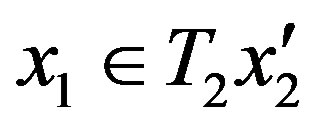 . If
. If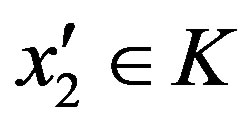 , then put
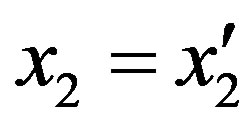 ; if
; if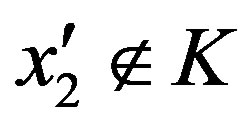 , then by Lemma 1.1 there exists
  such that
 . Continuing this way, we obtain
  and
and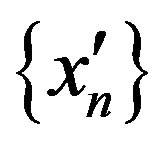 :
:
1)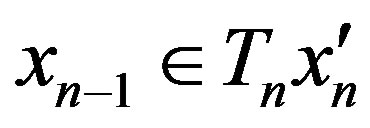 ;
;
2) if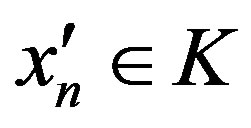 , then put
 ;
;
3) if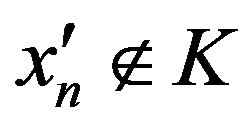 , then by Lemma 1.1 there exists
  such that
4)  for all
Let  and
and . If there exists
  such that
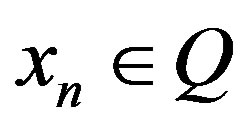 , then
 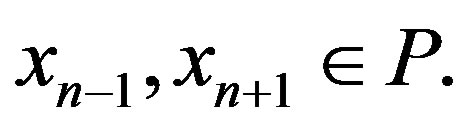 In fact, By 3) and the definition of
 , we have that
 ,
, 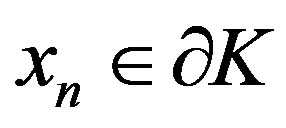 ,
, . If
. If , then
 . On the other hand, since
  and
and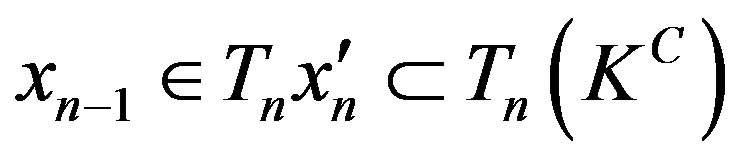 , hence
 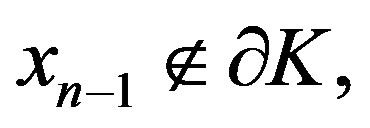 which is a contradiction. If
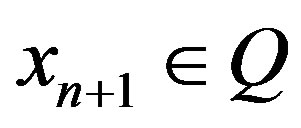 , then
 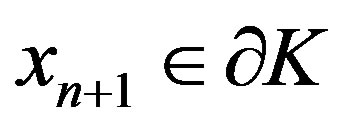 and
and , hence
 , so
, so , which is another contradiction.
By the definitions and properties of  and
and , we can estimate
  into three cases:
Case I.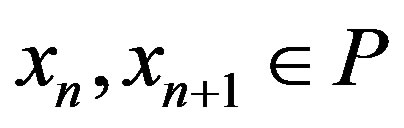 . In this case,
  ,
,  ,
,  and
and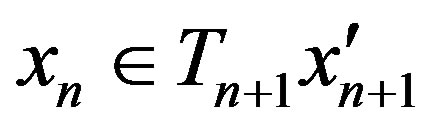 . And we have

where

If  then
then

hence

If , then
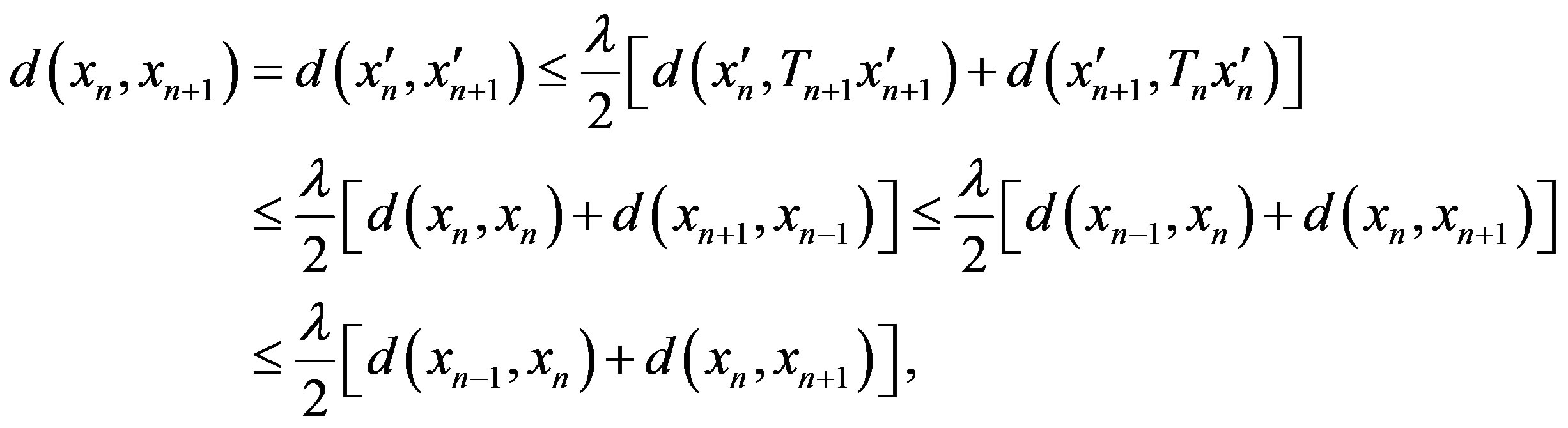
hence

Therefore, in any situation, we have

Case II.  and
and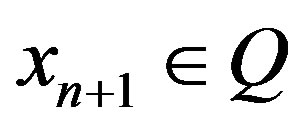 . In this case,
 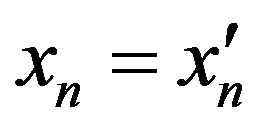 ,
,  and
and 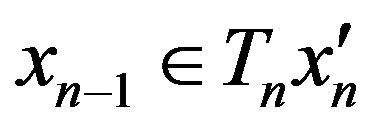 and
and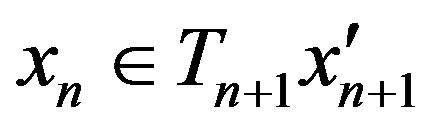 . And we have

where

If  then
then
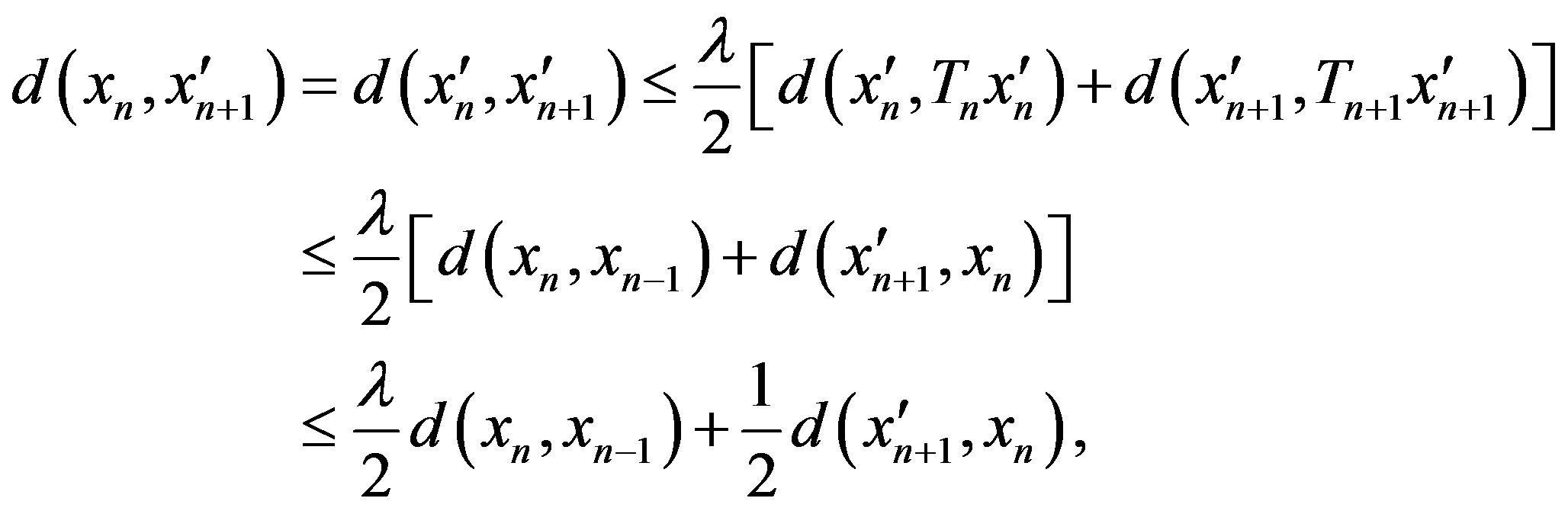
hence

If , then
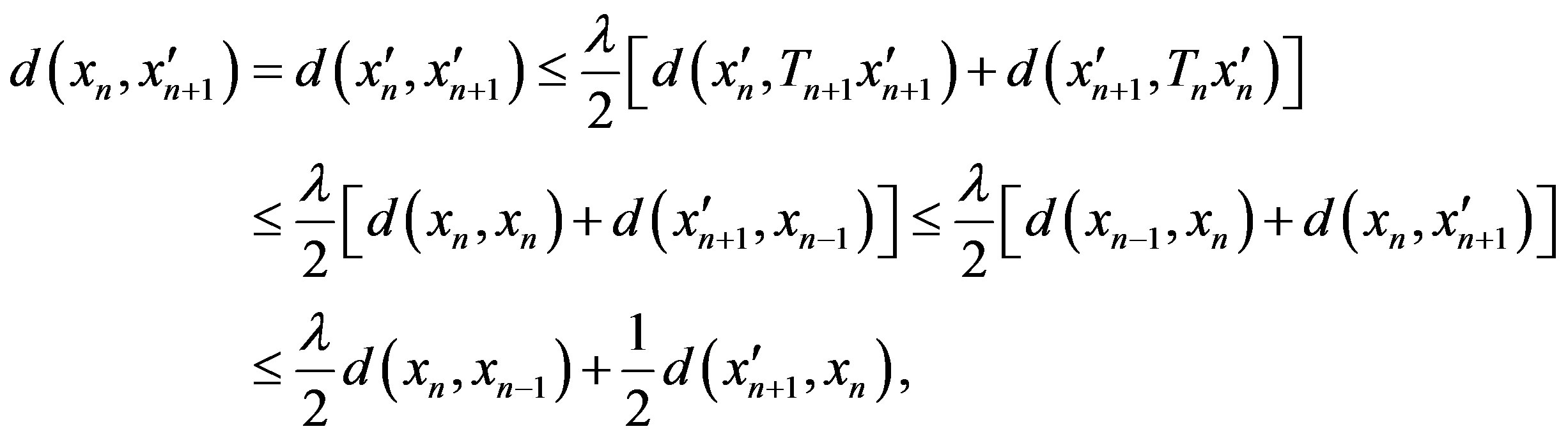
hence

Therefore, in any situation, we have

But , hence we obtain

Case III.  and
and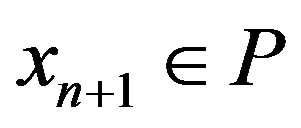 . In this case,
 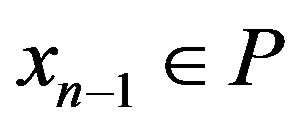 by the property of
  and
and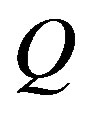 , and
, and ,
, 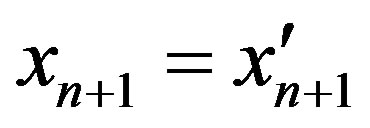 ,
, 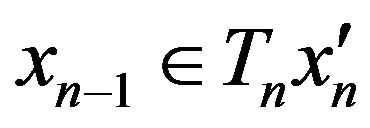 and
and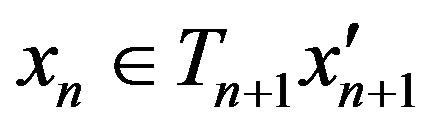 . And we have

where

Here, we give two basic properties:
1) since  so
so  and hence
2) since
 hence
hence 
If  then
then

hence by 2),

So by Case II, we obtain

If , then
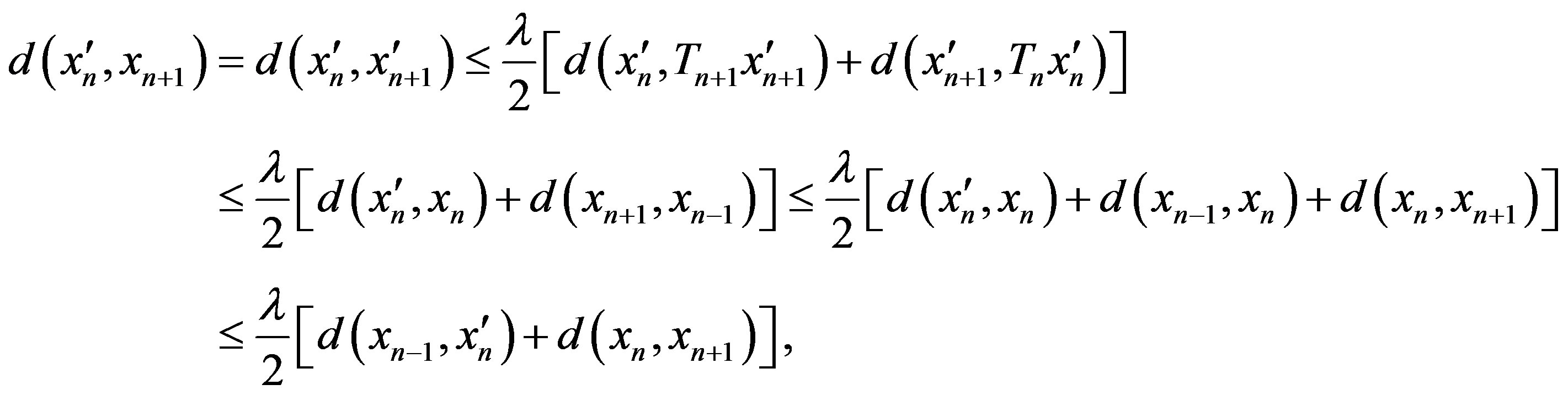
hence by 2),

So by Case II again, we obtain

Hence in any situation, we have

Therefore, from Case I, Case II and Case III, we obtain

Let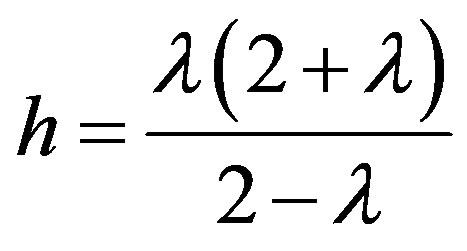 , then
  since
since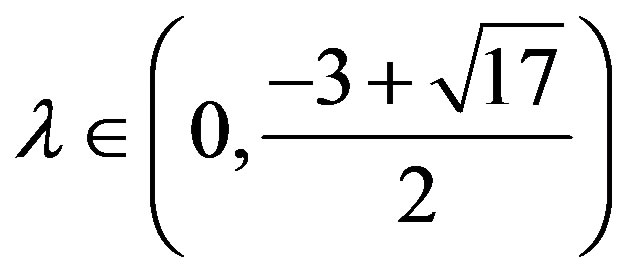 , hence we have

so

Let , then for
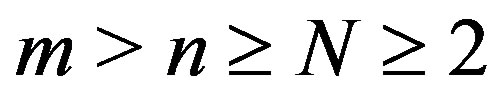 ,
,
 as
as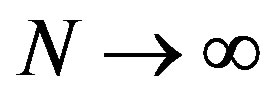 . Hence
  is a Cauchy sequence. Since
  is complete,
 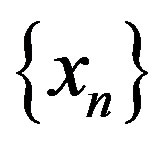 has a limit
 . But
. But  is closed and
  for all
 , hence
 .
.
By the property of  and
and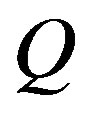 , we can see that there exists an infinite subsequence
 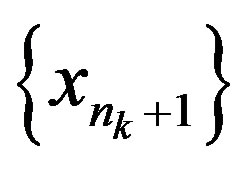 of
of 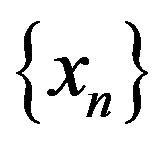 such that
 , hence
  and
and 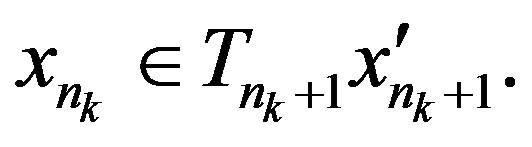
Next, we will prove that 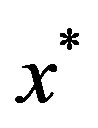 is a common fixed point of
 . Fix any
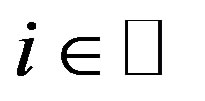 , for each fixed
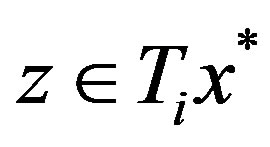 , there exists
  such that
 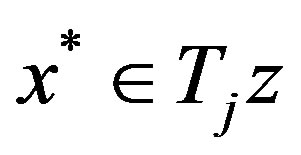 . Take an enough large
  such that
 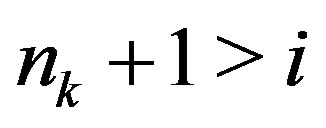 and
and . By Lemma 1.2 3) and (1), we have

and

where

If  then
then

Let , then
  since
since , hence
 . So
. So 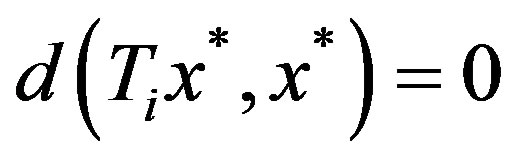 since
since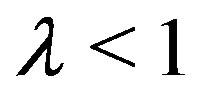 , therefore
 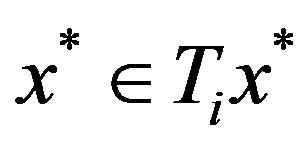 by Lemma 1.2 1).
If , then

Let , then
 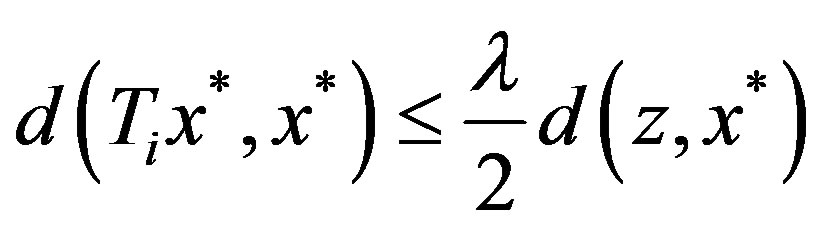 since
since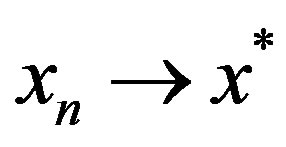 , hence similarly,
So in any situation, 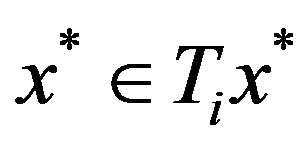 for all
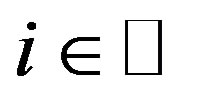 , so
, so 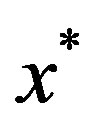 is a common fixed point of
 .
.
If 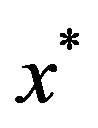 and
and  are all common fixed points of
 , then we will have

where

If , then
 , hence
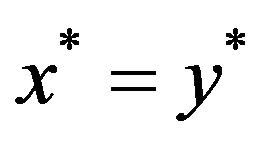 ;
;
If , then
 hence
hence 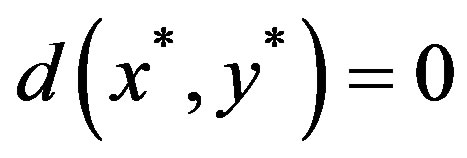 since
since , so
, so .
.
Hence in any situation, . So
. So 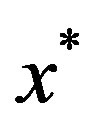 is the unique common fixed points of
If the mappings in Theorem 2.1 are all single-valued, then Theorem 2.1 becomes the next form.
Theorem 2.2. Let  be a nonempty closed subset of a complete metrically convex space
  with
with ,
, 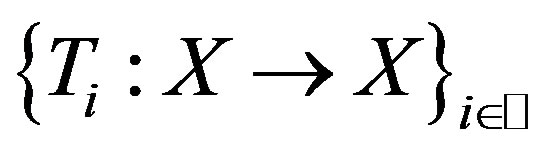 a countable family of surjective single-valued mappings such that for any
 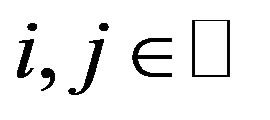 with
with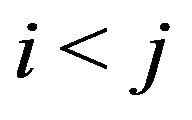 , any
, any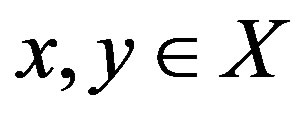 ,
,
 (2)
(2)
where  and
and  is a constant number.
Furthermore, if  for all
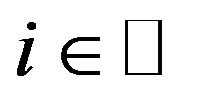 , and for each
  and
and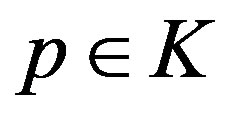 , there exists
  such that
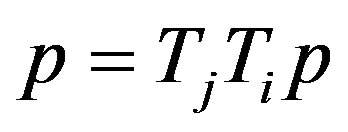 , then
  has a unique common fixed point in
 .
.
From Theorem 2.2, we can obtain the following more generalized common fixed point theorem.
Theorem 2.3. Let  be a nonempty closed subset of a complete metrically convex space
  with
with ,
,  a family of subjective single-valued mappings,
 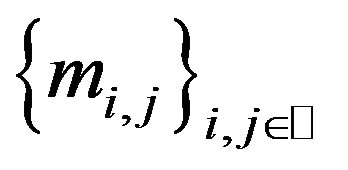 a family of positive integral numbers such that for any
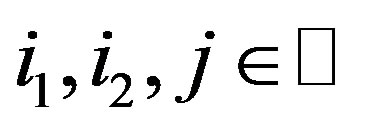 ,
,  ,
,
 (3)
(3)
where  and
and 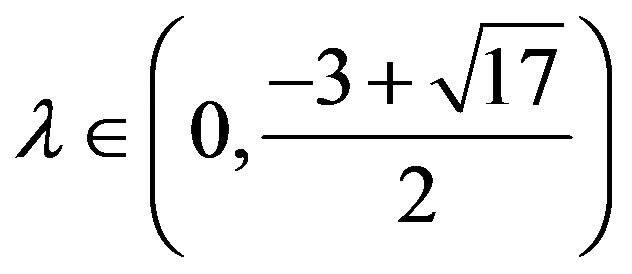 is a constant number. Furthermore, if 1)
 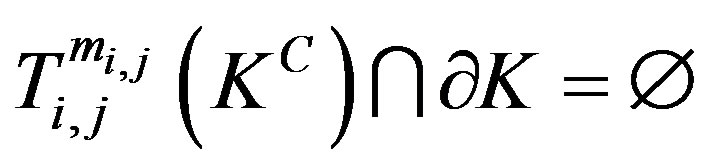 for all
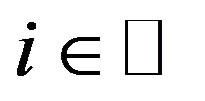 , 2) for each
 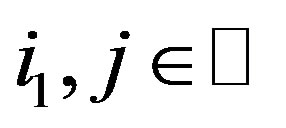 and
and there exists
 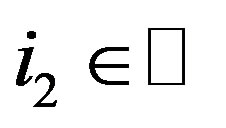 such that
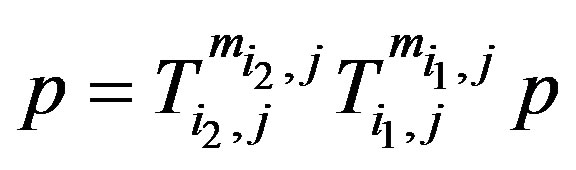 , 3) for each
 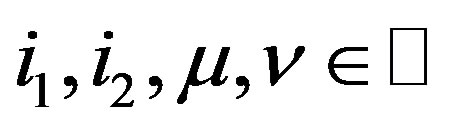 with
with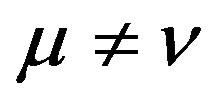 ,
,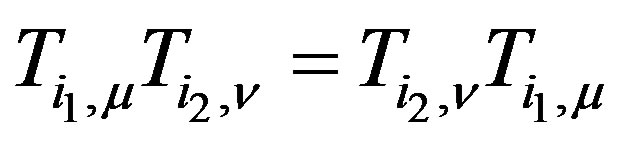 . Then
 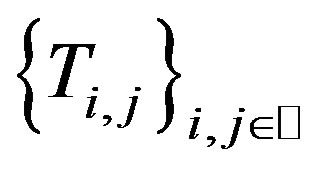 has a unique common fixed point in
 .
.
Proof Fix , and let
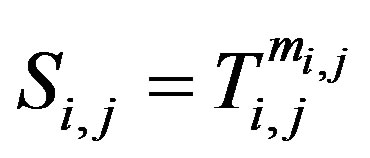 , then
 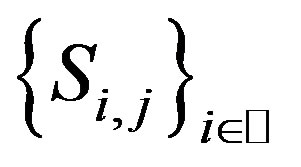 satisfies all of the conditions of Theorem 2.2, hence
  has an unique common fixed point
  in
in . Now, we will prove that
 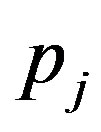 is also unique common fixed point of
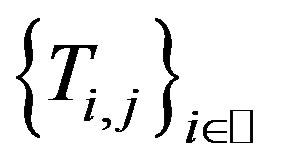 . In fact, for any fixed
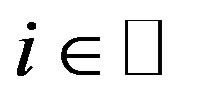 ,
,
 . This means that
  is a fixed point of
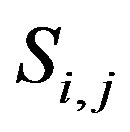 . For any
 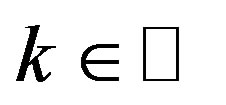 with
with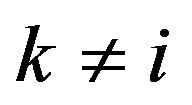 , there exists
 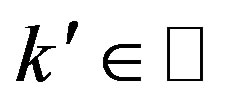 such that
  by 2), and by (3) we have that

where

If , then
 , hence
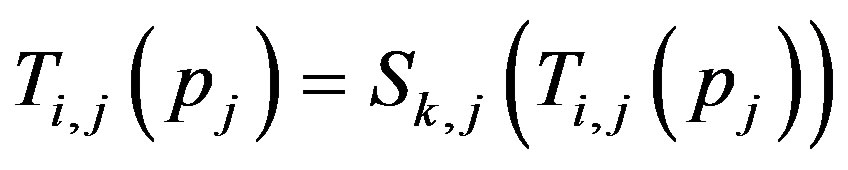 ;
;
If , then
 , hence
Hence in any situation, we have that  is a fixed point of
 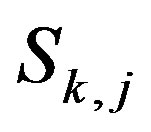 for each
  with
with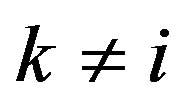 . So
. So  is a common fixed point of
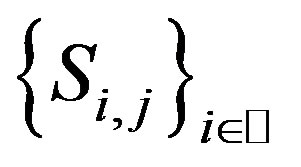 . By uniqueness of common fixed points of
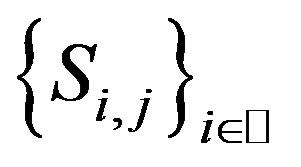 , we have
 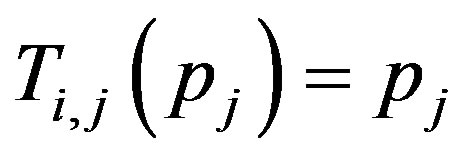 for each
 . Hence
 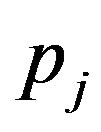 is a common fixed point of
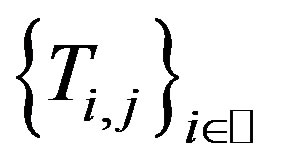 .
.
If 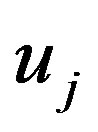 and
and 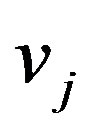 are all common fixed points of
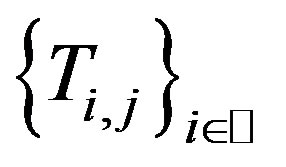 , then they are also common fixed points of
 , hence by the uniqueness of common fixed points of
 , we obtain
 . This means that for each
  has a unique common fixed point
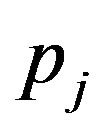 .
.
Now, we prove 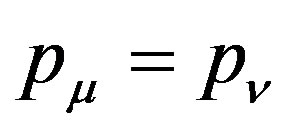 for each
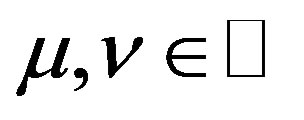 . In fact, for any
  with
with , since
  and
and , so
, so , hence
 by 3). Therefore,
  is a fixed point of
 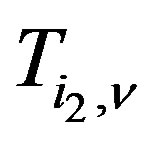 for each
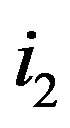 i.e.,
i.e., 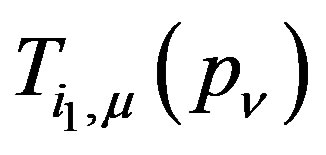 is a common fixed point of
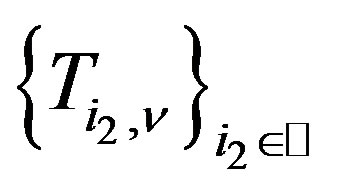 . But
. But  has a unique common fixe point
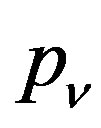 , hence
 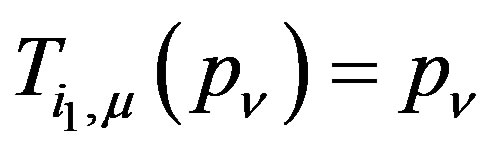 for each
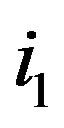 , and therefore
  is a common fixed point of
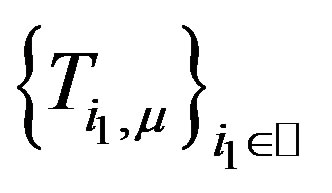 . But
. But 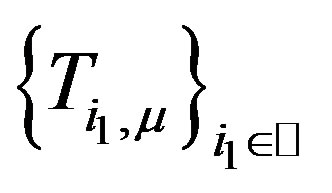
has a unique common fixed point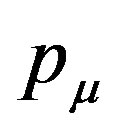 , hence
 . Let
. Let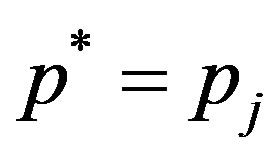 , then
  is the common fixed point of
 . The uniqueness of common fixed points of
  is obvious.
Funding
This work was supported by the National Natural Science Foundation of China (No. 11361064).
REFERENCES
[1] N. A. Assad, “On Fixed Point Theorem of Kannan in Banach Spaces,” Tamkang Journal of Mathematics, Vol. 7, 1976, pp. 91-94.
[2] N. A. Assad, “Fixed point Theorems for Set-Valued Transformations on Compact Sets,” Bolletino della Unione Matematica Italiana, Vol. 7, No. 4, 1973, pp. 1-7.
[3] N. A. Assad and W. A. Kirk, “Fixed Point Theorems for Set-Valued Mappings of Contractive Type,” Pacific Journal of Mathematics, Vol. 43, No. 3, 1972, pp. 553-562. http://dx.doi.org/10.2140/pjm.1972.43.553
[4] X. Zhang, “Common Fixed Point Theorem of Lipschitz Type Mappings on Convex Cone Metric Spaces,” Acta Mathematica Sinica (Chinese Series), Vol. 53, No. 6, 2010, pp. 1139-1148.
[5] M. Abbas, B. E. Rhoades, et al., “Common Fixed Points of Generalized Contractive Multivalued Mappings in Cone Metric Spaces,” Mathematical Communications, Vol. 14, No. 2, 2009, pp. 365-378.
[6] S. L. Singh and B. Ram, “Common Fixed Points of Commuting Mappings in 2-Metric Spaces,” Mathematical Semester Notes, Vol. 10, 1982, pp. 197-207.
[7] Y. J. Piao and Y. F. Jin, “New Unique Common Fixed Point Results for Four Mappings with  -Contractive Type Theorems in 2-Metric Spaces,” Applied Mathematics, Vol. 3, No. 7, 2012, pp. 734-737. http://dx.doi.org/10.4236/am.2012.37108
[8] M. S. Khan, H. K. Pathak and M. D. Khan, “Some Fixed Point Theorems in Metrically Convex Spaces,” Georgian Mathematical Journal, Vol. 7, No. 3, 2000, pp. 523-530.
[9] S. K. Chatterjea, “Fixed Point Theorems,” Comptes rendus de l'Académie des Sciences, Vol. 25, 1972, pp. 727-730.
[10] O. Hadzic, “Common Fixed Point Theorem for a Family of Mappings in Convex Metric Spaces,” Univ. U. Novom Sadu, Zb. Rad. Prirod. Mat. Fak. Ser. Mat., Vol. 20, No. 1, 1990, pp. 89-95.
[11] Y. J. Piao, “Unique Common Fixed Point Theorems for a Family of Non-Self Maps in Metrically Convex Spaces,” Applied Mathematics, Vol. 22, No. 4, 2009, pp. 852-857.
[12] Y. J. piao, “Unique Common Fixed Point Theorems for a Family of Quasi-Contractive Type Maps in Metrically Convex Spaces,” Acta Mathematica Scientia, Vol. 30A, No. 2, 2010, pp. 487-493.
[13] J. R. Wu and H. Y. Liu, “Common Fixed Point Theorems for Sequences of  -Type Contraction Set-Valued Mappings,” Chinese Quarterly Journal of Mathematics, Vol. 24, No. 4, 2009, pp. 504-510.
NOTES

*Corresponding author.