

Journal of Mathematical Finance
Vol.05 No.04(2015), Article ID:60999,11 pages
10.4236/jmf.2015.54029
H¥ Optimal Control Problems for Jump Linear Equations
Ivan G. Ivanov1,2, Ivelin G. Ivanov2
1Faculty of Economics and Business Administration, Sofia University “St. Kliment Ohridski”, Sofia, Bulgaria
2Pedagogical College Dobrich, Shoumen University, Shoumen, Bulgaria

Copyright © 2015 by authors and Scientific Research Publishing Inc.
This work is licensed under the Creative Commons Attribution International License (CC BY).


Received 8 September 2015; accepted 8 November 2015; published 11 November 2015

ABSTRACT
We consider a set of continuous algebraic Riccati equations with indefinite quadratic parts that arise in H¥ control problems. It is well known that the approach for solving such type of equations is proposed in the literature. Two matrix sequences are constructed. Three effective methods are described for computing the matrices of the second sequence, where each matrix is the stabilizing solution of the set of Riccati equations with definite quadratic parts. The acceleration modifications of the described methods are presented and applied. Computer realizations of the presented methods are numerically compared. In addition, a second iterative method is proposed. It constructs one matrix sequence which converges to the stabilizing solution to the given set of Riccati equations with indefinite quadratic parts. The convergence properties of the second method are commented. The iterative methods are numerically compared and investigated.
Keywords:
H¥ Optimal Control Problem, Generalized Riccati Equation, Indefinite Sign, Stabilizing Solution

1. Introduction
Recently the algebraic Riccati equations with indefinite quadratic part have been investigated intensively. The paper of Lanzon et al. [1] is the first where is investigated an algebraic Riccati equation with an indefinite quadratic part in the deterministic case. Further on, the Lanzon’s approach has been extended and applied to the algebraic Riccati equations of different types [2] -[5] and for the stochastic case [6] . Many situations in management, economics and finance [7] -[9] are characterized by multiple decision makers/players who can enforce the decisions that have enduring consequences. The similar game models lead us to the solution of the Riccati equations with an indefinite quadratic part. The findings in [8] show how to model economic and financial applications using a discrete-time H¥-approach to simulate optimal solutions under a flexible choice of system parameters. Here, a continuous H¥-approach to jump linear equations is studied and investigated.
More precisely, how to find the stabilizing solution of the coupled algebraic Riccati equations of the optimal control problem for jump linear systems with indefinite quadratic part:
 (1)
(1)
is considered. In the above equations the matrix coefficients
 are
are
 real matrices,
 are
are
 real matrices,
 is a
is a
 real matrix and the unknown
 is a symmetric
 matrix
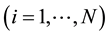 . The considered set of Riccati Equation (1) is connected to the stochastic controlled system with the continuous Markov process (see [2] ), which is called a
 control problem. The parameter
 presents a level of attenuation of the corresponding
 control problem. In order to solve a given
 control problem, we have to find the control
 which is given by

where
 is a right continuous Markov process and
 is the stabilizing solution to (1) (see [2] ).
The stabilizing solution of the considered game theoretic Riccati equation is obtained as a limit of a sequence of approximations constructed based on stabilizing solutions of a sequence of algebraic Riccati equations of stochastic control with definite sign of the quadratic part. The main idea is to construct two matrix sequences such that the sum of corresponding matrices converges to the stabilizing solution of the set of Riccati Equation (1). Such approach is considered in [2] . The properties of this approach are considered in terms of the concept of mean square stabilizability and the assumption that the convex set
 is not empty (see Dragan and coauthors in [2] ).
Here we introduce the sufficient conditions for the existence of stabilizing solutions of the set of Riccati Equation (1). We will prove under these conditions some convergence properties of constructed matrix sequences in terms of perturbed Lyapunov matrix equations. In addition, we introduce a second iterative method where we construct one matrix sequence. We show that the second iterative method constructs a convergent matrix sequence. Moreover, if the sufficient conditions of the first approach are satisfied then the second iterative method converges.
2. Preliminary Facts
The notation
 stands for the linear space of symmetric matrices of size n over the field of real numbers. For any
 , we write
 or
or
 if
if
 is positive definite or
 is positive semidefinite.
We use notation . The notations
 and the inequality
 mean that for
 and
and , respectively. The linear space
 is a Hilbert space with the Frobenius inner product
 . A linear operator
 on
on
 is called asymptotically stable if the
eigenvalues to
 lie in the open left half plane and almost asymptotically stable if the eigenvalues to
 lie in the closed left half plane.
We denote
 and define the matrix function
 as follows:
 (2)
(2)
We will rewrite the function
 in the form:
 (3)
(3)
where
 and
and

Note that transition coefficients
 if
if
 and
and
 for all i. Thus if
 , we have
 .
.
We introduce the following perturbed Lyapunov operator

and will present the solvability of (1) through properties if the perturbed Lyapunov operator.
Proposition 1: [10] The following are equivalent:
1) The matrix
 is the stabilizing solution to (1);
2) The perturbed Lyapunov operator
 is asymptotically stable where:

The above proposition presents a deterministic characterization of a stabilizing solution to set of Riccati Equation (1).
A matrix
 is called stabilizing for
 if eigenvalues of
 lie in the open left half plane. In order words the stabilizing
 to (1) stabilizes the operators
 .
.
Knowing the stabilizing solution
 to (1) we consider
 and
and
 and therefore the matrix
 builds a perturbed Lyapunov operator which is asymptotically stable.
Dragan et al. [2] have introduced the following iteration scheme for finding the stabilizing solution to set of algebraic Riccati Equation (1). They construct two matrix sequences
 and
and
 as follows:
 (4)
(4)
Each matrix
 is computed as the stabilizing solution of the algebraic Riccati equation with definite quadratic part:
 (5)
(5)
where

However, it is not explained in [2] how Equation (5) has to be solved.
In our investigation we present a few iterative methods for finding the stabilizing solution to (5). Convergence
properties of the matrix sequence
 will be derived. A second iterative method is derived. The
second aim of the paper is to provide a short numerically survey on iterative methods for computing the stabilizing solution to the given set of Riccati equations. Results from the numerical comparison are given on a family of numerical examples.
Lemma 1. For the map
 the following identities are valid:
i) (6)
(6)
for any symmetric matrices .
.
ii) (7)
(7)
with

Proof. The statements of Lemma 1 are verified by direct manipulations. □
Lemma 2. Assume there exist positive definite symmetric matrices
 with
with
 and
and
 is the stabilizing solution to

Then
i) if
 is asymptotically stable for
 with
with
 then
then ;
;
ii) if
 then the Lyapunov operator
 is asymptotically stable for
 .
.
Proof. Assume the index i is fixed. We have

 . Applying some matrix manipulations we obtain the equation:

Thus . The statement 1) is proved.
In order to prove the statement 2) we derive:
 (8)
(8)
Since the matrices
 and
and
 are positive definite then the Lyapunov operator
 is asymptotically stable for
 because Riccati Equation (8) has the stabilizing positive semidefinte solution.
 .
.
The lemma is proved.
3. Iterative Methods
In this section we are proving the some convergence properties of the matrix sequences
 and
and
 defined by iterative loop (4)-(5). We present the main theorem where the convergence properties for matrix sequences are derived.
Theorem 1. Assume there exist symmetric matrices
 and
and
 such that
 and
and
 and
and , and the Lyapunov operator
 is asymptotically stable. Then for the matrix sequences
 defined as the stabilizing solution of (5) satisfy
i) The Lyapunov operator
 is asymptotically stable
 ;
;
ii) ;
;
iii) The Lyapunov operator
 is asymptotically stable where
 ;
;
iv)
 for
for .
.
Proof. The algorithm begins with . Then
 . The matrix
 is a solution of the Riccati equation:
 (9)
(9)
Under the assumption the Lyapunov operator
 is asymptotically stable
 . Thus,
 is the unique stabilizing solution of the above Riccati equation and
 .
.
Using Lemma 1 1) and the fact that
 is a solution to (9) we have
 . In addition, the operator

is asymptotically stable and

The Lyapunov operator
 is asymptotically stable. In addition,
 is a solution to
 and applying Lemma 1 we obtain:

Since
 is the stabilizing solution to the latest equation, then the Lyapunov operator
 is asymptotically stable with

Thus, following Lemma 2, 1) we conclude that .
.
Thus, the properties 1), 2), 3) and 4) are true for . We compute
 .
.
Combining iteration (5) with equality
 we construct the following matrix sequences:

we prove by induction the following for :
:
(ak): The Lyapunov operator
 is asymptotically stable,
 ;
;
(bk): ;
;
(gk): The Lyapunov operator
 is asymptotically stable where
 ;
;
(dk): .
.
We have seen the statements (a0), (b0), (g0) and (d0)) are true. We assume the statements (ak), (bk), (gk) and (dk) are true for . We prove the same statements for
 .
.
We know . We compute
 , and
, and . We have to find
 as a unique stabilizing solution to (5) with
 . The matrix
 is positive semidefinite because
 is true. It remains to show that
 is asymptotically stable
 .
.
Following Lemma 2, 2) the operator
 is asymptotically stable because

 . Thus the operator
 is asymptotically stable. In addition,
 . Thus the operator
 is asymptotically stable,
 . There exists a unique positive semidefinite solution
 to (5) with
 . The last fact in combination of the presentation of
 from Lemma 1, 1) we conclude that
 and moreover is positive semidefnite. The assertions (ar) and (br) are proved.
We have to prove the operator
 is asymptotically stable and
 . In addition, the operator
 is asymptotically stable because (ar). Moreover,
 Thus the (gr) is true for
 .
.
Further on, we have
 and
and
 and thus

is asymptotically stable by Lemma 2, 2) Using again Lemma 2, 1) we conclude . Hence
 . All statements are proved for
 .
.
The theorem is proved. □
The problem is to find the stabilizing solution
 to the general equation
 (10)
(10)
The Riccati Iterative Method. We choose
 and
and
 is the stabilizing solution to

 (11)
(11)
with
 Note that the matrix
 is a positive semidefinite matrix for
 .
.
It is well know that if the matrix pair
 is stabilizable and the matrix
 is positive semidefinite, then there exists a semidefinite solution
 to the “perturbed” Riccati Equation (10).
Based on Riccati iteration (11) we consider the improved modification given by:
 (12)
(12)
with

The Lyapunov Iterative Method. We choose
 and
and
 is the stabilizing solution to
 (13)
(13)
with
 and
and

We consider the Lyapunov iteration (13) as a special case of the Lyapunov iteration introduced and investigated by Ivanov [11] . Following the numerical experience in [11] we improve iteration (13) and introduce the improved Lyapunov iteration
 (14)
(14)
where

Convergence properties of the matrix sequence defined by (14) are given with Theorem 2.1 [11] .
Further on, we consider an alternative iteration process where one matrix sequence is constructed. This sequence converges to the stabilizing solution of the given set of Riccati equations. We are proving that this in-
troduced iteration is equivalent to the iteration loop (4)-(5). We substitute
 from (3) in recurrence Equation (5) and after matrix manipulations we obtain for
 :
:
 (15)
(15)
Thus, we can construct the matrix sequence
 with
with
 and each subsequent matrix is computed as a unique stabilizing solution to (15). In fact we just proved that the matrix sequence
 defined by (15) is equivalent to the matrix sequence
 defined by (4)-(5). In order to apply the iteration (15) we change the term
 from (15) with
 .
.
The unknown matrix
 is a solution to the set of continuous-time algebraic Riccati equation with the independent matrix

4. Numerical Simulations
We have considered two iterative methods for computing the matrix sequence : the Riccati iteration
(15) and the Lyapunov iteration (14). In the begining we remark the LMI approach for finding the stabilizing solution to (5). Following similar investigations [12] [13] we conclude that the optimization problem (for given k)
 (16)
(16)
has a solution which is the stabilizing solution to (5).
We carry out experiments for solving a set of Riccati Equation (1). We construct two matrix sequences
 and
and
 for each example. The first matrix sequence is computed using iterative method (4)-(5). In order to form the second matrix sequence we apply Riccati iteration (15), Lyapunov iteration (14) and LMI approach (16). In addition, we construct a matrix sequence
 for each example using recurrence Equation (15) for this purpose.
The matrices
 are computed in terms of the solutions of N Riccati equations for (15) and N
algebraic Lyapunov equations for (14) at each step. For this purpose the MATLAB procedure care is applied where the flops are
 per one iteration. Lyapunov iteration (14) solves N algebraic Riccati equations at each step. The MATLAB procedure lyap is used and the flops are
 per one iteration. In order to find the symmetric solution to (16) we adapt MATLAB’s software functions of LMI Lab.
Our experiments are executed in MATLAB on a 2.20 GHz Intel(R) Core(TM) i7-4702MQ CPU computer. We use two variables tolR and tol for small positive numbers to control the accuracy of computations. We de-
note
 and
and . The iterations (15) and (14) stop when the inequality
 is satisfied for some
 . That is a practical stopping criterion for (15) and (14). The variable It means the maximal number of iterations for which the inequality
 holds. The last inequality is used as a practical stopping criterion for main iterative process (4)-(5). The tolerance tol controls accuracy of the procedure mincx which is used for numerical solution to (16).
We consider a family of examples in case
 for two given values of
 and
and . The coefficient real matrices are given as follows:

 were constructed using the MATLAB notations:

and


and

In our definitions the functions randn (p, k) and sprand (q, m, 0.3) return a p-by-k matrix of pseudorandom scalar values and a q-by-m sparse matrix respectively (for more information see the MATLAB description). The following transition probability matrix

is applied for all examples.
For our purpose we have executed hundred examples of each value of m for all tests. Table 1 reports the average number of iterations for the main iterative process “ItM” and the average number of iterations for the second iterative process “ItS” needed for achieving the relative accuracy for all examples of each size. The column “CPU” presents the CPU time for executing the corresponding iterations. Results from experiments are given in Table 1 with
 for all tests. Results from experiments with the iteration (15) are given in Table 2 with
 for all tests.
5. Conclusions
We have studied two iterative processes for finding the stabilizing solution to a set of continuous-time genera-
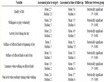
Table 1. Results from 50 runs for each value of n.
Table 2. Results from 50 runs for each value of n.
lized Riccati Equation (1). We have made numerical experiments for computing this solution and we have compared the numerical results. In fact, it is a numerical survey on iterative methods for computing the stabilizing solution. We have compared the results from the experiments in regard of the number of iterations and CPU time for executing. Our numerical experiments confirm the effectiveness of proposed new method (15).
The application of all iterative methods shows that they achieve the same accuracy for different number of iterations. The executed examples have demonstrated that the two iterations “(4)-(5) with RI: (15)” and “(4)-(5) with LI: (14)” require very close average numbers of iterations (see the columns “ItS” for all tests). However, the CPU time is different for these iterations. In addition, by comparing iterations based on the solution, the linear matrix Lyapunov equations shows that iteration “(4)-(5) with LI: (14)” is slightly faster than the second iteration (15). This conclusion is indicated by numerical simulations. Based on the experiments, the main conclusion is that the Lyapunov iteration is faster than the Riccati iteration because these methods carry out the same number of iterations.
Acknowledgements
The present research paper was supported in a part by the EEA Scholarship Programme BG09 Project Grant D03-91 under the European Economic Area Financial Mechanism. This support is greatly appreciated.
Cite this paper
IvanG. Ivanov,Ivelin G.Ivanov, (2015) H∞ Optimal Control Problems for Jump. Journal of Mathematical Finance,05,337-347. doi: 10.4236/jmf.2015.54029
References
- 1. Lanzon, A., Feng, Y., Anderson, B. and Rotkowitz, M. (2008) Computing the Positive Stabilizing Solution to Algebraic Riccati Equations with an Indefinite Quadratic Term via a Recursive Method. IEEE Transactions on Automatic Control, 53, 2280-2291.
http://dx.doi.org/10.1109/TAC.2008.2006108 - 2. Dragan, V., Freiling, G., Morozan, T. and Stoica, A.-M. (2008) Iterative Algorithms for Stabilizing Solutions of Game Theoretic Riccati Equations of Stochastic Control. Proceedings of the 18th International Symposium on Mathematical Theory of Networks & Systems, Blacksburg, Virginia, 28 July-1 August 2008, 1-11.
http://scholar.lib.vt.edu/MTNS/Papers/078.pdf - 3. Vrabie, D. and Lewis, F. (2011) Adaptive Dynamic Programming for Online Solution of a Zero-Sum Differential Game. Journal of Control Theory and Applications, 9, 353-360.
http://dx.doi.org/10.1007/s11768-011-0166-4 - 4. Praveen, P. and Bhasin, S. (2013) Online Partially Model-Free Solution of Two-Player Zero Sum Differential Games. 10th IFAC International Symposium on Dynamics and Control of Process Systems, India, 18-20 December 2013, 696-701.
- 5. Feng, Y.T. and Anderson, B.D.O. (2010) An Iterative Algorithm to Solve State-Perturbed Stochastic Algebraic Riccati Equations in LQ Zero-Sum Games. Systems & Control Letters, 59, 50-56.
http://dx.doi.org/10.1016/j.sysconle.2009.11.006 - 6. Dragan, V. and Ivanov, I. (2011) Computation of the Stabilizing Solution of Game Theoretic Riccati Equation Arising in Stochastic H∞ Control Problems. Numerical Algorithms, 57, 357-375.
http://dx.doi.org/10.1007/s11075-010-9432-7 - 7. Hata, H. and Sekine, J. (2013) Risk-Sensitive Asset Management under a Wishart Autoregressive Factor Model. Journal of Mathematical Finance, 3, 222-229.
http://dx.doi.org/10.4236/jmf.2013.31A021 - 8. Hudgins, D. and Na, J. (2013) H∞-Optimal Control for Robust Financial Asset and Input Purchasing Decisions. Journal of Mathematical Finance, 3, 335-346.
http://dx.doi.org/10.4236/jmf.2013.33034 - 9. Pang, W.-K., Ni, Y.-H., Li, X. and Yiu, K.-F. (2014) Continuous-Time Mean-Variance Portfolio Selection with Partial Information. Journal of Mathematical Finance, 4, 353-365.
http://dx.doi.org/10.4236/jmf.2014.45033 - 10. Dragan, V., Morozan, T. and Stoica, A.M. (2013) Mathematical Methods in Robust Control of Linear Stochastic Systems. Springer, New York.
- 11. Ivanov, I. (2008) On Some Iterations for Optimal Control of Jump Linear Equations. Nonlinear Analysis Series A: Theory, Methods & Applications, 69, 4012-4024.
- 12. Rami, M. and Zhou, X. (2000) Linear Matrix Inequalities, Riccati Equations, and Indefinite Stochastic Linear Quadratic Controls. IEEE Transactions on Automatic Control, 45, 1131-1143.
http://dx.doi.org/10.1109/9.863597 - 13. Ivanov, I. (2012) Accelerated LMI Solvers for the Maximal Solution to a Set of Discrete-Time Algebraic Riccati Equations. Applied Mathematics E-Notes, 12, 228-238.