
Journal of Modern Physics
Vol.05 No.16(2014), Article ID:50602,8 pages
10.4236/jmp.2014.516157
Quantum Statistical Derivation of a Ginzburg-Landau Equation
Shigeji Fujita1, Akira Suzuki2
1Department of Physics, University at Buffalo, State University of New York, Buffalo, USA
2Department of Physics, Faculty of Science, Tokyo University of Science, Tokyo, Japan
Email: asuzuki@rs.kagu.tus.ac.jp
Copyright © 2014 by authors and Scientific Research Publishing Inc.
This work is licensed under the Creative Commons Attribution International License (CC BY).
http://creativecommons.org/licenses/by/4.0/


Received 4 August 2014; revised 1 September 2014; accepted 26 September 2014
ABSTRACT
The pairon field operator  evolves, following Heisenberg’s equation of motion. If the Hamiltonian H contains a condensation energy
  and a repulsive point-like interparticle interaction
 ,
,  , the evolution equation for
  is non-linear, from which we derive the Ginzburg-Landau (GL) equation:
  for the GL wave function
 ,
,  where
where  denotes the state of the condensed Cooper pairs (pairons), and n the pairon density operator (u and
  are kind of square root density operators). The GL equation with
 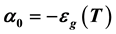 holds for all temperatures
  below the critical temperature Tc, where
  is the T-dependent pairon energy gap. Its solution yields the condensed pairon density
 . The T-dependence of the expansion parameters near Tc obtained by GL:
 ,
,  = constant is confirmed.
Keywords:
Ginzburg-Landau Equation, Complex-Order Parameter, Coherent Length, Cooper Pair (Pairon), Pairon Density Operator, T-Dependent Pairon Energy Gap

1. Introduction
In 1950 Ginzburg and Landau (GL) [1] proposed a revolutionary idea that below the critical temperature Tc a superconductor has a complex order parameter (also known as a GL wave function)  just as a ferromagnet possesses a real order parameter (spontaneous magnetization). Based on Landau’s theory of second-order phase transition [2] , GL expanded the free energy density
  of a superconductor in powers of small
  and
and :
:
 , (1)
, (1)
where ,
,  and
and  are constants, and
  is the superelectron mass. To include the effect of a magnetic field
 , they used a quantum replacement:
 , (2)
, (2)
where A is a vector potential generating , and added a magnetic energy term
 . The integral of the free energy density
  over the sample volume Ω gives the Helmholtz free energy F. After minimizing F with variation in
  and Aj, GL obtained two equations:
 , (3)
, (3)
 , (4)
, (4)
with the density condition:
 , (5)
, (5)
where j is the current density.
The superelectron model has difficulties. Since electrons are fermions, no two electrons can occupy the same particle state by Pauli’s exclusion principle. Cooper [3] introduced Cooper pairs in 1956. Bardeen, Cooper and Schrieffer (BCS) published a classic paper [4] on the superconductivity in 1957 based on the phonon exchange attraction between two electrons. The center-of-mass (CM) of Cooper pairs (pairons) move as bosons, which is shown in Section 2. We view that the Bose-condensed pairons can generate the superconducting state. We modify the density condition (5) to
 . (6)
. (6)
Equation (3) is the celebrated Ginzburg-Landau equation, which is quantum mechanical and nonlinear. Since the smallness of  is assumed, the GL equation was thought to hold only near Tc,
 . Below Tc there is a supercondensate whose motion generates a supercurrent and whose presence generates gaps in the elementary excitation energy spectra. The GL wave function
  represents the quantum state of this supercondensate.
In the present work, we derive the GL wave equation microscopically and show that the GL equation is valid for all temperature below Tc.
2. Moving Cooper Pairs (Pairons)
Fujita, Ito and Godoy in their book [5] discussed the moving pairons. We briefly summarize their theory and main results here. The energy  of a moving pairon can be obtained from
 (7)
(7)
which is Cooper’s equation, Equation (1) of his 1956 Physical Review [3] . The prime on the k'-integral means the restriction on the integration domain arising from the phonon-exchange attraction, see below. We note that the net momentum q is a constant of motion, which arises from the fact that the phonon exchange is an internal process, and hence cannot change the net momentum q. The pair wave functions  are coupled with respect to the other variable k, meaning that the exact (or energy-eigenstate) pairon wavefunctions are superpositions of the pair wavefunctions
 .
.
Equation (7) can be solved as follows. We assume that the energy  is negative:
 . (8)
. (8)
Then, . Rearranging the terms in Equation (7) and dividing it by
 , we obtain
 . (9)
. (9)
Here
 (10)
(10)
is k-independent. Introducing Equation (9) in Equation (7), and dropping the common factor , we obtain
 . (11)
We now assume a free electron model. The Fermi surface is a sphere of the radius (momentum):
 , (12)
where m1 represents the effective mass of an electron. The energy  is given by
 . (13)
The prime on the k-integral in Equation (11) means the restriction:
 . (14)
We may choose the polar axis along q as shown in Figure 1. The integration with respect to the azimuthal angle simply yields the factor 2π. The k-integral can then be expressed by
 (15)
(15)
where kD is given by
 (16)
(16)
After performing the integration and taking the small-q and small- limits, we obtain

Figure 1. The range of the interaction variables (k, θ) is restricted to the circular shell of thickness kD.
 , (17)
where the pairon ground-state energy w0 is given by
 . (18)
As expected, the zero-momentum pairon has the lowest energy. The excitation energy is continuous with no energy gap. Equation (17) was first obtained by Cooper (unpublished) and it is recorded in Schrieffer’s book (Ref. [6] , Equations (2)-(15)). The energy wq increases linearly with momentum  for small q. This behavior arises since the pairon density of states is strongly reduced with increasing momentum q and dominates the q2-increase of the kinetic energy. This linear dispersion relation means that a pairon moves like a massless particle with a common speed
 .
.
The center-of-mass (CM) of pairons move as bosons. We can show this as follows. Second-quantized operators for a pair of “electrons” (i.e., “electron” pairons) are defined by
 (19)
(19)
where c’s and ’s satisfy the Fermi anti-commutation rules:
 . (20)
Using Equation (20) we compute commutation relations for pair operators and obtain
 (21)
(21)
 (22)
(22)
 , (23)
where
 (24)
(24)
are number operators for electrons. Using Equations (19)-(24), we obtain
 . (25)
Hence , indicating that the eigenvalues
  of
of  are
are  or 1. Thus, the number operator in the
  representation
  with both
  and
and  specified, has the eigenvalues 0 or 1.
We now introduce
 , (26)
and calculate  and obtain
 , (27)
from which it follows straightforwardly that the eigenvalues  of
of  are: [7]
 (28)
(28)
with the eigenstates
 . (29)
3. Ginzburg-Landau Equation at 0 K
Let us take a three dimensional (3D) superconductor such as tin (Sn) and lead (Pb). Both metals form face-cen- tered cubic (fcc) crystals. They are in superconducting states at 0 K.
The system ground-state wave function  is a constant in the normalization volume Ω and vanishes at the boundary:
 (30)
(30)
We may assume a periodic rectangular-box with side-lengths  along the cubic lattice,
 (31)
(31)
where a is the lattice constant.
We introduce a one-body density operator n and the density matrix nab for the treatment of a many-particle system. The density operator n can be expanded in the form:
 (32)
(32)
where  denote the relative probabilities that particle states
  are occupied. It is customary to adopt the following normalization condition:
 , (33)
where the symbol “tr” means a one-body trace and N is the particle number. The density operator n is Hermitean:
 . (34)
Let us introduce kind of a square root density operator u such that
 . (35)
This u is not Hermitean but  is. We will show that the revised G-L wave function
  is connected with
 , (36)
where  denotes the condensed pairon state. For a running ring super current [8] we may choose
 , (37)
where L is the ring circumference. The  are very small numbers
 . The energies of the excited states m are practically the same as the ground state
  since
since  and
and . The excited states are semi-stable because N particles must be redistributed when going from an excited state m to the ground state 0. The natural decay times are measured in days.
Let us introduce boson field operators  and
and  which satisfy the Bose commutation rules:
 (38)
(38)
where  and
and  is Dirac’s delta-function.
We take a system characterized by many-boson Hamiltonian H:
 (39)
(39)
where  is a single-boson Hamiltonian and
  is a pair potential energy. The field equation obtained from the Heisenberg equation of motion is
 . (40)
We note that the field equation is nonlinear in the presence of a pair potential.
We can exprress  and
and  by
by
 , (41)
where  and
and  are boson operators and
  and
and  represent vacuum state vectors satisfying
 . (42)
In the Heisenberg picture (HP) the boson states are time-independent and boson operators  and
and  move following the field Equation (40).
The single particle Hamiltonian h contains the kinetic energy , which depends on the momentum p only, and the boson-condensation Hamiltonian he which arises from the phonon exchange attraction. The ground state wave function
  is flat as seen from Equation (30). There are no gradients and no material currents. Hence, we obtain
 , (43)
where the superscript (0) means the ground state average.
The ground-state energy of the pairon is negative and is given by w0 in Equation (18). Hence we may choose
 . (44)
The pairon has charge magnitude 2e and a size. For Pb the pairon linear size is about 103 Å. Because of the Colomb repulsion and Pauli’s exclusion principle two pairons repel each other at short distances. We may represent this repulsion by a point-like pair potential:
 . (45)
Using this and the random phase (factorization) approximation we obtain
 (46)
(46)
Gathering the results (43), (44) and (46), we obtain
 (47)
(47)
For the steady state the time derivative vanishes, yielding
 . (48)
This is precicely, the GL equation, Equation (3) with  and
and .
.
In our derivation we assumed that pairons move as bosons, which is essential. Bosonic pairons can multiply occupy the condensed momentum state while fermionic superelectrons cannot. The correct density condition (6) instead of (5) must therefore be used.
4. Discussion
We derived the GL equation from first principles. In the derivation we found that the particles that are described by the GL wave function  must be bosons. We take the view that
  represents the bosonically condensed pairons. This explains the quantum nature of the GL wave function.
The nonlinearity of the GL equation arises from the point-like repulsive inter-pairon interaction. In 1950 when Ginzburg and Landau published their work, the Cooper pair (pairon) was not known. They simply assumed the superelectron model.
Our microscopic derivation allows us to interpret the expansion parameters as follows. The  represents the pairon condensation energy, and
  the repulsive interaction strength:
 . (49)
BCS showed [4] that the ground-state energy W for the BCS system is
 , (50)
where  is the density of states per spin at the Fermi energy and
  the pairon ground-state energy. Hence we obtain Equation (44):
  at
at .
.
In the original work [1] GL considered a superconductor in the vicinity of the critical temperature Tc, where  is small. Gorkov [9] -[11] used Green’s functions and interrelated the GL and the BCS theory near Tc. We derived the original GL equation by examining the superconductor at 0 K from the condensed pairons point of view. The transport property of a superconductor below Tc is dominated by the Bose-condensed pairons. Since there is no distribution, the qualitative property of the condensed pairons cannot change with temperature. The pairon size (the minimum of the coherence length derivable directly from the GL equation) naturally exists. There is only one supercondensate whose behavior is similar for all temperatures below Tc; only the density of condensed pairons can change. Thus, there is a quantum nonlinear equation (48) for
  valid for all temperateures below Tc. The pairon energy spectrum below Tc has a discrete ground-state energy, which is separated from the energy continuum of moving pairons [5] . Inspection of the pairon energy spectrum with a gap suggests that
 . (51)
Solving Equation (48) with Equation (6), we obtain
 , (52)
indicating that the condensed density  is proportional to the pairon energy gap
 .
.
We now consider an ellipsoidal macroscopic sample of a type I superconductor below Tc subject to a weak magnetic field H applied along its major axis. Because of the Meissner effect, the magnetic fluxes are expelled
from the body, and the magnetic energy is higher by  in the super state than in the normal state. If the
field is sufficiently raised, the sample reverts to the normal state at a critical field Hc, which can be computed in terms of the free-energy expression (1) with the magnetic field included. We obtain after using Equations (6) and (50)
 , (53)
indicating that the measurements of Hc give the T-dependent  approximately. The field-induced transition corresponds to the evaporation of condensed paions, and not to their break-up into electrons. Moving pairons by construction have negative energies while quasi electrons have positive energies. Thus, the moving pairons are more numerous at the lowest temperatures, and they are dominant elementary excitations. Since the contribution of the moving pairons was neglected in the above calculation, Equation (51) contains approximation, see below.
We stress that the pairon energy gap  is distinct from the BCS energy gap Δ, which is the solution of
 . (54)
In the presence of a supercondensate the energy-momentum relation for an unpaired (quasi) electron changes:
 . (55)
Since the density of condensed pairons changes with the temperature T, the gap Δ is T-dependent and is determined from Equation (54) (originated in the BCS energy gap equation). Two unpaired electrons can be bound by the phonon-exchange attraction to form a moving pairon whose energy  is given by
 , (56)
 . (57)
Note that  is T-dependent since Δ is. At Tc, Δ = 0 and the lower band edge
  is equal to the pairon ground-state energy w0. We may then write
 . (58)
We call  the pairon energy gap. The two gaps
  have similar T-behavior; they are zero at Tc and they both grow monotonically as temperature is lowered. The rhs of Equation (54) is a function of
 ; Tc is a regular point such that a small variation
  generates a small variation in Δ2. Hence we obtain
 . (59)
Using similar arguments we get from Equations (57)-(59)
 . (60)
As noted earlier, moving pairons have finite (zero) energy gaps in the super (normal) states, which makes Equation (53) approximate. But the gaps disappear at Tc, and hence the linear-in- behavior should hold for the critical field Hc:
 , (61)
which is supported by experimental data. Tunneling and photo absorption data [12] -[16] appear to support the linear law in Equation (60).
In the original GL theory [1] , the following signs and T-dependence of the expansion parameters  near Tc were assumed and tested:
 , (62)
all of which are reestablished by our microscopic calculations.
5. Conclusions
In summary we reached a significant conclusion that the GL equation is valid for all temperatures below Tc. The most important results in the GL theory include GL’s introduction of a coherent length [1] and Abrikosov’s prediction of a vortex structure [17] , both concepts holding not only near Tc but for all temperatures below Tc.
In the present work the time evolution of the system is described through the field equation for the boson operators  and
and . The resulting equation
 (63)
(63)
may be useful in deriving the Josephson-Feynman equation and describing dynamical Josephson effect [18] [19] . Operators u and  are non-Hermitean, see Equation (35). Hence, a off-diagonal long range order simply arises from the definition of
 .
.
GL treated the effect of the magnetic field applied based on the super electron model. We shall treat this effect based on the moving pairons model separately.
Cite this paper
ShigejiFujita,AkiraSuzuki, (2014) Quantum Statistical Derivation of a Ginzburg-Landau Equation. Journal of Modern Physics,05,1560-1568. doi: 10.4236/jmp.2014.516157
References
- 1. Ginzburg, V.L. and Landau, L.D. (1950) Journal of Experimental and Theoretical Physics (USSR), 20, 1064.
- 2. Landau, L.D. and Lifshitz, E.M. (1980) Statistical Physics, Part I. 3rd Edition, Pergamon Press, Oxford, 171-174.
- 3. Cooper, L.N. (1956) Physical Review, 104, 1189.
http://dx.doi.org/10.1103/PhysRev.104.1189 - 4. Bardeen, J., Cooper, L.N. and Schrieffer, J.R. (1957) Physical Review, 108, 1175.
http://dx.doi.org/10.1103/PhysRev.108.1175 - 5. Fujita, S., Ito, K. and Godoy, S. (2009) Quantum Theory of Conducting Matter: Superconductivity. Springer, New York, 77-79, 133-138.
http://dx.doi.org/10.1007/978-0-387-88211-6 - 6. Schrieffer, J.R. (1964) Theory of Superconductivity. Benjamin, New York.
- 7. Dirac, P.A.M. (1958) Principle of Quantum Mechanics. 4th Edition, Oxford University Press, London, 136-138.
- 8. File, J. and Mills, R.G. (1963) Physical Review Letters, 10, 93.
http://dx.doi.org/10.1103/PhysRevLett.10.93 - 9. Gorkov, I. (1958) Soviet Physics—JETP, 7, 505.
- 10. Gorkov, I. (1959) Soviet Physics—JETP, 9, 1364.
- 11. Gorkov, I. (1960) Soviet Physics—JETP, 10, 998.
- 12. Glaever, I. (1960) Physical Review Letters, 5, 147.
http://dx.doi.org/10.1103/PhysRevLett.5.147 - 13. Glaever, I. (1960) Physical Review Letters, 5, 464.
http://dx.doi.org/10.1103/PhysRevLett.5.464 - 14. Glaever, I. and Megerle, K. (1961) Physical Review, 122, 1101.
http://dx.doi.org/10.1103/PhysRev.122.1101 - 15. Glover III, R.E. and Tinkham, M. (1957) Physical Review, 108, 243.
http://dx.doi.org/10.1103/PhysRev.108.243 - 16. Biondi, M.A. and Garfunkel, M. (1959) Physical Review, 116, 853.
http://dx.doi.org/10.1103/PhysRev.116.853 - 17. Abrikosov, A.A. (1957) Soviet Physics—JETP, 5, 1174.
- 18. Josephson, B.D. (1962) Physics Letters, 1, 251-253.
http://dx.doi.org/10.1016/0031-9163(62)91369-0 - 19. Josephson, B.D. (1964) Reviews of Modern Physics, 36, 216.
http://dx.doi.org/10.1103/RevModPhys.36.216