

Advances in Linear Algebra & Matrix Theory
Vol.05 No.01(2015), Article ID:53997,8 pages
10.4236/alamt.2015.51002
H-Singular Value of a Positive Tensor
Jun He
School of Mathematical Sciences, University of Electronic Science and Technology of China, Chengdu, China
Email: hejunfan1@163.com
Copyright © 2015 by author and Scientific Research Publishing Inc.
This work is licensed under the Creative Commons Attribution International License (CC BY).
http://creativecommons.org/licenses/by/4.0/



Received 18 January 2015; accepted 9 February 2015; published 12 February 2015
ABSTRACT
In this paper we study properties of H-singular values of a positive tensor  and present an iterative algorithm for computing the largest H-singular value of the positive tensor. We prove that this method converges for any positive tensors.
Keywords:
Singular Value, Positive Tensor, Convergence

1. Introduction
Recently, eigenvalue problems for tensors have gained special attention in the realm of numerical multilinear algebra [1] -[4] , and they have a wide range of practical applications [5] [6] . The definition of eigenvalues of square tensors has been introduced in [7] -[9] . Nice properties such as the Perron-Frobenius theorem for eigenvalues of nonnegative square tensors [7] have been discussed. The authors give algorithms to compute the largest eigenvalue of a nonnegative square tensor in [6] [10] . Singular values of rectangular tensors have been introduced in [11] . In [11] [12] , properties of singular values of rectangular tensors have been discussed. In particular, Chang, Qi and Zhou [11] established the Perron-Frobenius theorem to singular values of nonnega- tive rectangular tensors. They also proposed an iterative algorithm to find the largest singular value of a nonne- gative rectangular tensor. In [13] , the authors studied the convergence of the proposed algorithm.
In this paper, we focus on the tensor , and study properties of H-singular values of a positive tensor
 . For more about the definition of the H-singular value of a tensor
 , one can turn to the paper [14] .
The paper is organized as follows. In Section 2, we recall some definitions and define H-singular values for a positive tensor, we extend the Perron-Frobenius theorem to H-singular values of positive tensors. In Section 3, we give an algorithm to find the largest singular value of a positive tensor, some numerical experiments are given to show that our algorithm is efficient.
2. H-Singular Values for a Tensor
Let . In this paper, we extend the definition of the classical concept of rectangular tensors, the tensors are no need square or rectangular. Consider the optimization problem
 (1)
(1)
under the constraints that

We obtain the following system at a critical point:
 (2)
(2)
where

If ,
,  are solutions of (2), then we say that
  is an H-singular value of the tensor
 ,
,  are eigenvectors of
 , associated with the H-singular value
 .
.
Let


A vector  is called nonnegative if
  and it is called strongly positive if
 . For any
 , let
, let  be a nonnegative vector. We give our main theorems as follows.
Lemma 1. If a tensor  is positive, then for any
 ,
,  ,
,
 (3)
(3)
Proof. If ,
,  , suppose
 , and then
 , a contradiction.
If , and
, and ,
,  , there exists
 , and we can get

Then

Similarly, we can get .
. 
Lemma 2. Let a tensor  be positive, and let
  be a
be a
solution of (2). If  satisfies
 (4)
(4)
Then .
.
Proof. Define . Since
 ,
, . We have

if and only if . Thus

i.e.,

This implies .
. 
Remark. If there exists  such that
 (5)
(5)
Then  is the eigenvalue of
  and
and  is the corresponding eigenvectors of
 ,
, . This re- mark can be obtained by similar process in [12] [15] .
Theorem 1. Assume that a tensor  is positive, then there exists a solution
  of
of
system (1), satisfying  and
and , Moreover, if
  is a singular value with strongly positive ei-
genvectors ,
,  , then
 , The strongly positive eigenvectors are unique up to a multiplica-
tive constant,
Proof. Denote . Provide by Lemma 1, the map F on
  into itself:

is well defined.
According to the Brouwer Fixed Point Theorem, there exists  such that
 (6)
(6)
where

Let

Then  is a solution of (2).
Let us show: . If not, suppose
 , that is to say,

this contradicts the result of Lemma 1. Therefore,

The uniqueness of the positive singular value with strongly positive left and right eigenvectors now follows from Lemma 2 directly. The uniqueness up to a multiplicative constant of the strongly positive left and right eigenvectors is proved in the same way as in [7] . 
Theorem 2. Assume that  is a positive tensor, then

where  is the unique positive singular value corresponding to strongly positive eigenvectors.
Proof. Let ,
, . We define

Since it is a positively 0-homogeneous function, it can be restricted on . Let
. Let

Let  is a solution of (2). On one hand, we have

On the other hand, by the definition of , we get

This means
 (7)
(7)
According to Lemma 2, we have , and the we get

Similarly, we prove the other equality. 
Theorem 3. Assume that  is a positive tensor, and
  is the positive singular value with strongly positive eigenvectors. Then
  for all singular values
  of
of .
.
Proof. Let  for some
 ,
, . We wish to show
 . Let
. Let . We get

Apply Theorem 2, we can get

Theorem 4. Suppose that  is a positive tensor satisfying

where  is a constant. Then
 .
.
Proof. Let  is a solution of (2). Without loss of generality, we suppose that
 ,
, . Then

On the other hand, it is easy to check that C is an eigenvalue of A with corresponding eigenvectors ,
, . So
. So . Thus we have
 .
. 
3. An Iterative Algorithm
In this section, we propose an iterative algorithm to calculate the largest H-singular value of a positive tensor based on Theorem 2 and Theorem 3. This algorithm is a modified version of the one given in [11] [13] , and we will show the convergence of the proposed algorithm for any positive tensor. In this section, we always suppose that  is a positive tensor.
For a positive tensor ,
,  ,
,  , let
, let
 (8)
(8)
Algorithm 3.1
Step 0 Choose . Set
. Set ;
;
Step 1 Compute
 (9)
(9)
Let
 (10)
(10)
 (11)
(11)
Step 2 If , then stop. Otherwise, compute
 (12)
(12)
and replace  by
by  and go to Step 1.
In the following, we will give a convergence result for Algorithm 3.1.
Theorem 5. Assume that  is a solution of (2). Then,

Proof. By (8), . From Theorem 2, for

We now prove for any ,
,

For each , by the definition of
  and Lemma 1, we have

Then,

So,

Hence, we get

which means for 

Therefore, we get

Similarly, we can prove that

From Theorem 5,  is a monotonic increasing sequence and it has an upper bound, so the limit exists. Since
  is monotonic decreasing sequence and it has a lower bound, the limit exists as well. We suppose

By Theorem 5, we have
 (13)
(13)
The argument used in the following proof is parallel to that in [13] . We proceed the proof for completeness.
Theorem 6. Let ,
, 
 be the sequences produced by Algorithm 3.1. Then
a)  have convergent subsequences which converge to
 , respectively. Moreover,
  ,
, .
.
b) 
c) .
.
Proof. As  for all
 . Hence, there exists a convergent subsequence by the com-
pactness of the unit ball in  and
and  must not be a zero vector.
By the continuity of , (8) and (9), we get the result (b).
If , we get that someone of the follow inequations exists:
 . By Theorem 2.5 in [13] , there exists a positive integer
 such that

By (a) and the continuity of , for any sufficiently large
 , we obtain

Then we obtain , which contradicts with Theorem 5. So (c) holds.
By Theorem 6, we can get the largest H-singular value of  is
is

In the following, in order to show the viability of Algorithm 3.1, we used Matlab 7.1 to test it with some randomly generated rectangular tensors. For these randomly generated tensors, the value of each entry is be- tween 0 and 10. we set . We terminated our iteration when
 .
.
Our numerical results are shown in Table 1. In this table, Ite denotes the number of iterations,  and λ denote the values of
  and
and  at the final iteration, respectively.
  denote the values of at the final iteration, respectively. The results in Table 1 show that the proposed algorithm is promising. The algorithm is able to produce the largest singular values for all these randomly generated posi-
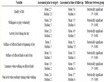
Table 1. Numerical results of Algorithm 3.1 for randomly generated tensors.
tive tensors.
4. Conclusion
In this paper, we give some eigenvalues properties about the H-singular value of a positive tensor  introduced in [6] . We find that the Perron-Frobenius like theorem for nonnegative square tensors can not be extended to the nonnegative tensor
 , so here we limit the tensor
  to the positive case. An algorithm is given to compute the largest H-singular value of the positive tensor.
Acknowledgements
I thank the editor and the referee for their comments. The author is funded by the Fundamental Research Funds for Central Universities.
References
- Chang, K.-C., Pearson, K. and Zhang, T. (2011) Primitivity, the Convergence of the NZQ Method, and the Largest Eigenvalue for Nonnegative Tensors. SIAM Journal on Matrix Analysis and Applications, 32, 806-819. http://dx.doi.org/10.1137/100807120
- Qi, L.Q. (2007) Eigenvalues and Invariants of Tensor. Journal of Mathematical Analysis and Applications, 325, 1363-1377.http://dx.doi.org/10.1016/j.jmaa.2006.02.071
- Pearson, K.J. (2010) Primitive Tensors and Convergence of an Iterative Process for the Eigenvalue of a Primitive Tensor. http://arxiv.org/abs/1004.2423
- Wang, Y.J., Qi, L.Q. and Zhang, X.Z. (2009) A Practical Method for Computing the Largest M-Eigenvalue of a Fourth- Order Partially Symmetric Tensor. Numerical Linear Algebra with Applications, 16, 589-601. http://dx.doi.org/10.1002/nla.633
- Qi, L.Q., Wang, Y.J. and Wu, E.X. (2008) D-Eigenvalues of Diffusion Kurtosis Tensor. Journal of Computational and Applied Mathematics, 221, 150-157. http://dx.doi.org/10.1016/j.cam.2007.10.012
- Ng, M., Qi, L.Q. and Zhou, G.L. (2009) Finding the Largest Eigenvalue of a Non-Negative Tensor. SIAM Journal on Matrix Analysis and Applications, 31, 1090-1099. http://dx.doi.org/10.1137/09074838X
- Chang, K.-C., Pearson, K. and Zhang, T. (2008) Perron-Frobenius Theorem for Nonnegative Tensors. Communications in Mathematical Sciences, 6, 507-520. http://dx.doi.org/10.4310/CMS.2008.v6.n2.a12
- Chang, K.-C., Pearson, K. and Zhang, T. (2009) On Eigenvalue Problems of Real Symmetric Tensors. Journal of Mathematical Analysis and Applications, 350, 416-422. http://dx.doi.org/10.1016/j.jmaa.2008.09.067
- Qi, L.Q. (2005) Eigenvalues of a Real Supersymmetric Tensor. Journal of Symbolic Computation, 40, 1302-1324. http://dx.doi.org/10.1016/j.jsc.2005.05.007
- Liu, Y.J., Zhou, G.L. and Ibrahim, N.F. (2010) An Always Convergent Algorithm for the Largest Eigenvalue of an Irreducible Nonnegative Tensor. Journal of Computational and Applied Mathematics, 235, 286-292. http://dx.doi.org/10.1016/j.cam.2010.06.002
- Chang, K.C., Qi, L.Q. and Zhou, G.L. (2010) Singular Values of a Real Rectangular Tensor. Journal of Mathematical Analysis and Applications, 370, 284-294. http://dx.doi.org/10.1016/j.jmaa.2010.04.037
- Yang, Y. and Yang, Q. (2011) Singular Values of Nonnegative Rectangular Tensors. Frontiers of Mathematics in China, 6, 363-378.
- Zhou, G.K., Caccetta, L. and Qi, L.Q. (2013) Convergence of an Algorithm for the Largest Singular Value of a Nonnegative Rectangular Tensor. Linear Algebra and Its Applications, 438, 959-968. http://dx.doi.org/10.1016/j.laa.2011.06.038
- Lim, L.H. (2005) Singular Values and Eigenvalues of Tensors: A Variational Approach. Proceedings of the IEEE International Workshop on Computational Advances in Multi-Sensor Adaptive Processing (CAMSAP’05), 1, 129-132.
- Yang, Y.N. and Yang, Q.Z. (2010) Further Results for Perron-Frobenius Theorem for Nonnegative Tensors. SIAM Journal on Matrix Analysis and Applications, 31, 2517-2530. http://dx.doi.org/10.1137/090778766