

Applied Mathematics
Vol.05 No.21(2014), Article ID:52265,9 pages
10.4236/am.2014.521325
New Oscillation Criteria of Second-Order Nonlinear Delay Dynamic Equations on Time Scales
Quanxin Zhang, Li Gao
Department of Mathematics, Binzhou University, Shandong, China
Email: 3314744@163.com, gaolibzxy@163.com
Copyright © 2014 by authors and Scientific Research Publishing Inc.
This work is licensed under the Creative Commons Attribution International License (CC BY).
http://creativecommons.org/licenses/by/4.0/



Received 25 September 2014; revised 22 October 2014; accepted 10 November 2014
ABSTRACT
By using the generalized Riccati transformation and the integral averaging technique, the paper establishes some new oscillation criteria for the second-order nonlinear delay dynamic equations on time scales. The results in this paper unify the oscillation of the second-order nonlinear delay differential equation and the second-order nonlinear delay difference equation on time scales. The Theorems in this paper are new even in the continuous and the discrete cases.
Keywords:
Oscillation Criterion, Dynamic Equations, Time Scale

1. Introduction
According to the important academic value and application background in Quantum Physics (especially in Nuclear Physics), engineering mechanics and control theory, the oscillation theory of dynamic equations on time scales has become one of the research hotspots. The paper will deal with the oscillatory behavior of all solutions of second-order nonlinear delay dynamic equation
 (1)
In order to obtain the main results, we give the following hypotheses:
(H1)  is a time scale (i.e., a nonempty closed subset of the real numbers
 ) which is unbounded above, and
 with
 . We define the time scale interval of the form
 by
 .
(H2)  is the ratio of two positive odd integers.
(H3) a, q are positive real-valued right-dense continuous functions on an arbitrary time scale .
(H4) 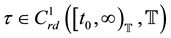 is a strictly increasing function such that
 and
 as
 and
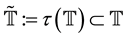 .
(H5) 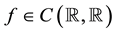 is a continuous function, for some positive constant L which satisfies
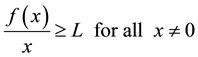
According to the solution of (1), we mean a nontrivial real-valued function x satisfying (1) for . We recall that a solution x of Equation (1) is said to be oscillatory on
 in case it is neither eventually positive nor eventually negative; otherwise, the solution is said to be nonoscillatory. Equation (1) is said to be oscillatory in case all of its solutions are oscillatory. Our attention is restricted on those solutions of (1) which are not eventually identically zero. Since
 , we shall consider both the cases
 (2)
and
 (3)
It is easy to see that (1) can be transformed into a second-order nonlinear delay dynamic equation
 (4)
where . In (1), if
 ,
 , then (1) is simplified to an equation
 (5)
In (4), if , then (4) is simplified to an equation
 (6)
In (6), if , then (6) is simplified to an equation
 (7)
After the careful consideration of the linear delay dynamic equations by Agarwal, Bohner and Saker in 2005 [1] (7) and the nonlinear delay dynamic equations by Sahiner [2] (6), some sufficient conditions for oscillation of (7) and (6) have been established. In 2007, Erbe, Peterson and Saker [3] considered the general nonlinear delay dynamic equations (4) and obtained some new oscillation criteria, which improved the results given by Sahiner [2] . Saker [4] in 2005 and Grace, Bohner and Agarwal [5] in 2009 considered the half-linear dynamic equations (5), and established some sufficient conditions for oscillation of (5). For other related results, we recommend the references [6] -[10] . On the basis of these, by using the generalized Riccati transformation and integral averaging technique, we continue to discuss the oscillation of solutions of (1) and obtain some new oscillatory criteria of Philos-type for (1).
A time scale  is an arbitrary nonempty closed subset of the real numbers
 . Since we are interested in oscillatory behavior, we suppose that the time scale under consideration is not bounded above, i.e., sup
 . On any time scale we define the forward and the backward jump operators by

A point  is said to be left-dense if
 , right-dense if
 , left-scattered if
 and right-scattered if
 . The graininess
 of the time scale is defined by
 . A function
 is said to be rd-continuous if it is continuous at each right-dense point and if there exists a finite left limit at all left-dense points.
Throughout this paper, we will make use of the following product and quotient rules for the derivative of the product fg and the quotient  of two differentiable functions f and g
 (8)
 (9)
For  and a differentiable function f, the Cauchy integral of
 is defined by

The integration by parts formula reads
 (10)
and infinite integrals are defined by

For more details, see [11] [12] .
2. Main Results
In order to obtain the main results, the following lemmas are first introduced.
Lemma 1 (Han et al. [[10] , Lemma 2.2]) Assume that  is strictly increasing and
 is a time scale,
 . Let
 . If
 , and let
 exist for
 , then
 exist, and
 (11)
Lemma 2 (Bohner et al. [[11] , Theorem 1.90]) Assume that  is Δ-differentiable and eventually positive or eventually negative, then
 (12)
Lemma 3 (Sun et al. [[13] , Lemma 2.1]) Assume that the conditions (H1)-(H5) and (2) hold, and let  be an eventually position solution of (1), then there exists
 such that
 (13)
Next, we will provide a new sufficient condition for oscillation of all solutions of (1), which can be considered as the extension of the result of Philos [14] for oscillation of second-order differential equations.
Theorem 1 Assume that the conditions (H1) - (H5), (2) hold and . Let
 be a rd-continuous function such that

and H has a non-positive continuous Δ-partial derivative  with respect to the second variable. Furthermore, let
 be a rd-continuous function, and satisfies

Assume that there exists a positive nondecreasing Δ-differentiable function  such that for every positive constant M,
 (14)
for ,
 . Then (1) is oscillatory on
 .
Proof. Suppose that  is a nonoscillatory solution of (1) on
 . Without loss of generality, we assume that
 and
 for all
 ,
 , and we shall only consider this case. When
 is eventually negative, the proof is similar. By Lemma 3, we have (23). Define the function
 by
 (15)
Then on , we have
 , and by (8)-(9), we obtain

 . Based on (1) and (15), we can obtain

by using (11), we have  thus
 (16)
By  and
 , we have
 (17)
Substituting (17) in (16), we obtain
 (18)
 . Now, due to the fact that
 is positive and nonincreasing, there exists an
 sufficiently large such that
 for some positive constant M and
 , and we have
 , so that
 (19)
Substituting (19) into (18), we obtain
 (20)
where . Thus, for every
 with
 , by (10), we obtain
 (21)
By (21), we obtain

From the above inequality, denoting , we obtain

The above inequality implies that

So we have a contradiction to the condition (14). This completes the proof.
Remark 1 From Theorem 1, we can obtain different conditions for oscillation of all solutions of (1) with different choices of  and
 . For example,
 or
 .
Now, let us consider the function  defined by

Then  for
 , and
 ,
 for
 ,
 . Furthermore,
the function h with  for
 ,
 . Hence we have the following results.
Corollary 1 Assume that the conditions (H1) - (H5), (2) hold and . Furthermore, assume that there exists a positive nondecreasing Δ-differentiable function
 such that for every positive constant M and
 ,
 (22)
for ,
 . Then (1) is oscillatory on
 .
Now, when (3) holds, we give the oscillatory criteria of Philos-type for (1).
Theorem 2 Assume that the conditions (H1) - (H5), (3) hold and , and let H, h and
 be defined as in Theorem 1 and the condition (14) holds. Furthermore, assume that for every
 ,
 (23)
where

Then (1) is oscillatory on .
Proof. Suppose that  is a nonoscillatory solution of (1) on
 . Without loss of generality, we assume that
 and
 for all
 ,
 , and we shall only consider this case. When
 is eventually negative, the proof is similar. Since
 is decreasing, it is eventually of one sign and hence
 is eventually of one sign. Thus, we shall distinguish the following two cases:
(1)  for
 ; and
(2)  for
 .
Case (1). The proof when  is an eventually positive is similar to that of the proof of Theorem 1 and it hence is omitted.
Case (2). For , we have

and hence
 (24)
Integrating (24) from  to
 and letting
 yields

and thus
 (25)
where . Using (25) in Equation (1), we find
 (26)
Integrating (26) from t1 to t, we have

so that
 (27)
Integrating (27) from t1 to t, we obtain

by (23), which is a contradiction. This completes the proof. 
Remark 2 In the past, the usual result is that the condition (3) was established, then every solution of the Equation (1) is either oscillatory or converges to zero. But now Theorem 2 in our paper prove that if the condition (3) is satisfied, every solution of the Equation (1) is oscillatory.
Similar to the Corollary 1, by applying Theorem 2 with

we have the following results.
Corollary 2 Assume that the conditions (H1) - (H5), (3), (22), (23) hold and , then (1) is oscillatory on
 .
Next, we give a result of a succinctness and convenient to application.
Theorem 3 Assume that the conditions (H1) - (H5), (2) hold and , and let
 be a rd-continuous function such that

and H has a non-positive continuous Δ-partial derivative  with respect to the second variable. Furthermore, assume that there exists a positive Δ-differentiable function
 such that for every positive constant M,
 (28)
for ,
 . Then (1) is oscillatory on
 .
Proof. Suppose that  is a nonoscillatory solution of (1) on
 . Without loss of generality, assume that
 and
 for all
 ,
 , which we shall only consider this case. When
 is eventually negative, the proof is similar. Proceeding as in the proof of Theorem 1, we obtain (20), thus
 (29)
for all . Then from (29), we have

for all , and therefore, for all
 ,

and hence, for all ,

Thus

which is contradicted with (28). This completes the proof. 
Now, applying Theorem 3 with

we have the following results.
Corollary 3 Assume that the conditions (H1) - (H5), (2) hold and . If there exists a positive Δ-differentiable function
 such that for every positive constant M and
 ,
 , (30)
for ,
 . Then (1) is oscillatory on
 .
Using the same ideas as in the proof of Theorem 2, when (3) holds, we can now obtain the following result.
Theorem 4 Assume that the conditions (H1) - (H5), (3), (23) hold and . Furthermore, let H and
 define the same as Theorem 3 and the condition (28) holds. Then (1) is oscillatory on

Now, let

we have the following results.
Corollary 4 Assume that the conditions (H1) - (H5), (3), (23), (30) hold and , then (1) is oscillatory on
 .
Remark 3 Our results in this paper unify the oscillation of the second-order nonlinear delay differential equation and the second-order nonlinear delay difference equation. As an example, when , the (1) becomes

and the condition (30) becomes

then Corollary 3 extends Theorem 2.1 in [15] and Theorem 1 generalizes Theorem 2.1 in [15] . The Theorem 2 - 4 in this paper are new even for the cases  and
 .
Example 1 Consider the second-order nonlinear delay 2-difference equations
 (31)
Here

The conditions (H1) - (H4) and (2) are clearly satisfied, (H5) holds with L = 1. Now let  for all
 , then

so that (30) is satisfied as well. Altogether, by Corollary 3, the equation (31) is oscillatory.
Acknowledgements
We thank the Editor and the referee for their comments. This research is supported by the Natural Science Foundation of Shandong Province of China under Grant No. ZR2013AM003.
References
- Agarwal, R.P., Bohner, M. and Saker, S.H. (2005) Oscillation of Second Order Delay Dynamic Equations. Quarterly of Applied Mathematics, 13, 1-18.
- Sahiner. Y. (2005) Oscillation of Second Order Delay Differential Equations on Time Scales. Nonlinear Analysis: Theory, Methods & Applications, 63, 1073-1080. http://dx.doi.org/10.1016/j.na.2005.01.062
- Erbe, L., Peterson, A. and Saker, S.H. (2007) Oscillation Criteria for Second Order Nonlinear Delay Dynamic Equations. Journal of Mathematical Analysis and Applications, 333, 505-522. http://dx.doi.org/10.1016/j.jmaa.2006.10.055
- Saker, S.H. (2005) Oscillation Criteria of Second-Order Half-Linear Dynamic Equations on Time Scales. Journal of Computational and Applied Mathematics, 177, 375-387. http://dx.doi.org/10.1016/j.cam.2004.09.028
- Grace, S.R., Bohner, M. and Agarwal, R.P. (2009) On the Oscillation of Second-Order Half-Linear Dynamic Equations. Journal of Difference Equations and Applications, 15, 451-460. http://dx.doi.org/10.1080/10236190802125371
- Bohner, M. and Saker, S.H. (2004) Oscillation of Second Order Nonlinear Dynamic Equations on Time Scales. Rocky Mountain Journal of Mathematics, 34, 1239-1245. http://dx.doi.org/10.1216/rmjm/1181069797
- Erbe, L. (2001) Oscillation Criteria for Second Order Linear Equations on a Time Scale. The Canadian Applied Mathematics Quarterly, 9, 345-375.
- Zhang, Q., Song, X. and Gao, L. (2012) On the Oscillation of Second-Order Nonlinear Delay Dynamic Equations on Time Scales. Applied Mathematics & Information Sciences, 30, 219-234.
- Zhang, Q., Gao, L. and Wang, L. (2011) Oscillation of Second-Order Nonlinear Delay Dynamic Equations on Time Scales. Computers & Mathematics with Applications, 61, 2342-2348. http://dx.doi.org/10.1016/j.camwa.2010.10.005
- Han, Z., Li, T., Sun, S. and Zhang, C. (2009) Oscillation for Second-Order Nonlinear Delay Dynamic Equations on Time Scales. Advances in Difference Equations, Article ID: 756171, 13 pages.
- Bohner, M. and Peterson, A. (2001) Dynamic Equations on Time Scales: An Introduction with Applications. Birkhäuser, Boston. http://dx.doi.org/10.1007/978-1-4612-0201-1
- Bohner, M. and Peterson, A. (2003) Advances in Dynamic Equations on Time Scales. Birkhäuser, Boston. http://dx.doi.org/10.1007/978-0-8176-8230-9
- Sun, S., Han, Z. and Zhang, C. (2009) Oscillation of Second Order Delay Dynamic Equations on Time Scales. Journal of Applied Mathematics and Computing, 30, 459-468. http://dx.doi.org/10.1007/s12190-008-0185-6
- Philos, Ch.G. (1989) Oscillation Theorems for Linear Differential Equations of Second Order. Archiv der Mathematik, 53, 482-492. http://dx.doi.org/10.1007/BF01324723
- Saker, S.H. (2003) Oscillation Theorems for Second-Order Nonlinear Delay Difference Equations. Periodica Mathematica Hungarica, 47, 201-213. http://dx.doi.org/10.1023/B:MAHU.0000010821.30713.be