
Applied Mathematics
Vol.07 No.09(2016), Article ID:66925,26 pages
10.4236/am.2016.79086
Proximal Methods for Elliptic Optimal Control Problems with Sparsity Cost Functional
Andreas Schindele, Alfio Borzì
Institut für Mathematik, Universität Würzburg, Würzburg, Germany

Copyright © 2016 by authors and Scientific Research Publishing Inc.
This work is licensed under the Creative Commons Attribution International License (CC BY).
http://creativecommons.org/licenses/by/4.0/



Received 17 March 2016; accepted 27 May 2016; published 30 May 2016
ABSTRACT
First-order proximal methods that solve linear and bilinear elliptic optimal control problems with a sparsity cost functional are discussed. In particular, fast convergence of these methods is proved. For benchmarking purposes, inexact proximal schemes are compared to an inexact semismooth Newton method. Results of numerical experiments are presented to demonstrate the computational effectiveness of proximal schemes applied to infinite-dimensional elliptic optimal control problems and to validate the theoretical estimates.
Keywords:
Optimal Control, Elliptic PDE, Nonsmooth Optimization, Proximal Method, Semismooth Newton Method

1. Introduction
In recent years, a great research effort has been made to solve optimization problems governed by Partial Differential Equations (PDEs); see, e.g., [1] - [3] and references therein. In many cases, this research has focused on objective functionals with differentiable  terms and non-smoothness resulted from the presence of control and state constraints. However, more recently, the investigation of
  cost functionals has become a central topic in PDE-based optimization [4] - [6] , because they give rise to sparse controls that are advantageous in many applications like optimal actuator placement [4] or impulse control [7] .
A representative formulation of optimal control problems with  control costs is the following
 (1.1)
(1.1)
where  represents a PDE for the state y including the control u. This problem has been discussed in [4] [5] for the case where
  represents a linear elliptic operator. Nonlinear PDE constraints have been considered in [6] . However, in these references a linear control mechanism is discussed. Concerning the optimization methodology for (1.1), the semi-smooth Newton method has been the solver of choice in [4] - [6] .
On the other hand, in the field of signal acquisition and reconstruction, l1-based optimization and sparsity have been exploited to successfully recover “functions” from few samples; see, e.g., [8] - [10] .
In this framework, it was shown [11] that l1-based inverse problems in signal recovery can be very efficiently solved by proximal methods. Nowadays, these iterative schemes are the method of choice in magnetic resonance imaging and a special proximal method called “Fast Iterative Soft Thresholding Algorithm” (FISTA) [12] is con- sidered the state-of-the-art method for solving finite-dimensional optimization problems of the following form

where the rectangular matrix A represents a blur operator.
We remark that the research and successful application of proximal schemes are attracting attention of many scientists and practitioners, which result in many new developments in this field. We refer to, e.g., [13] for recent results and additional references.
The purpose of our work is to contribute to the field of PDE-based optimization with  control costs by investigating proximal methods in this infinite-dimensional setting. In particular, we aim at implementing and analysing proximal schemes for solving (1.1) that exploit first-order optimality conditions. Our investigation is motivated by the fact that proximal methods may have a computational performance that is comparable to that of semismooth Newton methods. However, in contrast to the latter, proximal schemes do not require the con- struction of second-order derivatives and the implementation of, e.g., a Krylov solver.
For our investigation, we consider (1.1) with elliptic operators and linear and bilinear control mechanisms. Notice that the latter case has been a much less investigated problem. One of our main contributions is to prove convergence for all variants of the proximal schemes that we discuss in this paper. In particular, we prove an  convergence rate of the value of reduced cost functional, where k is the number of proximal iterations. This notion of convergence is used in l1-based optimization and in some application fields [14] .
We remark that many arguments in our analysis are similar to those presented in the finite-dimensional case. However, some additional arguments are necessary in infinite dimensions, especially regarding the structure of our differential constraints and the discussion of our inexact proximal schemes. We refer to [13] for further results concerning the formulation of proximal schemes for infinite-dimensional optimization problems from a different perspective.
In the next section, we discuss linear and bilinear elliptic optimal control problems, where for completeness, some conditions for the existence of a unique control-to-state operators are considered. Section 3 is devoted to optimal control problems with sparsity costs and governed by elliptic equations with linear and bilinear control mechanisms. We discuss conditions for convexity of the bilinear problem and state the optimality conditions. In Section 4, we present a Fast Inexact Proximal method (FIP) that represents an infinite-dimensional extension of the FISTA method. In Section 5, the convergence rate of this method is proven to be . In Section 6, an inexact semismooth Newton method in function spaces is presented as the state of the art method for comparison purposes. For completeness, the theory of this method is extended to the case of elliptic bilinear control pro- blems. A numerical comparison of the FIP and Semismooth-Newton methods is presented in Section 7. A section of conclusion completes this work.
2. Elliptic Models with Linear and Bilinear Control Mechanisms
In this section, we discuss elliptic PDE models with linear and bilinear control structures. Notice that these models are already discussed in many references; see, e.g., [2] [15] - [17] . However, in this section, we report the main results required for our analysis of convergence of the proposed proximal methods.
Consider the following boundary value problem
 (2.1)
(2.1)
 (2.2)
(2.2)
where , with
 , is a bounded domain and
 . The operator
  represents a second-order linear elliptic differential operator of the following form

such that , and
, and  satisfies the coercivity condition
  a.e. in
for some  and
and . For the existence and uniqueness of solutions to (2.1) see ( [15] , Section 6).
Further, we consider the following bilinear elliptic control problem
 (2.3)
(2.3)
 (2.4)
(2.4)
In both linear and bilinear control settings, we require , with the following set of feasible controls
 (2.5)
(2.5)
where ,
, .
.
Now, we discuss the existence of a unique weak solution to (2.3)-(2.4). For this purpose, we need the Poincaré-Friedrichs lemma and denote with  the Poincaré-Friedrichs constant; see, e.g., [15] .
We denote  induced by the inner product
 .
.
Theorem 2.1. Let , where
 (2.6)
(2.6)
Then, there exists a unique weak solution  to the bilinear elliptic problem (2.3)-(2.4) and the following property holds
 (2.7)
(2.7)
Proof. The proof is immediate using the Lemma of Lax-Milgram and the following result

With , we have that
  and therefore
 . In the forth
line the Poincaré-Friedrichs was used. Hence, . □
. □
Remark 2.1. In the case of ,
,  , and
, and , including homogeneous Dirichlet boundary conditions, we have
 ,
,  and
and  such that we can ensure invertibility for
 .
.
Remark 2.2. In order to ensure a unique solution, we require condition (2.6) for the choice of  in the bilinear case.
Next, we recall the following theorem stating higher regularity of solutions to (2.3)-(2.4); see ( [18] , Theorem 4.3.1.4).
Theorem 2.2. Let ,
,  , be a convex and bounded polygonal or polyhedral domain. If in addition to the assumptions of Theorem 2.1, we have that
 , then
  and the following holds
 (2.8)
(2.8)
for some appropriate constants  that only depend on
 .
.
Remark 2.3. Because  can be embedded in
  for
for  [19] and using (2.8), we obtain
 (2.9)
(2.9)
Theorem 2.1 and Theorem 2.2 ensure the existence of a unique control-to-state operator
 (2.10)
where in the linear case  represents the unique solution to (2.1) and in the bilinear case
  is the unique solution to (2.3). In the following, we use the expression
  when it is valid for both the linear and the bilinear systems.
Remark 2.4. The control-to-state operator  is not Fréchet-differentiable in the
  topology since for every
  there is always an
  with
with  such that
  and therefore it is not neces- sarily defined. However, we only need the following weaker form of differentiability, which is a directional dif- ferentiability in all
  in the directions
  for
for . This is called Q-differentiability; see [16] .
Definition 2.1. (Q-differentiability). Let  be a convex set and
 . Then T is called Q-differentiable in
 , if there exists a mapping
 , such that for all
  the following holds

In the following, we omit the index U and write .
.
The Q-derivatives of  have the following properties.
Lemma 2.3. The control-to-state-operator  is at least two times Q-differentiable in
  with
with  and its derivatives have the following properties for all directions
 :
:
i)  is the solution
  of
of
 (2.11)
ii)  is the solution
  of
of
 (2.12)
iii) The following inequalities hold
 (2.13)
 (2.14)
Proof. Part (i) and (ii) can be shown by direct calculation (see ( [16] , Lemma 2.9). So part (iii) is left to be proved. If  is a solution to

for  and
and , by using (2.9), we obtain
 (2.15)
where the constants depend on the measure of  and not on y. Therefore we obtain (2.13) and
 . conclude Furthermore, let
  be a solution to the following problem

for  and
and . With the same arguments as above and using (2.15), we obtain

Therefore, we obtain (2.14), which completes the proof. □
3. Elliptic Optimal Control Problems with Sparsity Cost Functional
In this section, we discuss optimal control problems governed by the linear- and bilinear-control elliptic systems discussed in the previous section. We consider the following cost functional
 (3.1)
(3.1)
where ,
,  ,
,  and
and . This functional is made of a Fréchet-differentiable classical tracking type cost with
  -regularization and a nondifferentiable
  -control cost. Using the control- to-state operator (2.10), we have the following reduced optimal control problem
 (3.2)
(3.2)
The nondifferentiable part  is convex. Therefore, in order to state convexity of the reduced
functional , we investigate the second-derivative of the differentiable part
 .
.
We have

In particular, in the linear case, we have
 (3.3)
(3.3)
We conclude that the reduced functional is strictly convex in the linear case.
In the bilinear case, we have a non-convex optimization problem. However, local convexity can be guar- anteed under some conditions. To be specific, we chose the sufficient condition stated in the following theorem.
Lemma 3.1. Let , if the following inequality holds
 (3.4)
(3.4)
then the reduced functional  is strictly convex in a neighborhood of
 .
.
Proof. Since  is convex, we have to prove that
  is strictly
convex in u. Therefore we show that the reduced Hessian is positive definite in  as follows

and thus  is strictly convex in u. □
We remark that the result of Lemma 3.1 is well known. It expresses local convexity of the reduced objective when the state function is sufficiently close to the target and the weight of the quadratic  cost of the control is sufficiently large. Indeed, local convexity may result with much weaker assumptions. However, since our focus is the investigation of proximal schemes, we make the following strong assumption.
Assumption 1. We assume that (3.4) holds for all .
.
Because of Lemma 2.3, this assumption holds if the regularization parameter .
.
In the next step, the first-order optimality conditions for (3.2) are derived. First, we need the definition of the subdifferential.
Definition 3.1. Let H be a Hilbert space and  be convex. We call the set-valued mapping
  given by

the subdifferential of F in u.
From ( [20] , Remark 3.2), we obtain that  is a solution of (3.2), if and only if there exists a
  such that
 (3.5)
(3.5)
where  denotes the adjoint operator. From (3.5), one can derive the optimality system by using the Lagrange multipliers
 . We have the following theorem (see [4] , Theorem 2.1).
Theorem 3.2. The optimal solution  of (3.2) is characterized by the existence of
  such that
 (3.6)
(3.6)
 (3.7)
(3.7)
 (3.8)
(3.8)
 (3.9)
(3.9)
 (3.10)
 (3.11)
If one introduces the parameter , it is shown in [4] that conditions (3.7)-(3.11) are equivalent to
 (3.12)
where

where  is arbitrary. With this setting, the optimality system (3.6)-(3.11) reduces to the following
 (3.13)
 (3.14)
In the linear-control case, the Equation (3.13) becomes the following
 (3.15)
where . By setting
  and
and , (3.15) becomes
 .
.
We summarize the previous considerations into the following theorem.
Theorem 3.3. (Linear optimality conditions) The optimal solution  to (3.2) in the linear control case is characterized by the existence of the dual pair
  such that
 (3.16)
 (3.17)
 (3.18)
 (3.19)
Furthermore, the reduced gradient and the reduced Hessian of  are given by
 (3.20)
Notice that with an abuse of notation, we denote the reduced Hessian with , which is also used to denote the second derivative operator.
For the bilinear-control system, we have  and therefore
 such that (3.13) becomes the following
 (3.21)
By setting  and
and  this can be written as follows,
 .
.
We summarize the previous considerations into the following theorem.
Theorem 3.4. (Bilinear optimality system) The optimal solution  to (3.2) in the bilinear control case is characterized by the existence of the dual pair
  such that
 (3.22)
Furthermore, the explicit reduced gradient and the reduced Hessian of  are given by
 (3.23)
and

4. Proximal Methods for Elliptic Control Problems
In this section, we discuss first-order proximal methods to solve our linear and bilinear optimal control problems. The starting point to discuss proximal methods consists of identifying a smooth and a nonsmooth part in the reduced objective . That is, we consider the following optimization problem
 (4.1)
(4.1)
where, we assume
 (4.2)
(4.2)
 (4.3)
(4.3)
 (4.4)
(4.4)
where . Notice that our optimal control problem (3.2) has this additive structure where (4.2) holds for
 and
and  is at least two times Q-differentiable, it is convex under
appropriate conditions discussed in the previous section, and it has Lipschitz-continuous gradient that we prove in the following lemma.
Lemma 4.1. The functional  has a Lipschitz-continuous gradient for
 (linear-control case) and for
  (bilinear-control case).
Proof. For the linear-control case, we have

such that we have the Lipschitz-constant .
.
For the bilinear-control case, we use the mean value theorem. There exists a  such that

for the last inequality, we use (2.7), (2.13), (2.14), which completes the proof. □
The following lemma is essential in the formulation of proximal methods.
Lemma 4.2. Let  be Q-differentiable with respect to
 , and it has a Lipschitz continuous gradient with Lipschitz constant
 . Then for all
 , the following holds
 (4.5)
(4.5)
Proof.

□
Notice that  represents the smallest value of L such that (4.5) is satisfied. We remark that the discussion that follows is valid for
  as in Lemma 4.5. However, as we discuss below, the efficiency of our proximal schemes depends on how close is the chosen L to the minimal and optimal value
 . Now, since this value is usually not available analytically, we discuss and implement below some numerical strategies for determining a sufficiently accurate approximation of
 . In particular, we consider a power iteration [21] , and the backtracking approach discussed in Remark 5.1.
Further, notice that also in the case of choosing , our proximal scheme still converges with rate
  (resp.
 ) times a convergence constant. However, this convergence constant grows considerably as L becomes larger and therefore the convergence of the proximal method appears recognizably slower. On the other hand, if L is chosen smaller than the Lipschitz constant, then convergence cannot be guaranteed.
The strategy of the proximal scheme is to minimize an upper bound of the objective functional at each iteration, instead of minimizing the functional directly. Lemma 4.2 gives us the following upper bound for all . We have

where, we have equality if . Furthermore, we have the following equation
 (4.6)
(4.6)
Now, consider (4.6) and recall that . We have the following lemma.
Lemma 4.3. The following equation holds

where the projected soft thresholding function is defined as follows

Proof. There exists a , the subdifferential of
  such that the solution
 fulfills the following variational inequality; see, e.g., ( [20] , Remark 3.2);
 (4.7)
(4.7)
Now, we show that  fulfills (4.7). The following investigation of the different cases is meant to be pointwise. We have
・  :
:
It follows that  and therefore
  such that
 .
.
・  :
:
It follows that  and
and  such that
 .
.
・  :
:
It follows that  and
and  such that
 .
.
・  :
:
It follows that  and therefore
  such that

・  :
:
It follows that  and therefore
  such that
 .
.
□
Based on this lemma, we conclude that the solution to (4.6) is given by

thus obtaining an approximation to the optimal u sought. Therefore we can use this result to define an iterative scheme as follows

starting from a given . The resulting algorithm implements a proximal scheme as follows
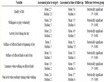
This scheme is discussed in [9] [12] for the case of finite-dimensional optimization problems. Notice that the iterated thresholding scheme discussed in [9] coincides with Algorithm 1 for the special case . The con- vergence results for Algorithm 1 presented in [12] can be extended to our elliptic control problems, using the theoretical results presented above. Therefore we can state the following theorem.
Theorem 4.4. Let  be a sequence generated by Algorithm 1 and
  be the solution to (3.2) with linear- or bilinear-control elliptic equality constraints. Then, for every
  the following holds

In [22] , an acceleration strategy for proximal methods applied to convex optimization problems fulfilling (4.4) is formulated, which improves the rate of convergence of these schemes from  to
to . Speci- fically, one defines the sequence
  with
with
 (4.8)
(4.8)
and
 (4.9)
(4.9)
Correspondingly, the optimization variable  is updated by the following

This procedures is summarized in the following algorithm
The following convergence result represents an extension of ( [12] , Theorem 4.4). We have
Theorem 4.5. Let  be a sequence generated by Algorithm 2 and
  be the solution of (3.2) with linear- or bilinear-control elliptic equality constraints. Then, for every
  the following holds

Algorithm 1 and Algorithm 2 require the calculation of


However, the exact inversion of a discretized elliptic differential operator A may become too expensive. Therefore one has to use iterative methods; e.g., the conjugate gradient method [23] . For this reason, we discuss an inexact version of the proximal scheme, where the equality constraints and the corresponding adjoint equa- tions are solved up to a given tolerance quantified by . In the following, we denote with
  the inexact gradient that corresponds to an inexact inversion of the equation
 , resp.
 , that results in an approximated state variable
 , resp.
 , in the following sense

Hence, there exists an  with
with  such that
 (4.10)
We denote the inexact inversion method for the problem , with an error
 , with
 . With this notation, the inexact gradient computation is illustrated in Algorithm 3.
With this preparation, we formulate our inexact proximal (IP) scheme with Algorithm 4.
We also formulate the accelerated (fast) version of our IP scheme in Algorithm 5. We refer to it as the FIP method.
5. Convergence Analysis of Inexact Proximal Methods
In this section, we investigate the convergence of our IP and FIP schemes. Notice that our analysis differs from that presented in [12] where finite-dimensional problems and exact inversion are considered. We start investigat- ing the error of the inexact gradient .
.
Lemma 5.1. The following estimate holds

for some c > 0.
Proof. In the linear case, we have . Using (4.10) there exist the errors
 with
with  such that
 (5.1)
(5.1)
where
 (5.2)
(5.2)
In the bilinear case, we have . Furthermore, Theorem
2.1 implies that the solution  of the equation
  has the following property
 (5.3)
(5.3)
We also have .
.
Using (4.10) there exist the errors  with
with  such that

where
 (5.4)
(5.4)
For the three last inequalities, we use (5.3), (2.7), and . □
. □
We refer to the estimation error of the inexact gradient in step k as follows

Now, we define


and
 (5.5)
(5.5)
such that one step of Algorithm 4, resp. Algorithm 5, can be written as follows

In order to prove the convergence of the IP method, we need the following two lemmas.
Lemma 5.2. For any , one has
  iff there exists
 , the subdifferential of
 , such that
 (5.6)
(5.6)
Proof. This is immediate from the variational inequality of (5.5). For a proof see, e.g., [20] . □
Lemma 5.3. Let  and
and , then for any
 , we have

Proof. From (4.5), we have

and therefore
 (5.7)
(5.7)
Now since  and
and  are convex, we have

Summing the above inequalities gives
 (5.8)
(5.8)
so using (5.6), (5.8), and the definition of  in (5.7) gives the following

□
Now, we prove a  convergence rate for Algorithm 4 (IP scheme).
Theorem 5.4. Let  be the sequence generated by Algorithm 4 and
  be the solution of (3.2) with linear or bilinear elliptic equality constraints; let c be determined by (5.2) resp. (5.4). Then for any
 , we have
 (5.9)
(5.9)
Proof. Using Lemma 5.3 with ,
,  and
and  we obtain

Summing this inequality over  gives
gives
 (5.10)
Using again Lemma 5.3 with , we obtain

Multiplying this inequality by n and summing again over  gives
gives

which simplifies to the following
 (5.11)
Adding (5.10) and (5.11) together, we get

and hence with  and
and , it follows that

□
Next, we present a convergence result for the FIP method. For this purpose, we need the following lemma.
Lemma 5.5. Let ,
,  and
and  be the sequences generated by Algorithm 5, let
  be the error of the inexact gradient, and let
  be the solution to (3.2), then for any
 , we have

with ,
, .
.
Proof. We apply Lemma 4.2 at the points  and likewise at the points
 . We obtain the following

where we used the fact that . Now, we multiply the first inequality above by
  and add it to the second inequality to obtain the following

Multiplying this inequality by  and using
 , which holds due to (4.8), we obtain

Applying the Pythagoras relation , to the right-hand side of the last inequality with
 , we obtain

Therefore, with  (see (4.9)) and
  defined as

it follows that

□
We also have the following lemmas.
Lemma 5.6. The positive sequence  generated by the FIP scheme via (4.8) with
  satisfies
  for all
 .
.
Proof. The proof is immediate by mathematical induction. □
Lemma 5.7. Let  and
and  be positive sequences of reals and
  be a sequence of reals satisfying

Then, .
.
Proof. The proof is immediate by mathematical induction. □
Now, we can prove a convergence rate of  for Algorithm 5 (FIP scheme).
Theorem 5.8. Let  be the sequence generated by Algorithm 5, let
  be the solution to (3.2) with linear or bilinear elliptic equality constraints; let c be determined by (5.2) resp. (5.4). Then for any
 , the following holds
 (5.12)
Proof. Let us define the quantities

As in Lemma 5.5, we define . Then, by Lemma 5.5, the following holds for every

and hence assuming that  holds true, invoking Lemma 5.7, we obtain

which combined with  (Lemma 5.6) gives the following
 (5.13)
Furthermore with Lemma 5.6 and , we have that

which combined with (5.13) and  gives the following

What remains to be proved is the validity of the relation . Since
 , we have

Applying Lemma 4.2 to the points  and
and , we get

that is  holds true. □
Remark 5.1. The IP and FIP methods converge also replacing L with an upper bound of it. In particular, we can prove  convergence of the FIP method using a backtracking stepsize rule for the Lipschitz constant (Step 1 in Algorithm 5) as in [12] .
We complete this section formulating a fast inexact proximal scheme where the Lipschitz constant L is obtained by forward tracking, (nevertheless we call it backtracking as in [12] ), thus avoiding any need to compute the reduced Hessian. Our fast inexact proximal backtracking (FIPB) method is presented in Algorithm 6.
6. The Inexact Semismooth Newton Method
We consider the semismooth Newton method as a benchmark scheme for solving elliptic non-smooth optimal control problems; see, e.g., [4] - [6] . This method is proven to be equivalent to the primal-dual active set method in [24] . The inexact semismooth Newton (ISSN) method is presented in [25] for finite-dimensional problems. In this section, we discuss the ISSN method for infinite-dimensional optimization problems and use it for compari- son with our inexact proximal schemes. To support our use of the ISSN scheme to solve bilinear control pro- blems, we extend two theoretical results in [3] [4] . For the analysis that follows, we need the following defini- tion.
Definition 6.1. Let X and Y be Banach spaces,  be open and
  be a nonlinear mapping. We say that
  is generalized differentiable in an open subset
  if there exists a set-valued mapping
  with
with  for all
  such that
 (6.1)
(6.1)
for every  and for every
 . We call
  the generalized differential and every
  a generalized derivative.
This definition is similar to the semismoothness stated in [3] and also known under the name “slant differentiability”; see, e.g., [24] . Now, we discuss the solution of the following nonlinear equation . We have the following theorem.
Theorem 6.1. ( [24] , Theorem 1.1) Suppose that  is a solution to
  and that
  is generalized differentiable in an open neighborhood U containing
  with a generalized derivative
 . If
. If  is
is
invertible for all  and
and  is bounded, then the semismooth Newton (SSN) iteration

converges superlinearly to , provided that
  is sufficiently small.
An inexact version of the SSN scheme discussed in this theorem is formulated in ( [3] , Algorithm 3.19), where the update  to
to  is obtained as follows. Choose a boundedly invertible operator
  and com- pute
 . For this scheme, superlinear convergence is proven in ( [3] , Theorem 3.20), provided that there exists a
  such that

However, this procedure is difficult to realize in practice. For this reason, in our ISSN scheme, the “exact”
update step  with
with , as discussed in [24] , is replaced by
with  satisfying the following inequality
 (6.2)
(6.2)
Our ISSN scheme is given in Algorithm 7.
On the basis of the proof of Theorem 3.20 in [3] , we prove the following theorem that states convergence of Algorithm 7. We have
Theorem 6.2. Suppose that  is a solution to
  and that
  is generalized differentiable and Lipschitz continuous in an open neighborhood U containing
  with a generalized derivative
 . If
. If  is
is
invertible for all  and
and  is bounded, then Algorithm 7 converges superlinearly to
 , provided that
  is sufficiently small.
Proof. Let  and
and . Furthermore, let
  be so small that
  and
and  is Lipschitz continuous in
  with
with . Now, we show inductively that
  for all k. So we assume that
  for some
 . Then there holds
 . We estimate the Y-norm of
  as
as
 (6.4)
(6.4)
Next, using , we obtain
 (6.5)
(6.5)
This result, the generalized differentiability of  at
at , and (6.4) give the following
 (6.6)
(6.6)
Hence, for sufficiently small , we have
 , with
 , and thus

This gives , which inductively proves that
  in Y. We con-
clude from (6.6) the following , which completes the proof. □
Our purpose is to solve the nonlinear and nonsmooth equation system (3.13)-(3.14) by the semismooth Newton iteration. We introduce the operator

where  is the Sobolev embedding (see [4] and [19] , Theorem 5.4]) of
  into
into  with
with . This embedding is necessary to show that the function
  defined in (6.7) is generalized differentiable. Now, by using
  from (3.13) and choosing
 , Equation (3.14) becomes
 , where
 (6.7)
(6.7)
The function  is generalized differentiable (see [4] , Theorem 4.2 for the linear case, analogue for the bilinear case) and a generalized derivative is given by
 (6.8)
(6.8)
where  and
and .
.
Using Theorem 6.2, the following theorem guarantees the superlinear convergence of the semismooth Newton method applied to our problems. To prove this we extend the proof of Theorem 4.3 in [4] .
Theorem 6.3. If (3.4) is fulfilled, then  is invertible for all
  and
and  is
is
bounded.
Proof. The linear-control case is investigated in [4] , so we focus on the bilinear case. Define , and for
  and
and  the restriction operator
  by
by . The corre- sponding adjoint operator is the extension-by-zero operator
 . We assume that
 . From (6.8) we obtain that
 . Thus,
  satisfies
 (6.9)
(6.9)
Now, we define  and
and

for . We use

to see that (6.9) is equivalent to .
.
Using  and (3.4) we have coercivity of a for
  and therefore the
Lax-Milgram-Lemma can be applied to show that (6.9) admits a unique solution . Moreover, this
solution satisfies , with a constant C independent of u. For the last inequality,
we use the fact that  is bounded due to the boundedness of
 ,
,  and
and  as shown in (2.7), (2.13), and (2.14). □
7. Numerical Experiments
In this section, we present results of numerical experiments to validate the computational performance of our inexact proximal methods and to demonstrate the convergence rate of  proved in Theorem 5.8. In the following procedures, for validation purposes, we formulate control problems for which we know the exact solution. We have
Procedure 1. (Linear case)
1) Choose  and
and  arbitrary.
2) Set 
3) Set ,
,  , and
, and .
.
Lemma 7.1. Procedure 1 provides a solution  of the optimal control problem (3.2) with linear-control elliptic equality constraints.
Proof. We show that the optimality conditions (3.16)-(3.19) in Theorem 3.3 are fulfilled. (3.16)-(3.18) are obviously fulfilled because of 3) in Procedure 1. Now, we consider different cases to show (3.19):
・  : From 2) we have
  and from 3)
  and therefore

・  :
:
* : From 2) we have
  and from 3) we have
 , therefore

* : From 2) we have
  and from 3) we have
 , therefore

・ 
* : From 2) we have
  and from 3) we have
 . So
. So

* : From 2) we have
  and from 3) we have
 , therefore

□
Procedure 2. (Bilinear case)
1) Choose  and
and  arbitrary.
2) Set .
.
3) Set ,
,  , and
, and .
.
Lemma 7.2. Procedure 2 provides a solution  to the optimal control problem (3.2) with bilinear- control elliptic equality constraints.
Proof. The proof is similar to the one of the linear case. □
Next, we specify the elliptic operator, the domain of computation, the choice of  and
and , and the optimi- zation and numerical parameters. We consider the following examples.
Case 1. (1 dimensional) ,
,  ,
,  ,
,  and
and . We discretize
 with gridsize
 is discretized by second-order finite differences. Then we have
 ,
,
 and
and  such that (2.6) holds. The results are shown in Table 1.
Case 2. (2 dimensional) ,
,  ,
,  ,
,  and
and
 . We discretize
  with gridsize
 . A is discretized by second-order finite
differences. Then we have ,
,  and
and  such that (2.6) holds. The results are shown in Table 2.
We compare the FIP, FIPB and ISSN schemes in terms of computational time. In the FIP method, we estimate an approximation to the Lipschitz constant  with a power iteration. This power iteration is stopped if the difference between two iterates of the norm
  is less or equal than a tolerance of
 . For the FIPB method, we use backtracking with
  and
and . All algorithms are stopped if
 . We can see in Table 1 and Table 2 that the computational performance of the FIP and FIPB methods is comparable to that of the ISSN method.
Table 1. Example 1: Comparison of the FIP, FIPB and ISSN methods.
Table 2. Example 2: Comparison of the FIP, FIPB, and ISSN methods.
In order to validate the convergence rate of , the theoretical upper bound of Theorem 5.20 and the actual error of the functional in correspondence to Example 1 and Example 2 with
  and
and , are plotted in Figure 1. We see that the observed convergence may be faster than the theoretical prediction.
We conclude this section considering challenging linear- and a bilinear-control cases. However, the exact solutions are not known. In these cases, the target function is not attainable. We have
Case 3. (Linear case) ,
,  ,
,  ,
,  ,
,  and
and . We discretize
  with gridsize
 . A is discretized by second-order finite differences.
Case 4. (Bilinear case) ,
,  ,
,  ,
,  ,
,  and
and . We discretize
  with gridsize
 . A is discretized by second-order finite differences.
In Figure 2, we present the optimal controls obtained for the Examples 3 and 4, respectively. Notice that the controls obtained with the FIP, FIPB, and ISSN schemes are indistinguishable. We observe that in the case of a small  there is an abrupt change between
  and
and , whereas for bigger
  the change is con- tinuous. We also see that by increasing
  the support of u decreases, as expected. The different computational times of the FIP, FIPB, and ISSN schemes are also given in the figure. We see that the FIPB scheme may outperform the ISSN scheme and vice versa. We also have a case where the ISSN scheme has difficulty to converge; see Figure 2, test case (d). Notice that very similar results are also obtained using a globalized version [7] of the ISSN scheme. These results and further results of numerical experiments demonstrate that fast inexact proximal scheme represent an effective alternative to semi-smooth Newton methods.
8. Conclusion
Inexact proximal schemes for solving linear- and bilinear elliptic optimal control problems were discussed. A complete analysis of these methods was presented and a convergence rate of  was proven. For bench- marking purposes, the proposed inexact proximal schemes were compared to an inexact semismooth Newton method. Results of numerical experiments demonstrated the computational effectiveness of inexact proximal schemes and successfully validated the theoretical estimates.


Figure 1. Validation of the theoretical upper bound (Theorem 58).

Figure 2. Optimal controls u for the Case 3 (top) and Case 4 (bottom).
Acknowledgements
Supported in part by the Interdisziplinäres Zentrum für Klinische Forschung der Universität Würzburg (IZKF); Project F-254: Parallel Multigrid Imaging and Compressed Sensing for Dynamic 3D Magnetic Resonance Imaging. This publication was supported by the Open Access Publication Fund of the University of Würzburg.
Cite this paper
Andreas Schindele,Alfio Borzì, (2016) Proximal Methods for Elliptic Optimal Control Problems with Sparsity Cost Functional. Applied Mathematics,07,967-992. doi: 10.4236/am.2016.79086
References
- 1. Borzì, A. and Schulz, V. (2011) Computational Optimization of Systems Governed by Partial Differential Equations. SIAM, Philadelphia.
http://dx.doi.org/10.1137/1.9781611972054 - 2. Troltzsch, F. (2009) Optimale Steuerung partieller Differentialgleichungen. Theorie, Verfahren und Anwendungen. Vieweg.
http://dx.doi.org/10.1007/978-3-8348-9357-4 - 3. Ulbrich, M. (2011) Semismooth Newton Methods for Variational Inequalities and Constrained Optimization Problems in Function Spaces. SIAM, Philadelphia.
http://dx.doi.org/10.1137/1.9781611970692 - 4. Stadler, G. (2009) Elliptic Optimal Control Problems with -Control Cost and Applications for the Placement of Control Devices. Computational Optimization and Applications, 44, 159-181.
http://dx.doi.org/10.1007/s10589-007-9150-9 - 5. Wachsmuth, G. and Wachsmuth, D. (2010) Convergence and Regularization Results for Optimal Control Problems with Sparsity Function. ESAIM: Control Optimisation and Calculus of Variations, 17, 858-886.
http://dx.doi.org/10.1051/cocv/2010027 - 6. Casas, E., Herzog, R. and Wachsmuth, G. (2012) Optimality Conditions and Error Analysis of Semilinear Elliptic Control Problems with Cost Functional. SIAM Journal on Optimization, 22, 795-820.
http://dx.doi.org/10.1137/110834366 - 7. Ciaramella, G. and Borzì, A. (2016) A LONE Code for the Sparse Control of Quantum Systems. Computer Physics Communications, 200, 312-323.
http://dx.doi.org/10.1016/j.cpc.2015.10.028 - 8. Candes, E., Romberg, J. and Tao, T. (2006) Stable Signal Recovery from Incomplete and Inaccurate Measurements. Communications on Pure and Applied Mathematics, 59, 1207-1223.
http://dx.doi.org/10.1002/cpa.20124 - 9. Defrise, M., Daubechies, I. and Mol, C.D. (2004) An Iterative Thresholding Algorithm for Linear Inverse Problems with a Sparsity Constraint. Communications on Pure and Applied Mathematics, 57, 1413-1457.
http://dx.doi.org/10.1002/cpa.20042 - 10. Donoho, D.L. and Elad, M. (2003) Maximal Sparsity Representation via Minimization. Proceedings of the National Academy of Sciences of the United States of America, 100, 2197-2202.
http://dx.doi.org/10.1073/pnas.0437847100 - 11. Combettes, P.L. and Wajs, V.R. (2005) Signal Recovery by Proximal Forward-Backward Splitting. Multiscale Modeling & Simulation, 4, 1168-1200.
http://dx.doi.org/10.1137/050626090 - 12. Beck, A. and Teboulle, M. (2009) A Fast Iterative Shrinkage-Thresholding Algorithm for Linear Inverse Problems. SIAM Journal on Imaging Sciences, 2, 183-202.
http://dx.doi.org/10.1137/080716542 - 13. Lorenz, A., Bredies, K. and Reiterer, S. (2015) Minimization of Non-Smooth, Non-Convex Functionals by Iterative Thresholding. Journal of Optimization Theory and Applications, 165, 78-112.
http://dx.doi.org/10.1007/s10957-014-0614-7 - 14. Wech, T., Seiberlich, N., Schindele, A., Grau, V., Diffley, L., Gyngell, M.L., Borzì, A., Kostler, H. and Schneider, J.E. (2016) Development of Real-Time Magnetic Resonance Imaging of Mouse Hearts at 9.4 Tesla—Simulations and First Application. IEEE Transactions on Medical Imaging, 35, 912-920.
http://dx.doi.org/10.1109/TMI.2015.2501832 - 15. Evans, L.C. (2010) Partial Differential Equations. 2nd Edition, Department of Mathematics, University of California, Berkeley, American Mathematical Society.
http://dx.doi.org/10.1090/gsm/019 - 16. Kr?ner, A. and Vexler, B. (2009) A Priori Error Estimates for Elliptic Optimal Control Problems with a Bilinear State Equation. Journal of Computational and Applied Mathematics, 230, 781-802.
http://dx.doi.org/10.1016/j.cam.2009.01.023 - 17. Lions, J. (1971) Optimal Control of Systems Governed by Partial Differential Equations. Springer, Berlin.
- 18. Grisvard, P. (1985) Elliptic Problems in Nonsmooth Domains. Pitman Publishing, Boston.
- 19. Adams, R.A. (1975) Sobolev Spaces. Pure and Applied Mathematics. Academic Press, Inc., Cambridge.
- 20. Ekeland, I. and Témam, R. (1999) Convex Analysis and Variational Problems. Society for Industrial and Applied Mathematics, Philadelphia.
http://dx.doi.org/10.1137/1.9781611971088 - 21. Wilkinson, J.H. (1988) The Algebraic Eigenvalue Problem. Oxford University Press, Oxford.
- 22. Nesterov, Y.E. (1983) A Method for Solving the Convex Programming Problem with Covergence Rate . Doklady Akademii Nauk SSSR, 269, 543-547.
- 23. Hestenes, M.R. and Stiefel, E. (1952) Methods of Conjugate Gradients for Solving Linear Systems. Journal of Research of the National Bureau of Standards, 49, 409-436.
http://dx.doi.org/10.6028/jres.049.044 - 24. Hintermüller, M., Ito, K. and Kunisch, K. (2002) The Primal-Dual Active Set Strategy as a Semismooth Newton Method. SIAM Journal on Optimization, 13, 865-888.
http://dx.doi.org/10.1137/S1052623401383558 - 25. Martínez, J. and Qi, L. (1995) Inexact Newton Methods for Solving Nonsmooth Equations. Journal of Computational and Applied Mathematics, 60, 127-145.