

Applied Mathematics
Vol.07 No.17(2016), Article ID:72426,16 pages
10.4236/am.2016.717179
Nonparametric Regression Estimation with Mixed Measurement Errors
Zanhua Yin, Fang Liu, Yuanfu Xie
College of Mathematics and Computer Science, Gannan Normal University, Ganzhou, China

Copyright © 2016 by authors and Scientific Research Publishing Inc.
This work is licensed under the Creative Commons Attribution International License (CC BY 4.0).
http://creativecommons.org/licenses/by/4.0/



Received: May 20, 2016; Accepted: November 27, 2016; Published: November 30, 2016
ABSTRACT
We consider the estimation of nonparametric regression models with predictors being measured with a mixture of Berkson and classical errors. In practice, the Berkson error arises when the variable X of interest is unobservable and only a proxy of X can be measured while the inaccuracy related to the observation of the proxy causes an error of classical type. In this paper, we propose two nonparametric estimators of the regression function in the presence of either or both types of errors. We prove the asymptotic normality of our estimators and derive their rates of convergence. The finite-sample properties of the estimators are investigated through simulation studies.
Keywords:
Berkson Error, Classical Error, Deconvolution, Kernel Method, Mixed Measurement Errors

1. Introduction
Let  denote a sequence of independent and identically distributed random vectors. In traditional non-parametric regression model analysis, one is in- terested in the following model
 (1)
(1)
where  is assumed to be a smooth, continuous but unknown function; the random errors
  are assumed to be normally and independently distributed with mean 0 and constant variance
 ; and
; and . Here, the predictor X is usually assumed to be directly observable without errors. Both the direct observation and error-free assumptions are however seldom true in most epidemiologic studies. For the violation of the error-free assumption, [1] considered an environmental study which studied the relation of mean exposure to lead up to age 10 (denoted as X) with intelligence quotient (IQ) among 10-year-old children (denoted as Y) living in the neighborhood of a lead smelter. Each child had one measurement made of blood lead (denoted as W), at a random time during their life. The blood lead measurement (i.e., W) became an approximate measure of mean blood lead over life (X). However, if we were able to make many replicate measurements (at different random time points), the mean would be a good indicator of lifetime exposure. In other words, the measure- ments of X are subject to errors and W is a perturbation of X. In the measurement error literature, this is known as the classical error model and Model (1) becomes
 (2)
(2)
where , are mutually independent and
  represents the classical measurement error variable. Various methods and approaches for analyzing Model (2) such as deconvolution kernel approaches (e.g., [2] [3] [4] ), design-adaptive local poly- nomial estimation method (e.g., [5] ), methods based on simulation and extrapolation (SIMEX) arguments (e.g., [6] [7] [8] [9] ), and Bayesian approach (e.g., [10] ) have been extensively studied in the literature.
In many studies, it is however too costly or impossible to measure the predictor X exactly or directly. Instead, a proxy W of X is measured. For the violation of the direct observation assumption, [1] modified the aforementioned environmental study in which the children’s place of residence at age 10 (assumed known exactly) were classified into three groups by proximity to the smelter―close, medium, far. Random blood lead samples, collected as describe in the aforementioned design, were averaged for each group (denoted as W), and this group mean used as a proxy for lifetime exposure for each child in the group. Here, the same approximate exposure (proxy) is used for all subjects in the same group, and true exposures, although unknown, may be assumed to vary randomly about the proxy. This is the well-known Berkson error model. In other words, the predictor X are not directly observable and measurements on its surrogates W are available instead. The true predictor X is then a perturbation of W. The model of interest now becomes
 (3)
(3)
where , are mutually independent. Model (3) was first con- sidered by [11] and the estimation of the linear Berkson measurement error models was discussed in [12] . Methods based on least squares estimation ( [13] ), minimum distance estimation ( [14] [15] ), regression calibration ( [16] ) and trigonometric functions ( [17] ) have been studied.
The stochastic structure of Model (3) is fundamentally different from Model (2). Here, the measurement error of Model (2) is independent of X, but dependent on W. This distinctive feature leads to completely different procedures in estimation and inference for the models. In particular, nonparametric estimators that are consistent in Model (2) are no longer valid in Model (3), and vice versa. In most of the existing literature, the measurement error is supposed to be only one of the two types. In the Berkson model (3), it is usually assumed that the observable variable W is measured with perfect accuracy. However, this may not be true in some situations. In such cases, W is observed through , where
  is a classical measurement error. [18] presented a good discussion of the origins of mixed Berkson and classical errors in the context of radiation dosimetry. Under this mixture of measurement errors, we observe a random sample of independent pairs
 , for
, for , generated by
 (4)
(4)
where ,
,  ,
,  and
and  are mutually independent, and the re- spective error densities
  and
and  are assumed to be known. Due to its potentially wide applications, statistical procedures for analyzing Model (4) has received more attention recently. For instance, a regression calibration approach was proposed by [19] and [20] in a parametric context of random exposure. [21] considered a bayesian approach for a semi-parametric regression function. [22] developed a nonparametric density estimation approach for contaminated data with a mixture of Berkson and classical errors but without further extending to estimate the regression function. [23] proposed a two-step nonparametric kernel method for estimating the regression function but its calculation is complicated. In this paper, we propose two non- parametric estimators for the regression function curve
  with the predictor
  being measured with either classical error, Berkson error, or a combination of both. The difficulty primarily depends on the relative smoothness of the error densities
  and
and . When
  is smooth enough (relative to
 ), we are able to construct a nonparametric estimator that converges to the target curve at the parametric
  rate. For less smooth density
 , we propose a kernel estimator that converges at rates ranging from
  to rates that are close to the deconvolution rates.
This paper is organised as follows. In Section 2, we propose estimators for the regression function curve . We then derive the asymptotic normality of our estimators under some regularity conditions and give the rates of convergence in Section 3. Section 4 presents some numerical results from simulation studies. A brief discussion will be given in Section 5. All technical results and proofs are deferred to the Appendix.
2. Proposed Estimators
Let  be a random sample from Models (4), and
 ,
,  ,
,  ,
,  and
and  be the characteristic functions of
 ,
,  ,
,  ,
,  and
and , respectively. We have the following relationships:

Hence, if  does not vanish,

Since  and
and  are assumed to be known, an estimate of
  can be computed as

Noticing that, if  is absolutely integrable, the characteristic function
  and its density function
  have the following relation

under the condition that , the density estimator of
  is then given by
 (5)
(5)
where

As a result, we propose the following estimator for 
 (6)
(6)
Example 1 Let the error densities  and
and  in Model (4) be normal densities with mean zero and variances
  and
and , respectively. It follows that
 with
with . If we assume
 , then the
ratio  is the characteristic function of another normal random variable. By (6), the estimator of
  can be written as

where  is the density of the
  variable. If
 , the ratio
  is not integrable, and the estimators (5) and (6) can not be calculated. To overcome this issue, we propose an alternative approach for estimating
 .
.
Using a kernel function  with a bandwidth h, we consider the following kernel estimator for

and an estimator for  is then given by

where  is the characteristic function of the kernel function
 .
.
Proceeding as above, we get an alternative estimator of  by
by
 (7)
(7)
where
 (8)
(8)
Therefore, when (6) is no longer valid, we propose the following estimator for 
 (9)
(9)
Remark 1 To ensure that the proposed estimator (9) is well-behaved, we need to make the following assumption.
Condition A:
1.  for all t; and
2.  and
and .
.
Example 2 We use the same model as in Example 1 with . In this case, to ensure (A2) to be valid, it is rather common to choose kernels that have a compactly supported characteristic function
 . For example, we choose the sinc kernel
 , which has characteristic function
 , the indicator function of the interval
 . From (8), we have

Remark 2
1. The above two nonparametric estimators of  were given by [22] ;
2. When the variance of  in Models (4) is equal to 0, which is the Berkson error model, the estimator (6) becomes
 (10)
(10)
where  is the density function of
 ; and;
3. When the variance of  in Models (4) is equal to 0, which is the classical error model,
  given in (9) reduces to the estimator of [2] .
3. Theoretical Properties
In this section, we study asymptotic properties of the estimators proposed in Section 2. In particular, the properties of the estimator  at (6) are clear. It is easy to check that the numerator and the denominator are both unbiased estimators of
  and
and , respectively and that,
  converges at the fast parametric
  rate. Properties of the estimator
  at (9) need to further explore and, in what follows, we derive them.
3.1. Asymptotic Results for 
In this section, we investigate the large-sample properties of the estimator  at (9). For this purpose, we present the following regular conditions which are mild and can be found in [2] .
Condition B:
1.  have zero means and uniformly bounded variances;
2. ,
,  and
and  are bounded, and
  and g have bounded kth derivatives;
3.  is a real and symmetric kernel and has finite moment of order k. Namely,
  for
for  and
and ; and
; and
4. The conditional moment  is bounded for all u and some
 .
.
Let . The mean squared error (MSE) of the estimator
  is described in the next Theorem.
Theorem 1 ((MSCE)) Suppose that Conditions A and B hold. Then, for each x such that ,
,
 (11)
(11)
where .
.
Explicit rates of convergence of the estimator  can be found by examination of the asymptotic behaviour of the MSE. For the bias, using the Taylor expansion of the first term on the right-hand side of Equation (11), we have

where .
.
The second term on the right-hand side of Equation (11) describes the variance of . The asymptotic behaviour of this term is more difficult to evaluate since it depends on the tail behaviour of the ratio
 , as [14] discussed, which can be classified into the following:
1. An exponential ratio of order  is
is
 (12)
(12)
with ,
,  ,
,  ,
,  and
and ,
, .
.
2. A polynomial ratio of order  is
is
 (13)
(13)
with ,
,  and
and .
.
3.1.1. Asymptotic Mean Squared Error (AMSE)
In this section, we study the asymptotic behaviour of the MSE where  behaves like an exponential or a polynomial.
Theorem 2 Suppose that Conditions A and B hold and that the first half inequality of (12) is satisfied. Assume that  is supported on
 . Then, for each x such that
 , we have

with  being some positive constant and
 .
.
When  is exponentially smoother than
 , we obtain a slower logarith- mic rate which is similar to the deconvolution rate for supersmooth error given in [2] . More precisely, the optimal bandwidth is of order
  with
with , and the estimator
  then converges at the rate of
 .
.
Theorem 3 Suppose Conditions A and B hold, and that . Then,
under the polynomial ratio (13), for each x such that , we have

with  being some positive constant, and
 .
.
We obtain that, when  behaves like a polynomial ratio of order
  in the tail, the convergence rates range from
  to deconvolution rate of ordinary smooth error of [2] . More precisely, the optimal bandwidth is of order
  when
when , and the estimator
  then converges at the rate of
 . When
 , the optimal bandwidth is of order
  and the estimator
  converges at the rate of
 .
.
3.1.2. Asymptotic Normality
The theorem below establishes asymptotic normality in the exponential ratio case.
Theorem 4 Under the conditions of Theorem (2), and for bandwidth  with
with ,
,

where  and
and .
.
The next theorem establishes asymptotic normality in the polynomial ratio case.
Theorem 5 Suppose that Conditions A and B hold and that the inequality of (13) is satisfied. Assume that  and
and . Then, under
 and
and  as
as , for each x such that
 , we have

where  is the same as given in Theorem (4) and
  is equal to the second term on the right-hand side of Equation (11).
The proofs of all theorems are postponed to the Appendix.
3.2. Unknown Measurement Error Distribution
When the error densities are unknown, they can be readily estimated from additional observations (e.g., a sample from the error densities, replicated data or external data) and these estimates can be substituted into (6) and (9) to produce the estimate of . For sufficiently large sample size, the rates of convergence of the estimates remain unchanged when
  and
and  are replaced by their consistent estimators (e.g., [4] [17] [24] ).
4. Simulation Studies
We study numerical properties of the estimators proposed in Section 2. Note that we have defined two estimators, at (6) and (9). The first exists when  is inte- grable, and the estimator (9) otherwise. We use the notations
  and
and  for the esti- mators (6) and (9) respectively. We use the notation
  for the estimator that ignores the errors, that is, the estimator is the classical Nadaraya-Watson estimator of
  based on direct data from
 ,
, . Note that
  is exactly equal to
  when
when . In addition, we use
  for the estimator of [23] .
We apply the various estimators introduced above to some simulated examples (see, [23] ):
1.  (sinusoidal),
2.  (sharp unimodal), and
3.  (asymmetric);
where  is the density of an
  variable. For each of the above regression functions, we generate 200 data sets of
  randomly sampled vectors
 , as follows. We generate a random sample
  from
from , a random sample
  from
from  and a random sample
  from
from , and put
  and
and ,
,  , where
  is the density of an
  variable, and we take
  and
and  to be either normal or Laplace with zero mean. Then we generate a random sample
  as
as , where the errors
  are normally distributed with zero mean and variance
 , where
  with
with  denoting the mean-squared deviation of g from its average value. We simply denoted
  and
and  by
by , and other similar.
In our simulations we consider sample sizes , and in each case we generate 200 samples from the distribution of the random vector
 . Except if stated otherwise, we adopt the second order kernel K corresponding to
  , which is necessary to calculate
  and
and . For the band- width h, it is necessary to calculate
 ,
,  and
and , we select the value h that mini- mises the cross-validation (CV) criterion,
  , where the sub- script
  meant that the estimator was constructed without using the jth observation. We report the Integrated Squared Error,
  , where
  is the estimator considered. In all graphs, to illustrate the performance of an estimator, we show the estimated curves corresponding to the first (Q1), second (Q2) and third (Q3) quartiles of the ordered ISEs. The target curve is always represented by a solid curve. In the tables we provide the average values, denoted by MISE, of the 200 cal- culated ISEs.
Figure 1 and Table 1 illustrate the way in which the estimator improves as sample size increases. We compare, for various sample sizes, the results obtained for estimating curve (a) when , and
, and  with the pair of variance ratios
  equals (0.1, 0.4), and for estimating curve (b) when
 and
and  ~ (N, L), (N, N), (L, L) or (L, N) with
 . We see clearly that, as the sample size increases, the quality of the estimators improves significantly in all cases.
For any nonparametric method for regression problem, the quality of the estimator also depends on the discrepancy of the observed sample. That is, for any given family of densities ,
,  and
and , and any given the noise-to-signal ratios
 , the performance of the estimator depends on the variances of
 ,
,  and
and . Here, we compare the results obtained from estimating curve (c) for different values of

Figure 1. Estimation of curve (a) for samples of size n = 50 (left panel), n = 100 (middle panel) or n = 250 (right panel), when , and
, and  with
with  The solid curve is the target curve.
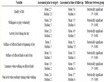
Table 1. MISE  for estimation of curve (b) when
 , and
, and  ~ (N, L), (N, N), (L, L) or (L, N) with
 .
.
 . As expected, Figure 2 shows that the best performance usually occur for smaller error variance (e.g.,
 ). It is noteworthy that the effect of the variances on the estimator performance is obvious in model (4).
Finally, we compare  (or
(or ),
),  and
and . Figure 3 shows the boxplots of the quantities of
  and
and  for estimating curve (a) when
  and
and , where
  is the ISE of our proposed estimator,
  is the ISE of the estimator that ignores the errors, and
  is the ISE of the estimator of [23] . Here, each boxplot is constructed from 200 samples. Here, in panel (a)-(L-L) (or (a)-(N-N)), the mixed errors are both Laplace (or both normal). Here, and also in panel (a)-(N-L) (or (a)-(L-N)), the errors are
  and
and 
 (or
(or  and
and ). In each panel, for X-axis = 1 to 7,
  = (0.1, 0.4), (0.1, 0.3), (0.2, 0.3), (0.2, 0.2), (0.3, 0.2), (0.3, 0.1) or (0.4, 0.1). The more a boxplot is located below the zero horizontal line, the better our method compared with the other two estimators. In the same situation, Table 2 and Table 3 report the average integrated square error (MISE) for estimating curves (b) and (c) respectively. As expected, our proposed estimator substantially outperformed the estimator that completely ignores any measurement errors. Our results show that our proposed estimator usually works better than the estimator proposed by [23] for estimating curves (a) and (b). It is noteworthy that the estimator proposed by [23] may perform better than our proposed estimator when curve (c) with
  is esti- mated.
5. Discussion
In this paper, we propose a new method for estimating non-parametric regression models with the predictors being measured with a mixture of Berkson and classical errors. The method is based on the relative smoothness of  and
and . When
  is
is

Figure 2. Estimation of function (c) for samples of size , when
 ,
,  and
and  with
with  being (0.5,0.05,0.15), (1,0.1,0.3), and (2,0.15,0.45) (from left to right). The solid curve is the target curve.

Figure 3. Boxplots of the quantities of log(ISEO/ISEI) (row 1) and log(ISEO/ISEC) (row 2) for estimating regression curve (a) when  and
and , for various error densities
  and
and  and various values of
 .
.
Table 2. MISE  for estimation of curve (b) when
  and n = 250, for various error densities
  and
and  and various values of
 .
.
Table 3. MISE for estimation of curve (c) when  and n = 250, for various error densities
  and
and  and various values of
 .
.
smooth enough (relative to ), we propose a nonparametric estimator (6) that converges to the target curve at the parametric
  rate. For less smooth function
 , we propose a kernel estimator (9) that converges at rates ranging from
  to rates that are close to the deconvolution rates. Numerical results show that the new esti- mators are promising in terms of correcting the bias arising from the errors-in- variables. It generally preforms better than the approach proposed by [23] . The metho- dology can be readily extended to the prediction problem of nonparametric errors-in- variables regression (see, e.g., [16] ). Extension of our method to the problems con- sidered in [5] is of future research interest.
Acknowledgements
This work was supported by Natural Science Foundation of Jiangxi Province of China under grant number 20142BAB211018.
Cite this paper
Yin, Z.H., Liu, F. and Xie, Y.F. (2016) Nonparametric Regression Estimation with Mixed Measurement Errors. Applied Mathematics, 7, 2269-2284. http://dx.doi.org/10.4236/am.2016.717179
References
- 1. Armstrong, B.G. (1998) Effect of Measurement Error on Epidemiological Studies of Environmental and Occupational Exposures. Occupational and Environmental Medicine, 55, 651-656.
https://doi.org/10.1136/oem.55.10.651 - 2. Fan, J. and Truong, Y.K. (1993) Nonparametric Regression with Errors in Variables. Annals of Statistics, 21, 1900-1925.
https://doi.org/10.1214/aos/1176349402 - 3. Delaigle, A. and Meister, A. (2007) Nonparametric Regression Estimation in the Heteroscedastic Errors-in-Variables Problem. Journal of the American Statistical Association, 102, 1416-1426.
https://doi.org/10.1198/016214507000000987 - 4. Delaigle A., Hall, P. and Meister A. (2008) On Deconvolution with Repeated Measurements. Annals of Statistics, 36, 665-685.
https://doi.org/10.1214/009053607000000884 - 5. Delaigle, A., Fan, J. and Carroll, R.J. (2009) A Design-Adaptive Local Polynomial Estimator for the Errors-in-Variables Problem. Journal of the American Statistical Association 104, 348-359.
https://doi.org/10.1198/jasa.2009.0114 - 6. Cook, J.R. and Stefanski, L.A. (1994) Simulation-Extrapolation Estimation in Parametric Measurement Error Models. Journal of the American Statistical Association, 89, 1314-1328.
https://doi.org/10.1080/01621459.1994.10476871 - 7. Stefanski, L.A. and Cook, J.R. (1995) Simulation-Extrapolation: The Measurement Error Jackknife. Journal of the American Statistical Association, 90, 1247-1256.
https://doi.org/10.1080/01621459.1995.10476629 - 8. Carroll, R.J., Maca, J.D. and Ruppert, D. (1999) Nonparametric Regression in the Presence of Measurement Error. Biometrika, 86, 541-554.
https://doi.org/10.1093/biomet/86.3.541 - 9. Staudenmayer, J. and Ruppert, D. (2004) Local Polynomial Regression and Simulation-Extrapolation. Journal of the Royal Statistical Society: Series B, 66, 17-30.
https://doi.org/10.1046/j.1369-7412.2003.05282.x - 10. Berry, S.M., Carroll, R.J. and Ruppert, D. (2002) Bayesian Smoothing and Regression Splines for Measurement Error Problems. Journal of the American Statistical Association, 97, 160-169.
https://doi.org/10.1198/016214502753479301 - 11. Berkson, J. (1950) Are There Two Regression Problems? Journal of the American Statistical Association, 45, 164-180.
https://doi.org/10.1080/01621459.1950.10483349 - 12. Fuller, W. (1987) Measurement Error Models. Wiley, New York.
https://doi.org/10.1002/9780470316665 - 13. Huwang, L. and Huang, H.Y.S. (2000) On Errors-in-Variables in Polynomial Regression— Berkson Case. Statistica Sinica, 10, 923-936.
- 14. Wang, L. (2003) Estimation of Nonlinear Berkson-Type Measurement Error Models. Statistica Sinica, 13, 1201-1210.
- 15. Wang, L. (2004) Estimation of Nonlinear Models with Berkson Measurement Errors. Annals of Statistics, 32, 2559-2579.
https://doi.org/10.1214/009053604000000670 - 16. Carroll, R.J., Delaigle, A. and Hall, P. (2009) Nonparametric Prediction in Measurement Error Models. ournal of the American Statistical Association, 104, 993-1003.
https://doi.org/10.1198/jasa.2009.tm07543 - 17. Delaigle, A., Hall, P. and Qiu, P. (2006) Nonparametric Methods for Solving the Berkson Errors-in-Variables Problem. Journal of the Royal Statistical Society: Series B, 68, 201-220.
https://doi.org/10.1111/j.1467-9868.2006.00540.x - 18. Schafer, D.W. and Gilbert, E.S. (2006) Some Statistical Implications of Dose Uncertainty in Radiation Dose-Response Analyses. Radiation Research, 166, 303-312.
https://doi.org/10.1667/RR3358.1 - 19. Reeves, G.K., Cox, D.R., Darby, S.C. and Whitley, E. (1998) Some Aspects of Measurement Error in Explanatory Variables for Continuous and Binary Regression Models. Statistics in Medicine, 17, 2157-2177.
https://doi.org/10.1002/(SICI)1097-0258(19981015)17:19<2157::AID-SIM916>3.0.CO;2-F - 20. Schafer, M., Mullhaupt, B. and Clavien, P.A. (2002) Evidence-Based Pancreatic Head Resection for Pancreatic Cancer and Chronic Pancreatitis. Annals of Surgery, 236, 137-148.
https://doi.org/10.1097/00000658-200208000-00001 - 21. Mallick, B., Hoffman, F.O. and Carroll, R.J. (2002) Semiparametric Regression Modeling with Mixtures of Berkson and Classical Error, with Application to Fallout from the Nevada Test Site. Biometrics, 58, 13-20.
https://doi.org/10.1111/j.0006-341X.2002.00013.x - 22. Delaigle, A. (2007) Nonparametric Density Estimation from Data with a Mixture of Berkson and Classical Errors. Canadian Journal of Statistics, 35, 89-104.
https://doi.org/10.1002/cjs.5550350109 - 23. Carroll, R.J., Delaigle, A. and Hall, P. (2007) Nonparametric Regression Estimation from Data Contaminated by a Mixture of Berkson and Classical Errors. Journal of the Royal Statistical Society: Series B, 69, 859-878.
https://doi.org/10.1111/j.1467-9868.2007.00614.x - 24. Hu, Y. and Schennach, S.M. (2008) Identification and Estimation of Nonclassical Nonlinear Errors-in-Variables Models with Continuous Distributions. Econometrica, 76, 195-216.
https://doi.org/10.1111/j.0012-9682.2008.00823.x - 25. Fan, J. (1991) Asymptotic Normality for Deconvolution Kernel Density Estimators. Sankhya A, 53, 97-110.
Appendix
Proof of Theorem 1
Let , where
 , we have
 (14)
(14)
and
 (15)
(15)
where . The result follows immediately from 14 and 15.
Proofs of the Results of Section 3.1.1.
Lemma 1 Suppose that  is supported on
 , and
, and  for all t. Then, for
 , we have

where, here, and below, C denotes a generic positive and finite constant.
Proof. It follows from (A2) of Condition A that  for some large enough constant
 . Since
 , we have

The conclusion follows from

The proof for the other result is similar and requires Parseval's Theorem.
From (14) and Lemma 1, we have

The proof of Theorem 2 follows from the expressions of  and
and .
.
The proof of Theorem 3 is the same as the proof of Theorem 2, but in this case we need the following lemma.
Lemma 2 Suppose that  for all t,
  and
and
 . Then, we have

with .
.
The proof of Lemma 2 is similar to the proof of Lemma 1 and is omitted.
Proofs of the Results of Section 3.1.2.
A standard decomposition gives ,
,  goes in pro- bability to
  and thus we only need to prove the asymptotic normality for
 . As given in [25] , a sufficient condition for the following asymptotical normality

is that the Lyapounov's condition holds, i.e., for some ,
,

Letting , we have

Under the conditions given in the theorem 4, we can prove that

Under the conditions given in the theorem 5, we can prove that

The rest is standard and is omitted.