

Advances in Pure Mathematics
Vol.05 No.11(2015), Article ID:59417,6 pages
10.4236/apm.2015.511059
Ideal Convergence in Generalized Topological Molecular Lattices
Kamal El-Saady1, Fatima Al-Nabbat2
1Department of Mathematics, Faculty of Science at Qena, South Valley University, Qena, Egypt
2Department of Mathematics, College of Science, King Faisal University, Al-Hasa, Saudi Arabia
Email: el-saady@lycos.com, fatima_math20@yahoo.com
Copyright © 2015 by authors and Scientific Research Publishing Inc.
This work is licensed under the Creative Commons Attribution International License (CC BY).
http://creativecommons.org/licenses/by/4.0/



Received 12 July 2015; accepted 4 September 2015; published 7 September 2015
ABSTRACT
The convergence theory of ideals in generalized topological molecular lattices is studied. Some properties of this kind of convergence are investigated. Finally, the relations between convergence theories of both molecular nets and ideals in GTMLs are discussed together with the GT2 separation axiom.
Keywords:
Generalized Topological Molecular Lattice, Continuous GOH, Convergence of Molecular Nets, Convergence of Ideals

1. Introduction
After Wang [1] introduced the theory of topological molecular lattices or TMLs for short, several authors established various kinds of convergence theory in TMLs by using a corresponding concept of remote neighborhoods (see e.g. [2] , [3] - [5] ). The theory of remote neighborhood has been established first by Wang [1] as a dual notion of Pu and Liu’s theory of the quasi-coincident neighborhoods in fuzzy topology [6] [7] .
In [8] , we introduced a generalization of Wang’s topological molecular lattice called generalized topological molecular lattice or briefly GTML and studied the convergence theory of molecular nets by using the concept of generalized remote neighborhoods in these spaces.
In this paper, we aim to study the convergence of ideals in GTMLs and investigate the relations among this notion and that of molecular nets. Moreover, we state the relations with other defined topological notions in GTMLs such as generalized order homomorphism or GOH for short.
The paper is organized as follows. In Section 2, we will review some useful concepts in the paper. In Section 3, we will study the convergence in GTMLs in terms of ideals and investigate some properties of such conver- gence. Furthermore, we show the relations between convergence of ideals and the continuity of GOHs. In Section 4, we will discuss the relations between convergence of molecular nets and convergence of ideals in TMLs. Finally, Section 5 presents our conclusions.
2. Preliminaries
This section is devoted to recall some useful concepts which is required in the sequel. Let L be a complete lattice with the smallest element  and the largest element
 , an element
  is said to be a molecule (some time called co-prime or join-irreducible) if for
  then
then  or
or . The set of all mole- cules in L is denoted by
 . The subset
  is called a minimal family of a [1] , if the following two conditions are hold:
a) .
.
b) If  and
and , then
 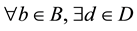 such that
 .
.
The greatest minimal family of a is denoted by  while
while .
.
Throughout this paper, the entry  denotes a molecular lattice, that is a lattice L and the set of its molecules M. For a non empty subset I of a complete lattice L, I is said to be an ideal [9] , if it satisfies the following conditions:
a) For  and
and .
.
b) For all .
.
c) .
.
Definition 2.1 [8] Let  be a molecular lattice. A subfamily
  is said to be a generalized closed topology, or briefly, generalized co-topology, if
(T1)  is closed under arbitrary intersections;
(T2) .
.
The pair  is called a generalized topological molecular lattice, or briefly, GTML.
Definition 2.2 [8] Let  be a GTML,
  , and
, and . Then F is said to be a genera- lized remote neighborhood of a. The set of all generalized remote neighborhoods of a will be denoted by
 .
.
Recall that according to the definition of ideals, the family  is not necessary be an ideal in GTMLs while the family
  satisfies the ideal conditions.
For a GTML  and
and , the intersection of all η-elements containing A is called the gene- ralized closure of A and denoted by
 . that is,

Definition 2.3 [8] Let  be a GTML,
  , then a is said to be an adherence point of A, if for all
 , we have
 .
.
It is clear that a is an adherence point of A if and only if .
.
Definition 2.4 [1] Let  and
and  be complete lattices. A mapping
  is said to be a generalized order homomorphism or GOH for short if
a)  if and only if
 .
.
b) f is join preserving, i.e; .
.
c)  is join preserving, where
 ,
, .
.
Definition 2.5 [8] Let  and
and  be GTMLs and
  be a GOH, then f is called:
1) continuous GOH, if for every , we have
 .
.
2) continuous at a molecule , if for every
 , we have
 .
.
For a directed set D and , the mapping
  is called a molecular net and denoted by
 . The molecular net s is said to be in A, if
 .
.
The molecular net S is said to be:
1) eventually in A if there exists  such that
 , we have
 .
.
2) frequently in A if for all  there exists
  such that
 .
.
Definition 2.6 [8] Let  be a GTML,
  be a molecular net and
 , then:
1) a is called a limit point of S, if  eventually true, and denoted by
 . The join of all limit points of S will be denoted by
 .
.
i.e, .
.
2) a is called a cluster point of S, if  frequently true, and denoted by
 . The join of all cluster points of S will be denoted by
 .
.
i.e, .
.
Definition 2.7 [8] Let  be a GTML, then
  is said to be a Gt2, if
 , there exists
  and
and  such that
 .
.
3. Convergence of Ideals in GTMLs
The aim of this section is to study the convergence in GTMLs in terms of ideals and investigate some properties of such convergence. Furthermore, we show the relations between convergence of ideals and the continuity of GOHs.
For the sake of convenience and no confusion, throughout this section and forwards, we restrict the attention of generalized remote neighborhoods of an element a in GTMLs into the set  instead of
 .
.
Definition 3.1 Let  be a GTML,
  be an ideal of L and
 , then
1) a is said to be a limit point of I if , denoted by
 . In this case, we say that i converges to a.
The join of all limit points of i will be denoted by .
.
2) a is said to be a cluster point of I if  and
and , we have
 , denoted by
 . In this case, we say that i accumulates to a.
The join of all cluster points of i will be denoted by .
.
As a consequence, we obtain the following proposition:
Proposition 1 Let  be a GTML, i and J be ideals of L with
  and
and . Then we have:
1) .
.
2) .
.
3) .
.
4) .
.
Proof.
1) Let , then
 . Thus,
  and hence
 .
.
Therefore, we have .
.
2) Let , then
  and
and , we have
 .
.
Since , then
  and hence
  and
and ,
, .
.
Therefore, we have .
.
3) Let , then
 . Since
 , then we get
 . So,
. So, .
.
Therefore, we have .
.
4) Let , then
  and
and ,
, . But
. But , then
  and
and , we have
 . Therefore, we have
 . □
. □
Theorem 2 Let  be a GTML, I be an ideal of L and
 , then
1)  if and only if
 .
.
2)  if and only if
 .
.
Proof.
1) Let , by the definition of
 , it is clear that
 .
.
Conversely, let  and
and , then
  and hence
 . So, there exists
  such that
 , then
 . Thus, we have
  but
but , hence
 . Therefore,
 .
.
2) Let , then similarly to 1),
  is clear.
Now, let  and
and , than
  and hence
 . So, there exists
  such that
 , then
 . Thus, for all
 , also, we have
 . So,
. So,  . Therefore,
 . □
. □
Corollary 1 Let  be a GTML, I be an ideal of L and
 , then
1)  if and only if
 .
.
2)  if and only if
 .
.
Theorem 3 Let  be a GTML,
  , and
, and , then
  if and only if there exists an ideal I in L such that
  and
and .
.
Proof.  Since
Since , then a is an adherence point of a, i.e;
 .
.
Put , then
  is an ideal and clearly that
  also, we have
  which implies
 .
.
 Let
Let , then
 , we have
 , i.e;
 . Since
 , then
 . So, by Definition 2.3, a is an adherence point of A and hence
 . □
. □
Lemma 1 Let  and
and  be GTMLs,
  be a GOH, and I be an ideal in
 . Then the set

is an ideal in .
.
Proof. It is easily to check the conditions of ideals. □
Theorem 4 Let  and
and  be GTMLs,
  be a continuous GOH at
  and I be an ideal in
 . If
. If , then
 .
.
Proof. Let f be a continuous GOH at  and I be an ideal in
  with
with , then
 ,
,
we have . Hence, we get that
  and for every
 . so,
. so,
 which implies that
 .
.
Therefore, . □
. □
Theorem 5 Let  and
and  be GTMLs,
  be a GOH, then f is continuous GOH if and only if for every ideal I of
 ,
, .
.
Proof.  Let I be an ideal of
  such that
 , hence
 . We need to show that
 . Since f is a continuous GOH, then f is continuous at
  and
and . Hence, by Theorem 4, we get
 , i.e;
 .
.
Since f is a GOH, then f preserves arbitrary joins and hence .
.
 We want to prove that f is continuous at every
 , i.e;
 , we have
 .
.
Assume that . Hence, there exists an ideal i such that
  and
and . Then
 which implies that
 . Thus,
 .
.
So,  , we have
 . By the definition of
 , there exists
  such that
 equivalently that
 . Hence,
  but
but , so
, so
 . Contradiction.
Then,  and hence
 .
.
Therefore, f is continuous GOH. □
4. Relations between Convergence of Molecular Nets and Convergence of Ideals in GTMLs
In [3] and [5] , the authors introduced a comparison between convergence of molecular nets and convergence of ideals in TMLs. In similar way, we discuss the relations between them in GTMs.
For a generalized topological molecular lattice , let I be an ideal in L, then the set

is a directed set with respect to the relation “ ”defined as

Set , then the set

is a molecular net in  called the molecular net generated by the ideal I.
Now, let  be a molecular net in L, then the set

is an ideal in l called the ideal generated by S.
Theorem 6 Let  be a GTML,
  be an ideal in l and S be a molecular net in L, then we have
1) , (resp.
 ).
).
2) .
.
3) .
.
Proof. 1) Case I: Let , then
  eventually, i.e; there exists
  such that
 , we have
 . Hence,
  we get
 , so
, so  but
but  which implies that
 .
.
Therefore,  and
and .
.
Conversely, let , then
 . Since
 , then
  and
and  such that
 , we have
 , but
, but , hence
 . Thus,
 .
.
Case II: Let ,
,  and
and , then there exists
  with
with . Thus,
  , since
 , there exists
  such that
  and
and . Since
  , then
  but
but , so
, so .
.
Thus,  and
and ,
, . Therefore,
 .
.
Conversely, we need to show that  eventually. Let
 , then
  and
and  .
.
Now,  , we have
 , therefore,
  such that
  and
and . So,
. So,  and
and ,
, .
.
Therefore,  frequently and
 .
.
2) Let , then
 . By the definition of
 , we have
  eventually which means that
 .
.
Conversely, let , then
  eventually. So,
  , i.e,
  which means
 .
.
3) Let , then there exists
  such that
  and
and  with
with
 , we have
 . But B ≥ A, hence
 , i.e;
  eventually.
Thus,  and
and .
.
Now, let , then
  eventually, i.e; there exists
  such that
  , we have
 . Since
  and
and , then
 . Hence,
  and
and , then
  and
and .
.
Therefore, . □
. □
According to Theorem 6, one can get directly the following result:
Corollary 2 Let  be a GTML, I be an ideal in L and S be a molecular net in L, then the following statements hold:
1) .
.
2) .
.
3) .
.
Theorem 7 Let  be a GTML, I be an ideal in L and S be a molecular net in L, then we have
 .
.
Proof. Let , then
 . So, we need to show that
 .
.
Now,  frequently. Also,
  eventually and hence,
  fre- quently. So,
  and
and , we get
 .
.
Therefore,  and hence,
 . □
. □
In 1986, Yang [9] introduced the concepts of maximal ideals and universal nets.
Definition 4.1 [9] An ideal I in a complete lattice L is called a maximal ideal , if for each ideal J in L such that , we have
 .
.
Definition 4.2 [9] A molecular net S in a complete lattice L is called a universal net , if there exists a maximal ideal in L such that S is a subnet of .
.
Proposition 8 Let  be a GTML and I be a maximal ideal in L, then
 .
.
Proof. It is clear that . Now, we prove that
 .
.
Let , then
 . Put
. Put 
Then J is an ideal in L and clearly that  and
and .
.
Since I is a maximal ideal in L, we get , hence
 .
.
So,  and
and . Therefore,
 . □
. □
Theorem 9 Let  be a GTML, then the following conditions are equivalent:
(i) For every ideal I,  such that
 .
.
(ii) For every maximal ideal I,  such that
 .
.
(iii) For every universal net S,  such that
 .
.
Proof.  Let I be a maximal ideal, by (i),
  such that
 . Since, I is a maximal, then by Proposition 8, we have
 .
.
 Let I be an ideal, then there exists a maximal ideal J with
  and
and  such that
 . Hence,
 .
.
So,  and
and . Thus,
 .
.
 Let S be a universal net and
 , then by the definition, there exists a maximal ideal I such that S is a subnet of
 . By (ii), we have
  and hence
 . Therefore,
 .
.
 Let I be a maximal ideal, then
  is a universal net, by (iii),
  such that
 . Then, we get
 . □
. □
Lastly, we conclude this section by studying the relation between the ideal convergence and the GT2 separa- tion axiom in GTMLs.
Theorem 10 Let  be a GTML, then it is GT2, if and only if for every ideal I in L,
  contains no disjoint molecules.
Proof.  Let
Let  be GT2, I be an ideal in L. Assume that
  with
with . Then there exists
  and
and  such that
 . Since
  and
and , we have that
  and
and . Hence,
  which implies that
 . Contradiction with the definition of I.
Therefore,  contains no disjoint molecules.
 Assume that
  is not GT2, then
  with
with  and
and , we have
 . Put
. Put

Then I is an ideal in L with  and
and . Hence, limI contains two disjoint molecules
  which contradicts the assumption. Therefore,
  is GT2. □
Corollary 3 Let  be a GTML, then the following statements are equivalents:
a)  is a GT2.
b) For every molecular net S and every , we have
 .
.
c) For every ideal I in L and every , we have
 .
.
5. Conclusion
In this paper, we introduced a convergence theory of ideals in generalized topological molecular lattices by using the concept of generalized remote neighborhoods and studied some of its characterization and properties. Then, we investigated the relations between the ideal convergence and the continuity of GOH in GTMLs. Finally, we discussed the relations among the convergence theories of both ideals and molecular nets and also the GT2 separation axiom.
Cite this paper
KamalEl-Saady,FatimaAl-Nabbat, (2015) Ideal Convergence in Generalized Topological Molecular Lattices. Advances in Pure Mathematics,05,653-659. doi: 10.4236/apm.2015.511059
References
- 1. Wang, G. -J. (1992) Theory of Topological Molecular Lattices. Fuzzy Sets and Systems, 47, 351-376.
http://dx.doi.org/10.1016/0165-0114(92)90301-J - 2. Chen, S.-L. and Wu, J.-R. (2000) SR-Convergence Theory in Fuzzy Lattices. Information Sciences, 125, 233-247.
http://dx.doi.org/10.1016/S0020-0255(99)00058-4 - 3. Chen, Y. (1996) Convergence in Topological Molecular Lattices. Fuzzy Sets and Systems, 84, 97-102.
http://dx.doi.org/10.1016/0165-0114(95)00224-3 - 4. Bai, S.-Z. (1997) Q-Convergence of Nets and Weak Separation Axioms in Fuzzy Lattices. Fuzzy Sets and Systems, 88, 379-386.
http://dx.doi.org/10.1016/S0165-0114(96)00085-1 - 5. Bai, S.-Z. (1997) Q-Convergence of Ideals in Fuzzy Lattices and Its Applications. Fuzzy Sets and Systems, 92, 357-363.
http://dx.doi.org/10.1016/S0165-0114(96)00174-1 - 6. Liu, Y.-M. and Luo, M.-K. (1997) Fuzzy Topology. World Scientific, Singapore City.
- 7. Pu, P.-M. and Liu, Y.-M. (1980) Fuzzy Topology. I. Neighborhood Structure of a Fuzzy Point and Moore-Smith Convergence. Journal of Mathematical Analysis and Applications, 76, 571-599.
http://dx.doi.org/10.1016/0022-247X(80)90048-7 - 8. El-Saady, K. and Al-Nabbat, F. (2015) Generalized Topological Molecular Lattices. Advances in Pure Mathematics, 5, 552-559.
http://dx.doi.org/10.4236/apm.2015.59051 - 9. Yang, Z.-Q. (1986) Ideals in Topological Molecular Lattices. Acta Mathematica Sinica, 29, 276-279.